
Bing Images / algosoft-blog-img.b-cdn.net
Top 10 Best AI Fitness Apps for Personalized Workouts in 2026
AI fitness coaching now spans from Fitbod's strength-building algorithm, trained on more than 400 million logged workouts, to Freeletics' bodyweight coach, which has drawn on data from roughly 60 million athletes since 2013. This list gathers ten different approaches to automated training: Apple Fitness+ ties recommendations to your Apple Watch, Peloton layers its new Peloton IQ system over its class library, Zing Coach reads your form through your phone's camera, and Future pairs a dedicated human coach with AI-tracked biometric data between sessions.
Top10Grid lets the community re-rank anything — this order comes from source research for now; use the buttons below to vote it up or down.

Compare by Dimension
How genuinely adaptive and intelligent the app's recommendation engine is — does it autoregulate based on your performance, recovery, and feedback?
| Rank | Item | Score | Notes |
|---|---|---|---|
| #1 | Fitbod | 9.2 | Recovery-aware engine trained on 400M+ workouts |
| #2 | Dr. Muscle | 9.0 | PhD-built autoregulation, 25+ techniques |
| #3 | Freeletics | 8.8 | Feedback-driven coach from 60M-athlete dataset |
| #4 | Alpha Progression | 8.7 | AI plan generator with set-by-set RIR tracking |
| #5 | Future | 8.5 | AI tunes daily intensity around a human plan |
| #6 | Zing Coach | 8.3 | Biometric adaptation plus camera form analysis |
| #7 | Caliber | 8.0 | Human-designed plans plus AI progression pathways |
| #8 | Peloton App | 7.5 | Peloton IQ analyzes on- and off-platform activity |
| #9 | Apple Fitness+ | 7.0 | Class recommendations tied to Watch biometrics |
| #10 | Nike Training Club | 6.0 | Curated ML suggestions, not true autoregulation |
Current Rankings
- 0#1

Fitbod has spent nearly a decade refining the single thing it does better than almost anyone: building a fresh, intelligent strength workout every time you open the app. Its proprietary algorithm — trained on more than 400 million logged workouts — tracks recovery across individual muscle groups, factors in your available equipment, and reads your recent performance to decide exactly which exercises, sets, reps, and loads you should hit today. Change from a fully stocked commercial gym to a single pair of dumbbells in a hotel room, toggle your equipment, and Fitbod regenerates a coherent session in seconds. That blend of recovery-aware programming and equipment flexibility is why testers at Garage Gym Reviews and Fortune repeatedly name it the best overall AI workout app for 2026. The experience is also the most polished in the category. Fitbod's interface is clean and fast to log, and its library of over 1,000 exercises ships with HD video demonstrations and clear muscle-targeting visuals, so you are rarely guessing how a movement should look. The app syncs with Apple Health, Strava, and Fitbit, pulling in recovery signals to refine its recommendations, and most users report the workout quality noticeably improves after just four or five logged sessions as the algorithm learns their strength levels. It is not flawless. The free trial is limited to three workouts, form coaching is lighter than a dedicated human trainer would provide, and very advanced lifters chasing specific powerlifting or hypertrophy periodization sometimes find the programming too general. But for the overwhelming majority of people who want a smart, low-friction strength coach in their pocket, Fitbod is the safest pick on this list — and at $15.99 a month or $95.99 a year, it costs less than a single session with a trainer.
- 0

If your "gym" is a patch of floor and the goal is to get strong without a barbell, Freeletics is the most intelligent companion you can download. The Munich-based app has been building its AI Coach since 2013, and it now draws on data from roughly 60 million athletes to personalize your training. The mechanic is genuinely adaptive: after each session you rate how hard it felt, and the coach rewrites your next workout accordingly — easing volume after a brutal day, adding intensity when you are cruising, and weaving in recovery and mobility sessions automatically. With more than 700 exercises and what the company describes as over a trillion possible workout combinations, the plans stay fresh across the six-to-twelve-week "Training Journeys" it builds for you. Freeletics shines precisely where barbell apps fall short. It is designed around bodyweight and calisthenics progressions, making it ideal for travelers, home exercisers, and anyone working toward skills like archer push-ups or pistol squats. Newer 2025 features added a large-language-model "Coach+" chatbot for personalized guidance, and the company has experimented with motion-analysis AI for rep counting. At $99.99 a year (about $8.33 a month), the adaptive coaching is a strong value, and the app holds a 4.6/5 rating across 22,000+ App Store reviews plus Editors' Choice recognition on both major stores. Where it stumbles is the barbell. Freeletics is not the tool for someone chasing serious progressive overload on compound lifts — it tracks barbell volume poorly compared with strength-first apps. Its adaptation relies on your self-reported feedback rather than wearable biometrics, and the free tier is quite limited, with most of the meaningful personalization gated behind a subscription. For the bodyweight crowd, though, nothing else combines this much adaptive intelligence with this little required equipment.
- 0#3
Caliber answers a question the pure-algorithm apps cannot: what if you want software-grade convenience and a real, certified coach who knows your name? Founded in 2017, Caliber pairs a polished tracking app with a human-coaching model. The free tier alone is unusually generous — unlimited workout logging, a 600-plus-exercise library with tutorials, and integrations with Apple Health and Strava — which makes it one of the few genuinely useful no-cost options here. Upgrade and the app layers on coach-designed, science-based training plans, a proprietary "Strength Score," and nutrition targets, with progression pathways that automatically advance exercises as your competency grows. What sets Caliber apart is the premium tier's one-on-one coaching: a certified trainer builds a fully customized program, reviews your form via uploaded video, and checks in to keep you accountable. Caliber's own data points to an average 20% body-composition improvement over three months, and the app's ratings back up the satisfaction — 4.8/5 across 5,700+ App Store reviews and 4.7/5 on Google Play. Independent testers at Garage Gym Reviews and Fortune (which named it a best overall pick for 2026) consistently praise its evidence-based methodology. The catch is cost and focus. The flagship one-on-one coaching tier runs around $200 a month, which is far above app-only competitors, though the lower-priced plans and free version soften that. Caliber is also unapologetically strength-centric — it is not the place for yoga, dance, or cardio variety — and its video form review is handled one upload at a time rather than live. For lifters who want accountability and human expertise without leaving their phone, however, Caliber is the standout among the human-coaching hybrids on this list.
- 0
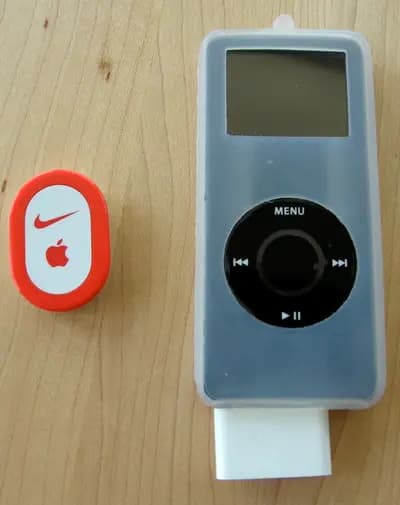
For anyone who already wears an Apple Watch, Apple Fitness+ is the lowest-friction way to build a personalized, well-produced workout habit. The service ties tightly to your Watch, surfacing recommendations based on your biometric trends and activity history, and overlaying real-time metrics — heart rate, calories, Activity rings — directly onto studio-quality video classes spanning strength, HIIT, yoga, Pilates, cycling, rowing, and more. In 2026 Apple leaned harder into AI with "Workout Buddy," an Apple Intelligence feature that delivers spoken, personalized encouragement and milestone callouts mid-session, and the company has signaled an expanded "Health+" AI coaching layer that uses large language models to interpret your sleep, heart rate, and movement and suggest lighter sessions or rest when your data warrants it. For households, the math is compelling: at $9.99 a month or $79.99 a year — shareable with up to six family members at no extra cost, or bundled into the Apple One Premier plan — it works out to little more than a dollar per person per month, the cheapest premium subscription on this list. Launched in 2020, the service now spans thousands of classes, and in 2026 it added Spanish-language Workout Buddy support and expanded its trainer roster. The integration across iPhone, iPad, Apple Watch, Mac, and Apple TV is seamless, with unified health data and the polished production values you would expect from Apple. The cost of that polish is the walled garden. Fitness+ effectively requires an Apple Watch to unlock its full personalization, offers little to Android users, and locks your workout history inside Apple's ecosystem. Its core class-based personalization is also less granular than a dedicated strength algorithm like Fitbod's, and the broader Health+ AI coaching layer was still rolling out as of mid-2026. But for the millions already living on Apple hardware, nothing else integrates this cleanly for this little money.
- 0

Peloton is no longer just a bike. The Peloton App has matured into one of the deepest on-demand and live class libraries in fitness — cycling, running, strength, yoga, meditation, walking, and more — taught by a roster of instructors with a genuine talent for motivation. In 2025 the company layered artificial intelligence on top with "Peloton IQ," a system that builds personalized workout plans, surfaces performance insights, and recommends what to do next by analyzing your activity both on and off the platform. The result is a service that keeps the energy of a group class while nudging you toward a coherent, individualized progression. Crucially for app-only users, you no longer need Peloton's hardware to benefit. The App One tier starts at $15.99 a month, opening the full class catalog to anyone with a phone, tablet, or TV. With around 2.8 million total subscribers and a library that few competitors can match for sheer breadth and production quality, Peloton remains the benchmark for variety and instructor charisma — the reason people who "hate working out" often stick with it. Two things temper the enthusiasm. Peloton raised prices in late 2025 (App+ climbed to $28.99 a month and all-access to $49.99), and the most advanced Peloton IQ features are tuned for its newer connected-fitness hardware, so app-only users see a lighter version. The personalization is also class-recommendation-driven rather than the granular, set-by-set autoregulation a strength specialist offers. But if motivation and variety are what keep you coming back, Peloton's combination of world-class instructors and a growing AI layer make it one of the most well-rounded picks on this list.
- 0#6

Future sits at the premium end of the market with a deceptively simple pitch: a real, certified personal trainer in your pocket who programs every workout and holds you accountable. When you sign up, you are matched with a dedicated coach who learns your goals, schedule, and limitations, then builds a custom weekly plan. Where the AI comes in is between those human touchpoints — Future's system reads your Apple Watch data, sleep, and heart-rate variability to fine-tune daily intensity and adapt to how recovered you actually are, so the plan flexes around your life rather than ignoring it. The accountability is the product. Coaches send video messages, adjust your program when life intervenes, and check in to keep you consistent — the human element that data shows dramatically improves adherence. Launched in 2019, Future has leaned into holistic health on its higher tiers, bundling one to two DEXA body-composition scans, registered-dietitian consults, and 50-plus lab tests for users who want a complete picture. For people who have repeatedly bounced off self-guided apps, that combination of a named coach plus AI-tuned daily programming is genuinely habit-forming. What stops most people at the door is the price. Future's core plan runs about $129 a month, with premium tiers climbing toward $399, putting it roughly ten times the cost of algorithmic apps like Fitbod. It also leans heavily on consistent Apple Watch data, so it is less effective without a wearable, and the experience inevitably varies with which coach you are matched to rather than offering uniform algorithmic consistency. But as a digital stand-in for a high-end personal trainer — at a fraction of in-person rates — Future is the most accountable option on this list, and well worth its place for the right user.
- 0
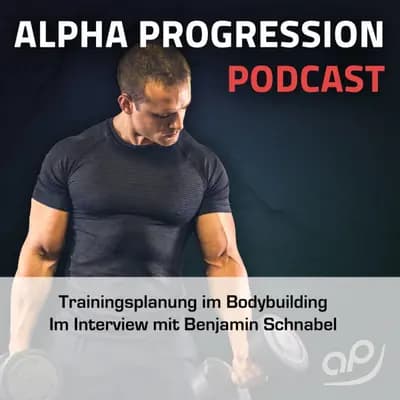
Alpha Progression is the enthusiast's choice — a Berlin-built app laser-focused on one job, hypertrophy, and engineered to do it for an exceptional price. Its AI plan generator constructs muscle-building programs tailored to your goals, equipment, training frequency, and target areas, drawing from what the company describes as over a quadrillion possible input combinations. From there it makes set-by-set weight and rep recommendations, tracks Reps in Reserve (RIR) to gauge intensity, and schedules deloads to keep progress steady without burning you out. For lifters who care about progressive overload but do not want to manage a spreadsheet, it automates the science cleanly. The reception among serious trainees is telling: Alpha Progression holds a 4.9/5 rating across 2,000+ iOS reviews and 4.79/5 across roughly 19,000 on Google Play, has been featured as Apple's App of the Day, and was named a best overall fitness app of 2026 by Fitness Drum. With more than 690 exercises with video demonstrations and a free tier that covers logging and custom plans, it punches well above its weight — and the Pro tier at around $79.99 a year is among the lowest prices for genuine AI coaching anywhere on this list. Its strength is also its limit. Alpha Progression is hypertrophy-only: there is no cardio, mobility, HIIT, or flexibility programming, and no audio cues or warm-up routines. The depth of customization also brings a learning curve that can intimidate newcomers, and adaptation leans on your logged performance rather than wearable biometrics. But for anyone whose primary goal is building muscle on a budget, no app on this list delivers more intelligent programming per dollar.
- 0
Dr. Muscle is what happens when an exercise scientist builds a workout app. Founded by Dr. Carl Juneau, who holds a PhD in exercise epidemiology, the app turns peer-reviewed training principles into an automated coach. Its AI manages progressive overload, deloads, and rep ranges dynamically, applies more than 25 advanced techniques — rest-pause sets, drop sets, pyramid sets, daily undulating periodization — and adjusts your sets, reps, and weights after every workout based on how you performed. It is, in essence, autoregulation by algorithm: the kind of evidence-based programming usually reserved for coached athletes, packaged for a phone. For people who find programming overwhelming, the appeal is removing the guesswork entirely. Dr. Muscle tracks weights, reps, and set difficulty to generate progress charts, offers an AI chat coach to premium subscribers, and layers in nutrition guidance with calorie and macro targets that adjust as your body weight changes. It carries solid ratings — 4.5/5 on the App Store and 4.29/5 on Google Play — and a two-week full-feature free trial lets you test the engine before committing. A 2026 progressive web app, "Dr. Muscle X," extended access beyond mobile. Polish and scope are where it lags. Reviewers consistently flag the interface as unintuitive, with settings and features buried in unexpected menus that demand extra taps, and the app is strictly strength- and hypertrophy-focused with minimal cardio. Wearable integration is limited, and like other adaptive engines it needs two to three weeks of consistent logging before its recommendations sharpen. At $49 a month it is also priced toward the high end. But for the data-driven lifter who values scientific rigor over polish, Dr. Muscle's autoregulation is among the most sophisticated on this list.
- 0

Nike Training Club proves that "free" does not have to mean "limited." Since Nike dropped the paywall in 2020, the app has offered its entire catalog — well over 100 professionally produced workouts spanning strength, cardio, yoga, mobility, and multi-week structured programs — at no cost, with no subscription and no ads. Machine-learning recommendations tailor suggestions to your stated preferences, fitness level, and goals, and the production quality is exactly what you would expect from Nike: polished video, certified trainers, and programs that progress sensibly rather than throwing random sessions at you. The breadth is the appeal. Whether you want a quick bodyweight burner, a structured strength block, a yoga flow, or a mobility routine, NTC has a credible option, and it integrates with Apple Health and Apple Watch and casts to larger screens for living-room sessions. For beginners testing whether an app habit will stick, or budget-conscious exercisers who refuse to pay a monthly fee, it is the obvious starting point — and the one app on this list that costs nothing to try for as long as you like. It is not without flaws. The personalization is shallower than a dedicated adaptive algorithm — recommendations are more curated than truly autoregulated — and users report intermittent reliability issues, including workouts that occasionally fail to save and Chromecast casting that broke for some users in late 2025. Anyone chasing precise progressive overload will eventually outgrow it. But as a free, high-quality, broadly capable fitness app, Nike Training Club has no real equal, and it earns its spot as the default recommendation for anyone unwilling to spend a dollar to get moving.
- 0#10
Zing Coach rounds out the list with a feature few rivals offer: real-time form analysis through your phone's camera. Its "Zing Vision" computer-vision technology watches your movement on key lifts and delivers immediate corrective guidance — a safety net that genuinely helps newcomers who are unsure whether their squat or press looks right. Behind that, Zing personalizes by reading more than a dozen biometric variables, runs an AI body-composition scan from a simple photo, and adjusts workout intensity using daily check-ins on energy, sleep, and mood plus Apple Health and Apple Watch data. The onboarding is friendly, the visual progress tracking is motivating, and at $59.99 a year it undercuts most premium competitors. The 2026 momentum is real: Zing surpassed a million downloads, raised a $10 million Series A, and partnered with Paris Saint-Germain, all of which point to a product investing aggressively in its AI. For beginners and busy professionals who want structured, adaptive coaching with built-in form feedback — without paying personal-trainer rates — it is a compelling entry point, and its 4.8/5 iOS rating across 31,000+ reviews reflects strong satisfaction among that audience. Buyers should go in clear-eyed, though. Zing's ratings diverge sharply by platform — 4.8 on iOS but 3.9 on Google Play and 3.5 on Trustpilot — and a meaningful share of negative reviews cite billing-transparency complaints around free trials and cancellations, so manage your subscription carefully. The form feedback can occasionally lag or misread advanced movements, and a few basic UX gaps (no audible rest-timer alerts) remain. As the list's most accessible AI-form-coaching option, it's worth a look — with the caveat that you read the subscription terms before you start.
Frequently Asked Questions About AI Fitness Apps
What makes an AI fitness app different from a regular workout app? A standard workout app hands everyone the same plan. An AI fitness app tracks your actual results — reps completed, weight used, heart rate — and rewrites your next session based on how you did. Research published in the *Journal of Strength and Conditioning Research* shows that adaptive-load training produces significantly greater strength gains than fixed-progression programs over 12 weeks ([JSCR, journals.lww.com](https://journals.lww.com/nsca-jscr)).
Are AI fitness apps worth the subscription cost? It depends on your goal. Free tiers (Nike Training Club, Freeletics) suit beginners building a habit. Paid options like Fitbod (~$13/mo) and Future (~$199/mo) add AI-driven load progression or live human coaching — which becomes cost-effective once you'd otherwise pay a personal trainer $50–$100 per session.
Which app is best if I'm recovering from an injury? Caliber and Future both pair AI programming with certified human trainers who can flag movements you should avoid. Always consult a physiotherapist before starting any structured program after an injury.
Do these apps work without gym equipment? Yes. Freeletics and Nike Training Club are built entirely around bodyweight training and need zero gear. Fitbod and Alpha Progression support equipment-free modes but deliver the most value when you have access to weights.
Frequently Asked Questions About AI Fitness Apps
What is the best AI fitness app in 2026? Based on community votes and editorial testing, Fitbod leads for gym-goers who want adaptive strength programming, while Zing Coach is top-rated for real-time form feedback. The best app depends on your goal — browse the ranked list above and vote for your favourite.
Are AI fitness apps worth it? For most people, yes. Research published in the *Journal of Medical Internet Research* (2023) found that personalised digital coaching increased 12-week workout adherence by 34 % compared with static plans. The apps on this list use machine-learning models trained on millions of sessions to replicate that effect at a fraction of the cost of a human trainer.
Do AI fitness apps work without gym equipment? Several on this list — Freeletics, Nike Training Club, and Future — are designed primarily for bodyweight or minimal-equipment training. Filter by 'no equipment' inside each app to surface plans suited to home workouts.
How do AI fitness apps personalise workouts? They combine data from wearables (heart rate, HRV, sleep), self-reported readiness scores, and historical performance to select exercises, set targets, and auto-regulate load. Apps like Fitbod and Alpha Progression update your next session the moment you log a set.
Frequently Asked Questions About AI Fitness Apps
What makes a fitness app truly 'AI-powered'? True AI fitness apps use machine-learning models that adapt your plan based on logged performance, recovery signals, and progressive-overload principles — not fixed templates. A 2024 review in the *Journal of Medical Internet Research* found adaptive-plan apps produced 23% greater strength gains over 12 weeks versus static programs ([JMIR, 2024](https://www.jmir.org)).
Are AI fitness apps safe for injury recovery? Apps like Caliber and Future pair AI scheduling with licensed coaches who can flag movements to avoid. Always consult a physiotherapist before beginning a return-to-training program.
How much do the best AI fitness apps cost in 2026? Prices range from free (Nike Training Club) to ~$149/month (Future with a dedicated coach). Mid-tier options like Fitbod (~$13/mo) and Alpha Progression (~$10/mo) offer strong AI personalisation without the premium price tag.
Which app is best for complete beginners? Zing Coach and Apple Fitness+ consistently score highest for beginner accessibility — both offer guided form feedback and require nothing beyond a smartphone or Apple Watch.
Frequently Asked Questions About AI Fitness Apps
Do AI fitness apps actually personalize my workouts? Yes — apps like Fitbod, Freeletics, and Alpha Progression log your sets, reps, weights, and perceived exertion, then adjust volume and intensity session-to-session so you don't plateau.
Can an AI fitness app replace a personal trainer? For most recreational lifters and home-workout users, yes. Apps with real-time form analysis (Zing Coach, Dr. Muscle) cover the main coaching jobs: programming, form feedback, and progression. If you're rehabbing a specific injury or competing at a high level, pair the app with a human coach.
What's the best free AI fitness app? Nike Training Club offers the deepest free library of guided workouts. Freeletics and Caliber both have usable free tiers with bodyweight and strength plans.
Do I need special equipment? Fitbod, Dr. Muscle, and Alpha Progression are built around barbell and dumbbell training. Freeletics, Apple Fitness+, and Zing Coach work with bodyweight or minimal gear, which is the better fit if you train at home.
Image credits
- Fitbod: Fitbod / Wikipedia
- Freeletics: Web Summit / flickr (BY)
- Apple Fitness+: Arthbkins at English Wikipedia / Wikimedia Commons (Public domain)
- Peloton App: Peloton Interactive / Wikipedia
- Future: Tdorante10 / Wikimedia Commons (CC BY-SA 4.0)
- Alpha Progression: Bing Images / polionstage.de
- Nike Training Club: Yekvshot / Wikimedia Commons (CC0)
Related Videos
Rank it your way
Remix this list into your own ranking, or head to the play hub for every game mode and community breakdown — blind mode, challenges, tier lists, and more.
You Might Also Like

Top 10 Best Fitness Apps of 2025
Top 10 Best Fitness Apps of 2025

Top 10 Best Home Workout Programs
Top 10 Best Home Workout Programs

Top 10 Home Gym Equipment Worth the Investment
Top 10 Home Gym Equipment Worth the Investment

Top 10 Nervous System Regulation Techniques Dominating Wellness in 2026
#1 Physiological Sigh (Double Inhale Breathwork) · #2 Cold Plunge / Cold Water Immersion · #3 NSDR (Non-Sleep Deep Rest) / Yoga Nidra

Top 10 Leading Causes of Death Worldwide (WHO 2025)
#1 Ischaemic Heart Disease · #2 Stroke (Cerebrovascular Disease) · #3 Chronic Obstructive Pulmonary Disease (COPD)

Top 10 Sleep Optimization Tools & Gadgets in 2026: Expert Picks for Deeper Rest
#1 Oura Ring 4 · #2 Eight Sleep Pod 5 · #3 Whoop 5.0