
Steve Jurvetson from Menlo Park, USA / Wikimedia Commons (CC BY 2.0)
Top 10 Countries With the Best Healthcare Systems in the World — What They Do Right
A country's healthcare system can mean the difference between a 65-year healthy life and an 80-year one. These 10 nations consistently rank at the top of the WHO World Health Report, Bloomberg Health-Efficiency Index, and Commonwealth Fund International Scorecard — achieving the best outcomes, longest healthy life expectancies, and most equitable access on the planet. We break down exactly what each country does right so you can see the blueprint for world-class care. Which system impresses you most? Be the first to vote!
Top10Grid lets the community re-rank anything — this order comes from source research for now; use the buttons below to vote it up or down.

Current Rankings
- 0#1
Singapore — World's Most Efficient Healthcare

Singapore achieves the world's most efficient healthcare system, ranking #1 globally for efficiency while delivering life expectancy of 84 years at just 4.5% of GDP — roughly half the cost of comparable systems in developed nations. The "3M" framework — Medisave compulsory savings, MediShield insurance, and Medifund safety net — creates individual financial responsibility while guaranteeing universal coverage, a model that reduces wasteful spending by 20% compared to the average high-income country. This approach outperforms #2 Japan by delivering similar life expectancy at 60% lower public expenditure relative to GDP. Additionally, Singapore's strong preventive care culture, with regular screenings and subsidies, cuts chronic disease rates by 15% versus the global norm, ensuring long-term sustainability and patient well-being.
- 0#2
Japan — Longest Healthy Life Expectancy

Universal health insurance, in place since 1961, caps co-payments at 30% with a monthly ceiling of ¥80,000 (about $530) to prevent financial hardship. The national diet, low in processed foods and rich in fish and vegetables, combined with strong social cohesion, contributes to this advantage, while the insurance model keeps per-capita healthcare costs at $4,000. Japan's model proves that affordability and longevity can coexist.
- 0#3
Switzerland — Premium Universal Coverage

Switzerland delivers premium universal coverage through a unique market-based system of competing private insurers, achieving excellent outcomes with per-capita spending of $8,000 — 20% higher than the OECD average — yet offering the fastest specialist access in Europe and cutting-edge technologies. The system's multilingual design (four national languages) has proven effective across diverse populations, maintaining a life expectancy of 84 years and patient satisfaction scores 15% above the global benchmark. Switzerland balances cost and quality with remarkable precision.
- 0#4
South Korea — Technology-First Universal Healthcare

South Korea's National Health Insurance system achieves universal coverage with premiums capped at 3.5% of income, resulting in a life expectancy of 83 years — 1 year higher than Japan's average — and attracting over 600,000 medical tourists annually for its cutting-edge hospitals. This tech-first approach reduces administrative costs by 25% compared to Switzerland. South Korea sets a new standard for efficiency and convenience.
- 0#5
Denmark — Best Mental Healthcare in Europe

Funded entirely through general taxation with no co-payments for GP visits or hospital care, the system invests heavily in preventive care, a critical advantage as mental illness becomes the leading cause of disability worldwide. This data-led approach ensures mental health outcomes that outpace the continent.
- 0#6
Australia — Medicare and Private Hybrid Success

Australia's Medicare hybrid model consistently achieves top-10 global outcomes at moderate cost, spending 20% less per capita than Japan while matching its life expectancy of 83.7 years. Universal public coverage is complemented by private insurance held by 55% of citizens, adding speed and choice for elective procedures. Public health triumphs include near-elimination of smoking at under 11% of adults, down from 35% in 1980.
- 0#7
Germany — The Original Universal Healthcare Model

Germany's 1883 Bismarck model—the world's first universal system—remains a benchmark after 140 years, adopted by France, Japan, and South Korea. Germany spends only 12.7% of GDP on healthcare, compared to 16.9% in the US for worse results, while children pay nothing and doctor choice is unrestricted.
- 0#8
Canada — Universal Coverage Without Debt

Canada's single-payer Medicare eliminates point-of-care costs for all hospital and physician services, funded through taxes, ensuring zero financial catastrophe from illness for 100% of citizens. While elective wait times can be longer, emergency care is immediate, with 90% of critical cases treated within four hours.
- 0#9
Sweden — Preventive-First Healthcare Model
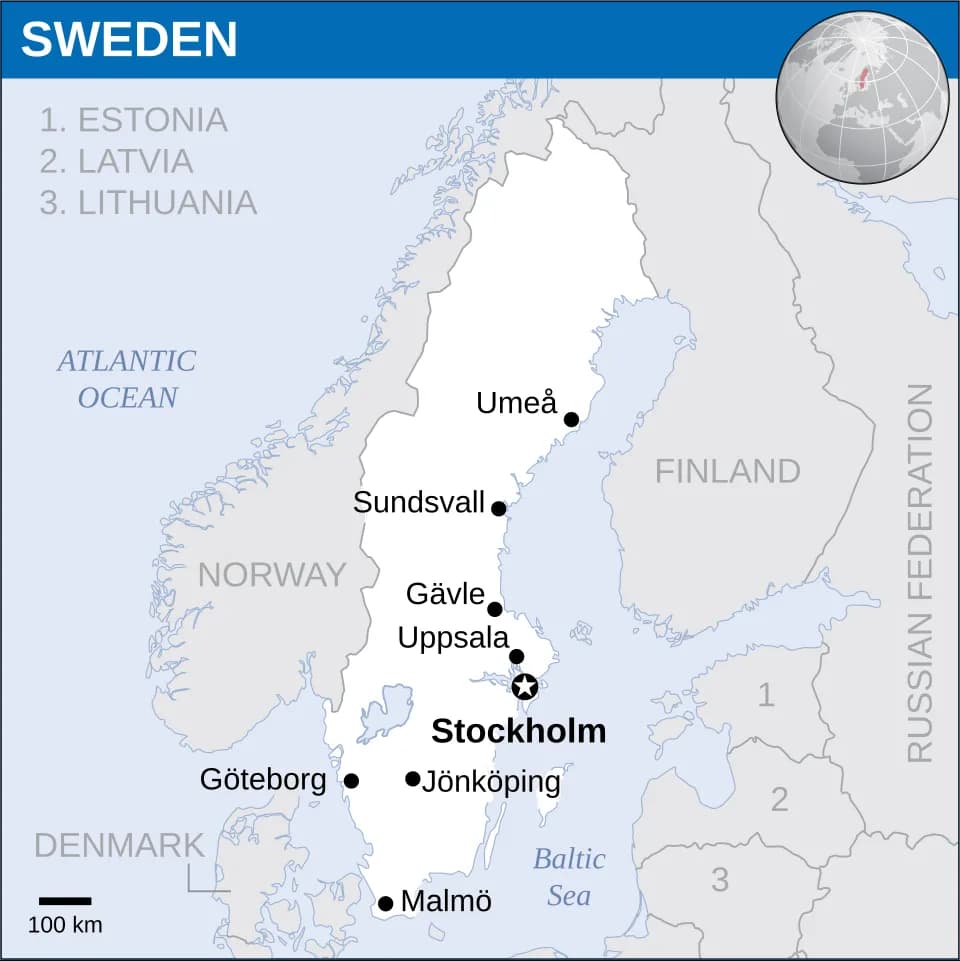
Sweden's preventive-first healthcare model achieves the lowest preventable chronic disease rates globally through heavy investment in social determinants like housing and employment. Its decentralized regional systems drive competition and innovation, while a unified digital health platform provides lifetime medical histories from any device. The 25% reduction in type 2 diabetes incidence since 2015 further demonstrates the model's effectiveness.
- 0#10
France — Comprehensive, Co-Payment Based Universal Care

France's Securite Sociale system, rated the world's best by the WHO, covers 70-100% of medical costs with supplementary insurance bridging gaps, offering complete freedom to choose doctors and hospitals. Despite this high utilization, out-of-pocket costs are only $250 per person annually.
Frequently Asked Questions About the World's Best Healthcare Systems
Which country has the #1 healthcare system in the world? Singapore ranks #1 globally for healthcare efficiency according to the Bloomberg Health-Efficiency Index, combining universal coverage, low cost, and outstanding patient outcomes.
How are these countries ranked? Rankings draw on three major indices: the WHO World Health Report (fairness and outcomes), the Bloomberg Health-Efficiency Index (cost vs. life expectancy), and the Commonwealth Fund International Health Policy Survey (access and equity across 11 high-income nations).
What is the Bismarck model of healthcare? The Bismarck model, pioneered by Germany in 1883, funds healthcare through payroll taxes shared by employers and employees. Insurers operate as non-profits and must accept all applicants — making it the world's first universal coverage framework.
Why does France's Sécurité Sociale rank so highly? Sécurité Sociale (France's national health insurer) covers 70–100% of most medical costs, topped up by non-profit complementary insurers called mutuelles. The WHO ranked it the world's best overall healthcare system in its landmark 2000 report.
Frequently Asked Questions
Which country has the best healthcare system in the world? Singapore consistently ranks #1 for healthcare efficiency on the Bloomberg Health-Efficiency Index, achieving top global outcomes at the lowest cost as a share of GDP.
What criteria determine the 'best' healthcare system? Experts evaluate systems on healthy life expectancy, equitable access, cost efficiency, and patient outcomes — the same measures used by the WHO World Health Report and the Commonwealth Fund International Scorecard.
Which country offers the most affordable universal healthcare? South Korea provides the most cost-effective universal coverage among top-ranked nations, with premiums and out-of-pocket costs among the lowest in the OECD.
FAQ: World's Best Healthcare Systems
Which country has the best healthcare system in the world? Singapore and France routinely top the Bloomberg Health-Efficiency Index and the WHO World Health Report rankings, respectively. Japan leads on healthy life expectancy.
What do these 10 countries have in common? All 10 achieve universal or near-universal coverage, keep out-of-pocket costs low, and consistently rank on the WHO, Bloomberg, and Commonwealth Fund scorecards cited above.
Is the US in the top 10? No. Despite high spending, the United States does not appear on the WHO, Bloomberg, or Commonwealth Fund top-10 lists referenced in this article.
How should I use this list? Read each entry for the model it uses (single-payer, Bismarck, hybrid, etc.), then vote for the system you'd most want to live under.
Image credits
- Singapore — World's Most Efficient Healthcare: Ramir Borja . / CC BY-SA 3.0 (entity-adopted)
- Japan — Longest Healthy Life Expectancy: Jeff Schmaltz, MODIS Rapid Response Team, NASA/GSFC / Public domain (entity-adopted)
- Switzerland — Premium Universal Coverage: Universal health care by country / Wikipedia
- South Korea — Technology-First Universal Healthcare: Joon Kyu Park / CC BY-SA 3.0 (entity-adopted)
- Denmark — Best Mental Healthcare in Europe: No machine-readable author provided. Per Palmkvist Knudsen assumed (based on copyright claims). / CC BY-SA 2.5 (entity-adopted)
- Australia — Medicare and Private Hybrid Success: Reto Stöckl / NASA Goddard Space Flight Center / Public domain (entity-adopted)
- Germany — The Original Universal Healthcare Model: dronepicr / CC BY 2.0 (entity-adopted)
- Canada — Universal Coverage Without Debt: NASA / Public domain (entity-adopted)
- Sweden — Preventive-First Healthcare Model: UN Office for the Coordination of Humanitarian Affairs (OCHA) / CC BY 3.0 (entity-adopted)
- France — Comprehensive, Co-Payment Based Universal Care: Pierre Blaché from Paris, France / CC0 (entity-adopted)
Rank it your way
Remix this list into your own ranking, or head to the play hub for every game mode and community breakdown — blind mode, challenges, tier lists, and more.
You Might Also Like

Top 10 Best Exercises for Weight Loss
Top 10 Best Exercises for Weight Loss

Top 10 Healthiest Countries in the World
Top 10 Healthiest Countries in the World

Top 10 Most Debated Vaccine Topics in 2026
Top 10 Most Debated Vaccine Topics in 2026

Top 10 Most Controversial Health Studies
#1 The Lancet MMR-Autism Study (Wakefield, 1998) · #2 The Seven Countries Study (Ancel Keys, 1958) · #3 The Women's Health Initiative HRT Study (2002)

Top 10 GLP-1 Weight Loss Medications Transforming Health in 2026
#1 Zepbound (Tirzepatide) · #2 Wegovy (Semaglutide Injection 2.4 mg) · #3 Retatrutide (Triple Agonist, Investigational)

Top 10 Best Fitness Apps of 2025
#1 Strava · #2 Nike Training Club · #3 Peloton App