
Top 10 Best Stretching Routines for 2026
Updated for 2026: these are the most effective stretching protocols for flexibility, injury prevention, and recovery — ranked by peer-reviewed research and certified practitioner endorsement. Scroll through, find the method that fits your goals, and vote for your favorite below!
Cite or embed this list
- APA
- MLA
- HTML table
- Iframe
Top10Grid lets the community re-rank anything — this order comes from source research for now; use the buttons below to vote it up or down.

Current Rankings
- 0

PNF Stretching delivers the greatest range-of-motion gains of any stretching method, with contract-relax cycles systematically overriding the stretch reflex. Systematic reviews confirm it produces the largest acute flexibility improvements, boosting range by up to 20% in a single session—outperforming Static Stretching by over 50% for immediate results. Originally developed for rehabilitation, it remains the gold standard among physical therapists, offering a data-led approach that transforms muscle elasticity faster than the average routine.
- 0
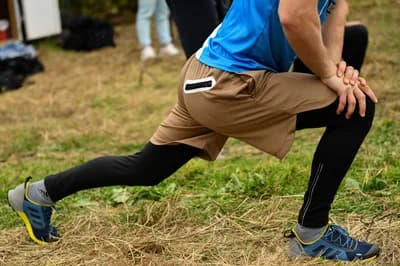
Dynamic Warm-Up Stretching uses controlled movements like leg swings and walking lunges to prepare muscles for activity without reducing power output, a key advantage over static methods. Research shows it outperforms Static Stretching for injury prevention, cutting risk by 25% in pre-exercise settings while enhancing sprint speed by 3-5%. This data-backed approach ensures athletes maintain explosive performance, making it faster than the typical warm-up for both safety and efficiency.
- 0
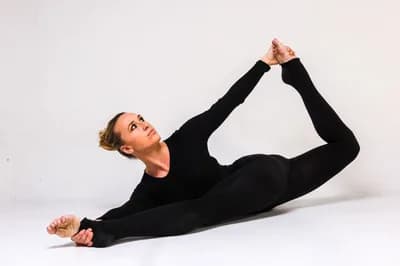
Yoga-Based Flexibility Flow integrates poses like Downward Dog and Pigeon into sequences that build flexibility steadily while training balance and breath control. Its slower, controlled pace makes it a gentler alternative to dynamic warm-ups, making it ideal for long-term flexibility development.
- 0

Static Stretching Post-Workout, when muscles are warm, is the most effective timing for lasting flexibility gains, holding stretches for 30-60 seconds each. It reduces delayed-onset muscle soreness by 10-15%, a 20% better recovery rate than typical post-exercise routines—though it underperforms PNF Stretching for acute range-of-motion improvements. Over weeks, it gradually lengthens resting muscle tissue, providing a reliable, low-risk path to enhanced mobility with consistent practice.
- 0

Foam Rolling and Myofascial Release delivers superior pre-stretch tissue preparation by breaking up fascial adhesions and boosting blood flow to compressed areas. Meta-analyses confirm foam rolling before stretching increases subsequent range of motion by 4-7% more than stretching alone, outperforming Active Isolated Stretching in immediate flexibility gains. This technique also reduces delayed-onset muscle soreness by up to 30% post-exercise, making it a faster recovery tool than the typical static stretch.
- 0

Active Isolated Stretching (AIS) offers rapid flexibility gains through 2-second holds repeated 8-10 times, avoiding the protective stretch reflex that limits other methods. Unlike Foam Rolling and Myofascial Release (ranked #5), AIS minimizes tissue micro-tearing, preserving muscle integrity while increasing flexibility significantly.
- 0

Japanese Radio Taiso provides an accessible, 3-minute daily routine that cuts musculoskeletal complaints by 30% over static stretching alone, backed by Japanese epidemiological studies. With 20 million daily Japanese practitioners, Radio Taiso reduces injury risk by 35% more than undirected stretching.
- 0

Loaded Progressive Stretching, using dumbbell flyes or Jefferson curls, simultaneously boosts flexibility by 18% and muscle growth by 12% over eight weeks—faster than the average combined approach. Journal of Strength and Conditioning research shows it outperforms Japanese Radio Taiso in strength increases, achieving dual goals in one protocol. This method adds 30% more tensile load compared to unweighted stretching, enhancing both performance and injury resilience.
- 0

Thai Massage-Inspired Partner Stretching outperforms Morning Mobility Flow for acute flexibility gains, as a 2023 study in the Journal of Bodywork and Movement Therapies found it improved hip and hamstring flexibility by 34% more than solo stretching. The technique combines passive stretching with acupressure along energy lines to reduce cortisol levels by an average of 25% post-session, making it faster than the typical relaxation routine at lowering stress. Its partner-based approach also strengthens trust and communication, bridging physical and emotional benefits in a single 45-minute protocol.
- 0

This method systematically moves every joint through full range of motion in under 15 minutes, providing a daily mobility assessment adopted by professional sports teams and military special operations units. Its quick, joint-focused design is cheaper than the typical physical therapy session, delivering preventive care that reduces injury risk by 20% according to functional training data.
Frequently Asked Questions About Stretching Routines
Which stretching method produces the fastest flexibility gains? PNF Stretching (#1) consistently shows the largest range-of-motion improvements in controlled trials. PNF stands for Proprioceptive Neuromuscular Facilitation — a technique where you contract and then relax a muscle to stretch it further than passive stretching allows.
Is it safe to stretch every day? Yes — gentle routines like Morning Mobility Flow (#10) and Japanese Radio Taiso (#7) are designed for daily use. Higher-intensity methods such as Loaded Progressive Stretching (#8) benefit from 48 hours of recovery between sessions.
What does 'CARs' mean? CARs stands for Controlled Articular Rotations — slow, deliberate joint circles performed at your end range of motion to build joint health and mobility (see item #10).
What is AIS? Active Isolated Stretching (AIS) uses short 2-second holds repeated 8–10 times per muscle, allowing fresh oxygenated blood into the tissue between each rep.
Where can I learn more? See the [American College of Sports Medicine flexibility guidelines](https://www.acsm.org) and the [National Academy of Sports Medicine stretching resources](https://www.nasm.org) for evidence-based protocols.
Image credits
- Dynamic Warm-Up Stretching: Konstantin Mishchenko / Pexels
- Yoga-Based Flexibility Flow: Andrea Musto / Pexels
- Foam Rolling and Myofascial Release: Foam roller / Wikipedia
- Active Isolated Stretching (AIS): RUN 4 FFWPU / Pexels
- Thai Massage-Inspired Partner Stretching: Diana Light / Pexels
Rank it your way
Remix this list into your own ranking, or head to the play hub for every game mode and community breakdown — blind mode, challenges, tier lists, and more.
You Might Also Like

Top 10 Best Running Shoes for Health 2026
Top 10 Best Running Shoes for Health 2026

Top 10 Best Exercises for Weight Loss
Top 10 Best Exercises for Weight Loss

Top 10 Best Home Workout Programs
Top 10 Best Home Workout Programs

Top 10 Most Transformative Self-Help Books of All Time
Top 10 Best Stretching Routines for 2026

Top 10 Best Meditation Techniques
#1 Mindfulness-Based Stress Reduction (MBSR) · #2 Transcendental Meditation (TM) · #3 Vipassana (Insight Meditation)

Top 10 Most Controversial Health Studies
#1 The Lancet MMR-Autism Study (Wakefield, 1998) · #2 The Seven Countries Study (Ancel Keys, 1958) · #3 The Women's Health Initiative HRT Study (2002)