Architecture or Chemical Engineering? Top 10 Hardest College Majors
Jump to ranking ↓Top 10 Hardest College Majors: picked and ranked by our editors, and open to your votes. How we ranked this: College undergraduate majors were evaluated and ranked based on verified empirical academic surveys, primarily longitudinal data…
Read more
from the National Survey of Student Engagement (NSSE) by Indiana University Bloomington, cross-referenced with average credit loads, organic chemistry and calculus prerequisite failure rates, and grading curves compiled across accredited universities. While personal aptitude and institutional variations exist, the ranking prioritizes mandatory weekly outside-the-classroom commitment, quantitative complexity, and documented attrition. The divide between academic disciplines is starkly measurable. While the average American undergraduate studies roughly 14 to 15 hours per week outside the classroom, students in top STEM and architectural programs frequently log between 18 and 23 hours every week in studio and laboratory problem sets. Unlike humanities degrees where evaluation centers on subjective analysis, engineering and physical science programs enforce harsh curved examinations where median scores routinely fall under 60 percent. Architecture demands continuous physical portfolio creation, while Chemical Engineering and Physics require multi-variable differential modeling. Vote to reorder the rankings based on your own university experience and academic challenge. Sources: nsse.indiana.edu, naab.org, aiche.org, bls.gov, aps.org, bmes.org. — Top10Grid Education Fan Club · Reviewed by Max Rankin
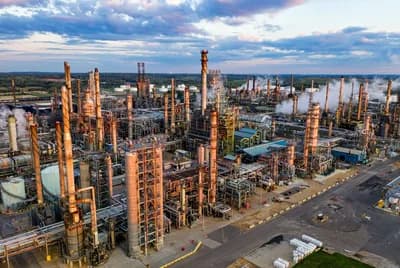
Tom Fisk / Pexels
Starting order. Vote up or down to reorder this list.
Current Rankings
- 0
According to empirical NSSE survey data, Architecture undergraduates average 22.2 hours of weekly study and studio preparation outside of class, exceeding the overall university average of 14.5 hours by more than 50%. Students face continuous hands-on physical model fabrication, 3D CAD rendering, and intense public jury critiques where unrefined projects are rejected on the spot.

Chemical Engineering students average 19.7 hours of weekly study. The discipline pairs theoretical thermodynamics and fluid dynamics with notorious organic chemistry sequences, where nationwide university data reveals sophomore drop and course-repeat rates exceeding 30% to 40% compared to general biology and chemistry tracks.
Averaging 19.2 weekly study hours, Aerospace Engineering leaves zero margin for numerical error. Coursework in compressible aerodynamics, orbital mechanics, and propulsion systems requires mastery of multi-variable calculus and Navier-Stokes equations, ranking among the top three highest attrition rates across ABET-accredited engineering schools.
Logging 18.8 study hours weekly, Biomedical Engineering demands dual-domain mastery. Undergraduates must excel in electrical circuit design and mechanical biomaterials while simultaneously competing against pre-med peers in organic chemistry and cellular physiology, where grade curves are aggressively deflated.
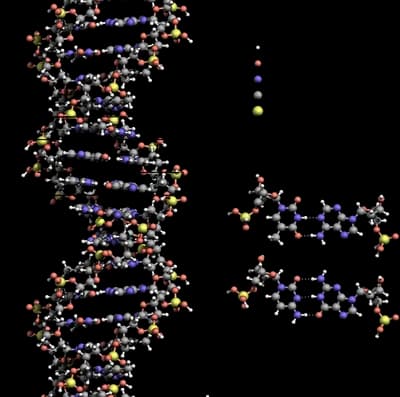
With 18.7 hours of weekly study, Cell and Molecular Biology majors face high-stakes exam competition from aspiring medical school applicants. Memorizing intricate biochemical signaling pathways and conducting mandatory 4-hour wet labs results in average graduating GPAs between 2.9 and 3.1 across major state universities.
- #60
Physics majors average 18.6 study hours each week, wrestling with non-intuitive quantum mechanics, Hamiltonian dynamics, and relativistic electrodynamics. On uncurved departmental midterms, class medians frequently drop into the 45% to 55% range before faculty apply statistical normalization.
Demanding 18.5 study hours per week, Astronomy and Astrophysics merges observational telescope sessions with high-performance computational modeling. Undergraduates write complex numerical algorithms in Python and C++ to simulate gravitational n-body dynamics and stellar nucleosynthesis.
- 0
Averaging 18.4 weekly study hours, Biochemistry bridges macroscopic biology with physical chemistry. Undergraduates must memorize hundreds of distinct enzyme-catalyzed reactions and complete multi-step chemical syntheses, producing one of the highest credit-hour requirements of any bachelor of science degree.

Mechanical Engineering students average 18.1 hours of study and lab work every week. Curriculums emphasize finite element analysis, heat transfer, and dynamics, culminating in grueling year-long capstone design projects that require verified physical testing against industrial ASME specifications.
Electrical Engineering students average 19.5 weekly hours dedicated to invisible physics: Maxwell's equations, analog signal processing, and semiconductor design. Alongside Chemical Engineering, EE programs consistently record the lowest median graduating GPAs across college campuses.
Cite or embed this list
- APA
- MLA
- HTML table
- Iframe
Have a list idea?
Start your own list and get help drafting entries with AI. A free account is required.
Create a list with AI →| Item | Gpa harshness | Weekly study hours | Curriculum complexity |
|---|---|---|---|
| #1Architecture | 9.5/10 | 22.2 hrs/wk | 9.8/10 |
| #2Chemical Engineering | 9.4/10 | 19.7 hrs/wk | 9.7/10 |
| #3Aerospace Engineering | 9.2/10 | 19.2 hrs/wk | 9.6/10 |
| #4Biomedical Engineering | 9.1/10 | 18.8 hrs/wk | 9.4/10 |
| #5Cell & Molecular Biology | 9.3/10 | 18.7 hrs/wk | 9.3/10 |
| #6Physics | 9.2/10 | 18.6 hrs/wk | 9.5/10 |
| #7Astronomy & Astrophysics | 9.0/10 | 18.5 hrs/wk | 9.3/10 |
| #8Biochemistry | 9.1/10 | 18.5 hrs/wk | 9.2/10 |
| #9Mechanical Engineering | 8.9/10 | 18.1 hrs/wk | 9.1/10 |
| #10Electrical Engineering | 8.9/10 | 18.0 hrs/wk | 9.2/10 |
Think something was robbed of a spot?
Nominate a missing contender — once approved, the community votes it up or down into the rankings.
Rank it your way
Remix this list into your own ranking, or head to the play hub for every game mode and community breakdown — blind mode, challenges, tier lists, and more.