

All That Jazz (film) / Wikipedia
Jazz has produced more masterpiece albums per decade than any other genre in American music, from the bebop revolution of the 1940s to the fusion experiments of the 1970s. These 10 albums -- selected across 50 years of jazz history -- represent the recordings that changed music forever, from Miles Davis redefining what a small group could sound like to John Coltrane extending human expression to its limits.
Top 10 lists about this release
Curated by our music editors. Builds on critical consensus while letting community vote rewrite the order — updated continuously.

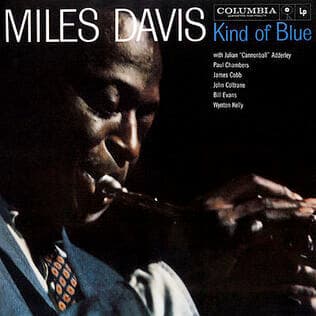
Recorded in two sessions on March 2 and April 22, 1959, Kind of Blue is the best-selling jazz album in history with over 5 million copies sold in the US alone and the first jazz record to be certified platinum four times. Miles Davis assembled an unprecedented ensemble -- including John Coltrane, Bill Evans, Cannonball Adderley, and Paul Chambers -- and created a modal jazz manifesto that replaced the complex chord progressions of bebop with scales, giving musicians unprecedented improvisational freedom.

Recorded in a single session on December 9, 1964, A Love Supreme is John Coltrane's four-part suite expressing spiritual devotion -- representing the pinnacle of hard bop and post-bop jazz and selling over 1 million copies, extraordinary for an avant-garde work. The album's iconic four-note bass motif and Coltrane's 33-minute devotional improvisation have made it the most studied and analyzed jazz recording in the academic curriculum of jazz conservatories worldwide.

The first jazz album to sell one million copies, Time Out was recorded in 1959 and built entirely around unusual time signatures -- Take Five in 5/4, Blue Rondo a la Turk in 9/8 -- that Dave Brubeck had encountered while touring the Middle East and South Asia for the US State Department in 1958. Columbia Records initially refused to release it, believing unconventional time signatures would doom its commercial prospects; instead it remained on the Billboard chart for 97 weeks.

The album that introduced bossa nova to the world won the Grammy for Album of the Year in 1965 -- the first jazz album ever to do so -- and made The Girl from Ipanema, sung by Astrud Gilberto, one of the most played songs in the history of radio. Stan Getz's cool tenor saxophone and Joao Gilberto's intimate guitar and vocal style created a recording of such understated elegance that it has sold continuously since 1964 and remains the definitive document of Brazilian jazz.
Recorded in May 1959 -- the same year as Kind of Blue and Time Out -- Mingus Ah Um is Charles Mingus's masterpiece of the hard bop era, incorporating gospel, blues, and bebop into a compositionally sophisticated whole that anticipated everything from fusion to free jazz. The tribute Better Git It in Your Soul, recorded in a single take with Mingus shouting encouragement to his musicians, is considered one of the most exhilarating performances in jazz history.

John Coltrane's 1960 album introduced Coltrane changes -- a harmonic innovation of rapidly cycling key centers a major third apart -- that was so harmonically advanced that pianist Tommy Flanagan visibly struggled to improvise over the chord progressions in the studio. The title track cycles through three key centers (B, G, and E-flat) in four measures at a tempo of 286 beats per minute, and mastering Coltrane changes remains the defining test for advanced jazz musicians six decades later.

Recorded on June 22, 1956 at Hackensack, New Jersey, Saxophone Colossus contains St. Thomas -- a calypso melody from the Virgin Islands that Rollins heard from his mother -- performed with such authority and wit that critic Gunther Schuller wrote it represented the peak of Rollins's powers as a thematic improviser. The album's title was coined by critic Ira Gitler and stuck permanently to Rollins, who continued performing into his 80s.

Miles Davis's double album recorded in August 1969 and released in March 1970 sold 400,000 copies in its first year -- unprecedented for avant-garde jazz -- and invented jazz fusion by overlaying electric keyboards, electric bass, wah-wah trumpet, and multiple rhythm instruments over dense, swirling improvisation. Davis assembled 13 musicians for sessions he directed with hand signals rather than written scores, creating a recording process as innovative as the music itself.

Duke Ellington's 1956 Newport Jazz Festival performance -- where tenor saxophonist Paul Gonsalves played 27 consecutive improvised choruses on Diminuendo and Crescendo in Blue, inciting the crowd to dance -- is the most famous concert in jazz history and put Ellington, then considered past his prime at 57, on the cover of Time magazine and back at the top of the jazz world. The live recording sold over 100,000 copies and is the only live jazz album to reach the US Top 10.

Charles Mingus's 1963 album is a six-part extended composition for a ten-piece ensemble that merges flamenco, soul, and free jazz into a continuous 38-minute work -- the most ambitious single composition in jazz history at the time of its recording. Mingus included liner notes written by his psychiatrist analyzing the album as a document of his psychological state, making it one of the first albums to explicitly connect music with mental health and emotional therapy.
The most-voted lists across every category — curated weekly. Join the early readers.
No spam. One email per week. Unsubscribe anytime.

Create a free account or sign in to join the discussion.
Sign in to join the conversation
Top 10 Best Nigerian Musicians of All Time
Top 10 World Cup Songs and Anthems
Top 10 Greatest Albums of the 2000sExplore more Music rankings on Top10Grid

Recorded in two sessions on March 2 and April 22, 1959, Kind of Blue is the best-selling jazz album in history with over 5 million copies sold in the US alone and the first jazz record to be certified platinum four times. Miles Davis assembled an unprecedented ensemble -- including John Coltrane, Bill Evans, Cannonball Adderley, and Paul Chambers -- and created a modal jazz manifesto that replaced the complex chord progressions of bebop with scales, giving musicians unprecedented improvisational freedom.

Recorded in a single session on December 9, 1964, A Love Supreme is John Coltrane's four-part suite expressing spiritual devotion -- representing the pinnacle of hard bop and post-bop jazz and selling over 1 million copies, extraordinary for an avant-garde work. The album's iconic four-note bass motif and Coltrane's 33-minute devotional improvisation have made it the most studied and analyzed jazz recording in the academic curriculum of jazz conservatories worldwide.

The first jazz album to sell one million copies, Time Out was recorded in 1959 and built entirely around unusual time signatures -- Take Five in 5/4, Blue Rondo a la Turk in 9/8 -- that Dave Brubeck had encountered while touring the Middle East and South Asia for the US State Department in 1958. Columbia Records initially refused to release it, believing unconventional time signatures would doom its commercial prospects; instead it remained on the Billboard chart for 97 weeks.

The album that introduced bossa nova to the world won the Grammy for Album of the Year in 1965 -- the first jazz album ever to do so -- and made The Girl from Ipanema, sung by Astrud Gilberto, one of the most played songs in the history of radio. Stan Getz's cool tenor saxophone and Joao Gilberto's intimate guitar and vocal style created a recording of such understated elegance that it has sold continuously since 1964 and remains the definitive document of Brazilian jazz.
Recorded in May 1959 -- the same year as Kind of Blue and Time Out -- Mingus Ah Um is Charles Mingus's masterpiece of the hard bop era, incorporating gospel, blues, and bebop into a compositionally sophisticated whole that anticipated everything from fusion to free jazz. The tribute Better Git It in Your Soul, recorded in a single take with Mingus shouting encouragement to his musicians, is considered one of the most exhilarating performances in jazz history.

John Coltrane's 1960 album introduced Coltrane changes -- a harmonic innovation of rapidly cycling key centers a major third apart -- that was so harmonically advanced that pianist Tommy Flanagan visibly struggled to improvise over the chord progressions in the studio. The title track cycles through three key centers (B, G, and E-flat) in four measures at a tempo of 286 beats per minute, and mastering Coltrane changes remains the defining test for advanced jazz musicians six decades later.

Recorded on June 22, 1956 at Hackensack, New Jersey, Saxophone Colossus contains St. Thomas -- a calypso melody from the Virgin Islands that Rollins heard from his mother -- performed with such authority and wit that critic Gunther Schuller wrote it represented the peak of Rollins's powers as a thematic improviser. The album's title was coined by critic Ira Gitler and stuck permanently to Rollins, who continued performing into his 80s.

Miles Davis's double album recorded in August 1969 and released in March 1970 sold 400,000 copies in its first year -- unprecedented for avant-garde jazz -- and invented jazz fusion by overlaying electric keyboards, electric bass, wah-wah trumpet, and multiple rhythm instruments over dense, swirling improvisation. Davis assembled 13 musicians for sessions he directed with hand signals rather than written scores, creating a recording process as innovative as the music itself.

Duke Ellington's 1956 Newport Jazz Festival performance -- where tenor saxophonist Paul Gonsalves played 27 consecutive improvised choruses on Diminuendo and Crescendo in Blue, inciting the crowd to dance -- is the most famous concert in jazz history and put Ellington, then considered past his prime at 57, on the cover of Time magazine and back at the top of the jazz world. The live recording sold over 100,000 copies and is the only live jazz album to reach the US Top 10.

Charles Mingus's 1963 album is a six-part extended composition for a ten-piece ensemble that merges flamenco, soul, and free jazz into a continuous 38-minute work -- the most ambitious single composition in jazz history at the time of its recording. Mingus included liner notes written by his psychiatrist analyzing the album as a document of his psychological state, making it one of the first albums to explicitly connect music with mental health and emotional therapy.

Top 10 Albums That Aged Like Milk
25 views · @admin

Top 10 Best Rock Albums of All Time
22 views · @admin

Top 10 Bad Bunny Albums Ranked
339 views · @admin

Top 10 Greatest Albums of the 2000s
113 views · @admin

Top 10 Greatest Hip-Hop Albums of All Time
60 views · @admin

Top 10 Greatest Jazz Albums of All Time
44 views · @admin
Because you're viewing Music
Top 10 Greatest Rappers of All Time
796 views · 1 votes

Top 10 Best Nigerian Musicians of All Time
230 views · 0 votes

Top 10 World Cup Songs and Anthems
160 views · 0 votes

Top 10 Greatest Albums of the 2000s
113 views · 0 votes

Top 10 Apple Music — Top Songs (GB) — March 14, 2026
90 views · 0 votes

Top 10 Apple Music — Top Albums (US) — March 13, 2026
76 views · 0 votes
Top 10 Trending Songs on Spotify - Week 20, 2026
10 items
Top 10 Greatest Rappers of All Time
10 items

Top 10 Best Nigerian Musicians of All Time
10 items

Top 10 World Cup Songs and Anthems
12 items

Top 10 Greatest Albums of the 2000s
10 items

Top 10 Apple Music — Top Songs (GB) — March 14, 2026
12 items
If you liked this, you might love these