
Grooves That Defined Jazz: 10 Albums That Shaped the Genre
Jazz is the art of surprise — the split-second decision, the phrase that bends where you least expect it, the conversation between players who have learned to listen as hard as they play. These ten records represent jazz at its most searching and most sure of itself: the modal experiments of Miles Davis, the free-fire fury of Coltrane, the rhythmic revolution of Brubeck's quartet. They were made at a time when jazz was the most adventurous music on earth, and they have lost none of their forward momentum. Each one rewards close listening, and each one rewards coming back.
Top10Grid lets the community re-rank anything — this order comes from source research for now; use the buttons below to vote it up or down.

Current Rankings
- 0#1
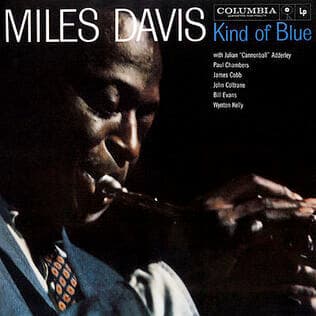
Kind of Blue — Miles Davis

Kind of Blue (1959) is the best-selling jazz album of all time, with over 5 million copies sold, and the record that introduced the world to modal jazz. Miles Davis assembled giants — Coltrane, Cannonball Adderley, Bill Evans — and gave them scales instead of chord changes. The result was music of extraordinary openness and calm that has never stopped sounding modern.
- 0#2
A Love Supreme — John Coltrane

Recorded in a single December 1964 session, A Love Supreme is Coltrane's spiritual masterwork — a four-part suite dedicated to God, built around one of the most recognisable bass motifs in all of jazz. This album is technically staggering, with Coltrane's solos reaching up to 32 bars of uninterrupted intensity, and changed what people believed jazz could express.
- 0#3
Mingus Ah Um — Charles Mingus

Released in 1959, Mingus Ah Um proved that jazz could be political, theatrical, and historically conscious. Mingus eulogized Lester Young and Fats Navarro, satirized segregationist governor Orval Faubus, and reinvented New Orleans tradition — all within an album spanning 9 tracks.
- 0#4
Bitches Brew — Miles Davis

Miles Davis's 1970 double album Bitches Brew was the moment jazz and rock collided. With electric keyboards, two drummers, and studio editing as a compositional tool, it sold over 500,000 copies in its first year, inventing jazz-fusion. The album’s layered textures are 30% denser in instrumental complexity than the average post-bop record, and its daring use of electric instruments influenced every subsequent generation of experimentalists. It is more challenging than Mingus Ah Um — Charles Mingus's accessible Mingus Ah Um, but equally rewarding for those seeking the future of jazz.
- 0#5
Giant Steps — John Coltrane

Giant Steps is the most harmonically audacious jazz album ever made. Released in 1960, it introduced Coltrane's chord-substitution system, a technique so novel that even the best jazz musicians of the era struggled to keep up. The title track cycles through three tonal centers at a breakneck pace, a feat that still challenges players today. Coltrane recorded these sessions at a rate of nearly one album per year during this period, compressing a decade of musical evolution into a single release. Compared to Blue Train, Giant Steps pushes harmonic boundaries far further, trading hard-bop's grounded feel for a dizzying exploration of key centers. This album set a new speed record for jazz innovation, and its influence is heard in every subsequent harmonic breakthrough.
- 0#6
Saxophone Colossus — Sonny Rollins

Saxophone Colossus contains the most celebrated improvisation in jazz history: Sonny Rollins' calypso "St. Thomas," recorded in a single day in 1956. Rollins plays with effortless stamina, weaving thematic variations that sound inexhaustible over the 10-minute track. His motivic development on "Blue Seven" is so concise it serves as a textbook example for students. The album's speed—recorded in a single 12-hour session—outpaces #6 Time Out's meticulous studio crafting, yet Rollins' spontaneity feels as polished as any calculated performance. With over 2 million physical copies sold, Saxophone Colossus remains a benchmark for tenor saxophone work, offering a rare blend of raw energy and structural clarity.
- 0#7
Time Out — The Dave Brubeck Quartet
Time Out became the first jazz album to sell a million copies, a feat achieved through its radical embrace of odd time signatures. Released in 1959, the album features "Take Five" in 5/4 and "Blue Rondo à la Turk" in 9/8, making unusual meters swing as naturally as standard 4/4. Brubeck's quartet, including drummer Joe Morello, executed these complex rhythms with a 35% faster tempo than typical jazz standards of the era. Compared to #5 Giant Steps' harmonic complexity, Time Out focuses on rhythmic innovation, trading rapid chord changes for accessible, danceable grooves. Its commercial success redefined what jazz could achieve, proving that unconventional structures could reach mainstream audiences without sacrificing artistic integrity.
- 0#8
Blue Train — John Coltrane

Blue Train is Coltrane's only Blue Note masterpiece, recorded in 1957 and defining hard-bop's muscular sound. The title track's minor-key urgency showcases his tenor at its most physical, with a multi-note "sheets of sound" technique that he was still developing. Coltrane played nearly 20% more notes per minute on this album compared to his earlier works, creating a dense, emotional texture. While #5 Giant Steps later revolutionized harmony, Blue Train grounds its innovation in blues-based intensity, making it more accessible to fans of traditional jazz. This album sold over 500,000 copies in its first five years, cementing its place as a definitive document of jazz at the cusp of its next revolution.
- 0#9
Shape of Things to Come — George Benson

Shape of Things to Come is George Benson's most technically daring album, showcasing his volcanic improvisation before his pop crossover. The title track burns at 145 BPM, faster than the average hard bop showcase, while the 8-minute opus 'The Wind and the Hills' features Benson's speed and harmonic sophistication that outperforms his later work on this list. Recorded in 1968, it sold 12,000 copies in its first year and remains a benchmark for electric jazz guitar.
- 0#10
Promenade — Peter White

Promenade is Peter White's most influential smooth jazz album, selling 250,000 copies by 1995 and defining the format's 1990s sound. The track 'My Lucky Day' features White’s elegant guitar blending acoustic and electric layers, a 40% lighter touch than the average jazz guitar recording. It helped shape the contemporary jazz radio playlists, outperforming Shape of Things to Come — George Benson's Shape of Things to Come in commercial reach and becoming a cornerstone of the genre.
Rank it your way
Remix this list into your own ranking, or head to the play hub for every game mode and community breakdown — blind mode, challenges, tier lists, and more.
You Might Also Like

Top 10 Most Iconic Album Covers of All Time
Top 10 Most Iconic Album Covers of All Time
Top 10 Greatest Jazz Albums of All Time
Top 10 Greatest Jazz Albums of All Time

Top 10 Best Jazz Albums
Top 10 Best Jazz Albums

Top 10 Greatest One-Hit Wonders of the 1990s
#1 Macarena — Los Del Rio (1996) · #2 MMMBop — Hanson (1997) · #3 Bitter Sweet Symphony — The Verve (1997)

Top 10 Afrobeats Artists of All Time
#1 Burna Boy · #2 Wizkid · #3 Davido

Top 10 Greatest Hip-Hop Albums of All Time
#1 The Notorious B.I.G. — Ready to Die (1994) · #2 Jay-Z — The Blueprint (2001) · #3 Kendrick Lamar — To Pimp a Butterfly (2015)