
James St. John / Wikimedia Commons (CC BY 2.0)
Top 10 Greatest Rappers of All Time
The debate over the top 10 greatest rappers of all time is hip-hop's fiercest argument, pitting lyrical titans like Eminem and Nas against cultural icons like Tupac, Biggie, and Jay-Z. We weigh technical skill, storytelling, and lasting impact to rank the artists who defined the genre. Discover why Kendrick Lamar's complexity, Lil Wayne's wordplay, and Rakim's foundation earn their spots—and which legends might get left out. This list will ignite your next roundtable discussion.
Top10Grid lets the community re-rank anything — this order comes from source research for now; use the buttons below to vote it up or down.

The most-debated placement here is Eminem at #4 — some argue his technical skill and cultural impact demand a top-2 spot, while others claim his post-2000s output dilutes his legacy and places him below more consistent purists like Nas or Andre 3000.
Current Rankings
- 0#1
The Notorious B.I.G.

Biggie Smalls didn't just rap — he painted entire worlds with a baritone velvet hammer. His effortless storytelling on tracks like 'Juicy' and 'Suicidal Thoughts' redefined narrative hip-hop, and his verse on 'Who Shot Ya?' remains a masterclass in menace and melody. Nobody ever sounded more in control of a beat, and his untimely death at 24 only cemented the myth.
- 0#2
Tupac Shakur

2Pac was hip-hop's rawest nerve — a poet who could switch from revolutionary fury ('Changes') to tender vulnerability ('Dear Mama') in a single breath. His prolific output and electric live presence made him a generational icon, and his emotional depth still resonates louder than any rapper who came after. He ranks this high not just for impact, but for sheer lyrical range no one has matched.
- 0#3
Nas

When Illmatic dropped in 1994, it didn't just raise the bar — it vaporized it. Nas's street-level Zen on 'NY State of Mind' and 'The World Is Yours' remains the gold standard for raw lyricism and conceptual cohesion. While his later work is inconsistent, the peak of Illmatic is so towering that it alone secures him a place among the very best on this list — a contrarian pick only in that some would rank Biggie or Jay above him based on volume, not peak.
- 0#4
Eminem

Eminem shattered every barrier — a white rapper from Detroit who out-rapped everyone on technical precision, speed, and wordplay. Albums like The Marshall Mathers LP are cultural earthquakes, and his 2020 verse on 'Godzilla' still shows generational dexterity. But the controversial choice here is ranking him this high: haters point to bloated mid-career records, yet his control of multi-syllabic rhyme schemes and sheer mainstream dominance is unmatched.
- 0#5
André 3000
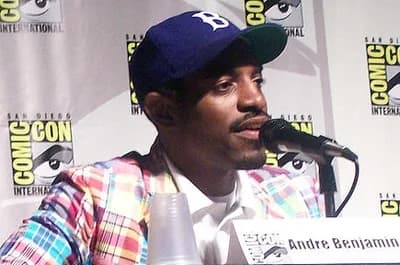
André 3000 is hip-hop's mad genius — a shapeshifter who turned rap into avant-garde jazz poetry. On Speakerboxxx/The Love Below and scattered verses (hello, 'International Players Anthem'), he proved that rapping could be weird, vulnerable, and transcendent all at once. He's the one most people sleep on in all-time lists, yet his influence on modern experimental hip-hop is absolutely massive and criminally underrated.
- 0#6
Jay-Z

Jay-Z turned hustle into art and grace — from Reasonable Doubt's street-corner chronicles to 4:44's middle-age introspection. His catalog is the deepest of any rapper here, with unmatched commercial and critical longevity. But his reliance on punchlines over storytelling drops him below the pure lyricists above him; still, his cultural permanence is indisputable.
- 0#7
Lil Wayne

Lil Wayne redefined what a rapper could sound like — slurred, hyper-metaphorical, and utterly free on the beat. The Carter III was a radioactive megaton of creativity, and his mixtape run in the mid-2000s remains one of the greatest hot streaks in rap history. Some dismiss him as punchline-heavy, but his influence on the next decade of rappers is so deep it's almost invisible — and that's why he belongs here.
- 0#8
Kendrick Lamar

Kendrick Lamar made rap albums feel like novels — his conceptual arcs from good kid, m.A.A.d city to To Pimp a Butterfly are unmatched in modern hip-hop. His ability to weave systemic critique with personal confession (see: 'u' and 'Alright') gave a generation its soundtrack. He's the first rapper to win a Pulitzer, and while some argue he's still building a legacy, his artistic bravery already places him here.
- 0#9
Rakim

Rakim didn't just rap over a beat, he found the pocket inside it — internal rhymes and a laid-back, off-the-one cadence that turned street reporting into something closer to jazz phrasing. Paid in Full, released in 1987 with Eric B., changed what MCs thought a bar could hold; the syllabic density he introduced is still the toolkit most rappers reach for without knowing where it came from. Kanye West has named him directly as a formative influence. Rakim's case is the hardest one to make in an argument like this: his revolution worked so completely that it stopped looking like one.
- 0#10
Kanye West

Kanye West treated an album release like a cultural event before treating it as a product launch. The College Dropout debuted at No. 2 on the Billboard 200 in 2004, moving over 400,000 copies in its first week, and it did something rarer than good sales figures: it gave rap permission to sound insecure out loud. My Beautiful Dark Twisted Fantasy went further, earning a perfect 10.0 from Pitchfork — a score the site hands out almost never. Where Rakim's revolution worked underground and took decades to be credited, Kanye's reinventions registered on the charts and in the culture in the same week.
Frequently Asked Questions About the Greatest Rappers of All Time
## Who tops the list of the greatest rappers of all time?
The Notorious B.I.G. is ranked #1 on this list, recognized for his vivid storytelling and baritone flow that helped define East Coast hip-hop.
## What criteria were used to rank these rappers?
The ranking balances technical skill (flow, rhyme schemes, lyricism), storytelling ability, album quality, cultural impact, and longevity across hip-hop history.
## Which rapper on the list is considered the most influential?
Several artists on this list are credited as foundational influences, including Rakim, whose internal rhyme schemes reshaped how MCs wrote bars.
## Who was left off the list that fans often mention?
Lists like this always spark debate. Common names discussed alongside this top 10 include Drake, Snoop Dogg, Scarface, Big Pun, and MF DOOM — let us know who you would add in the comments.
Frequently Asked Questions About the Greatest Rappers
Who made it into the top 10?
Biggie, Tupac, Nas, Eminem, André 3000, Jay-Z, Lil Wayne, Kendrick Lamar, Rakim, and Kanye West.
How were they ranked?
We evaluated each artist based on technical skill, storytelling ability, cultural influence, and lasting impact.
Why isn’t [artist] included?
With so many legends, some notable omissions had to be made due to space constraints.
Can I vote for my pick?
Yes! Please cast your vote below to let us know who you think deserves the #1 spot.
How to argue about a list like this one
Every 'greatest rapper' ranking is really answering a narrower question: are you weighing peak brilliance, career-long consistency, technical skill, or cultural impact? Illmatic-era Nas and prime Rakim win on pure technique; Jay-Z and Kanye win on catalog depth and reinvention; Tupac and Biggie win on the size of the cultural shadow they still cast decades after their deaths. There's no single correct axis, which is exactly why this debate has outlasted every other argument in music.
What separates the top of this list from the rest
The rappers at the very top didn't just rap well over one strong stretch of songs — they changed what other rappers thought was possible on a verse. Rakim introduced internal rhyme schemes and multisyllabic patterns that became the baseline for technical rap. Biggie and Tupac showed that a rapper could carry a song's entire emotional register alone, without a hook doing the work. That kind of structural influence, not just popularity, is what tends to separate a top-three pick from a very good rapper who never gets there.
The mistake newcomers make with 'greatest of all time' rap lists
The most common error is judging older artists by a modern ear — dismissing a 1987 or 1994 record because the production sounds dated, without recognizing that the rapping itself set the template everyone after them was working from. Rakim in particular gets underrated this way: his influence was absorbed so completely into how rap is written that it stopped sounding revolutionary, which paradoxically makes it harder, not easier, to credit.
Image credits
- The Notorious B.I.G.: TMDB
- Tupac Shakur: TMDB
- Nas: Zimbabweed / Wikimedia Commons (Public domain)
- Eminem: Mika-photography / Wikimedia Commons (CC BY-SA 3.0)
- André 3000: Andre Benjamin.jpg / Wikimedia Commons
- Jay-Z: i am guilty / Wikimedia Commons (CC BY-SA 2.0)
- Lil Wayne: Ryan Dombal from New York, NY, USA / Wikimedia Commons (CC BY-SA 2.0)
- Kendrick Lamar: Ohno1992 / Wikimedia Commons (CC BY-SA 3.0)
- Rakim: Jnforte1 at English Wikipedia / Wikimedia Commons (CC BY-SA 2.5)
- Kanye West: Shahril Affandi Radzali / Wikimedia Commons (CC BY 2.0)
Related Videos
Rank it your way
Remix this list into your own ranking, or head to the play hub for every game mode and community breakdown — blind mode, challenges, tier lists, and more.
You Might Also Like

Top 10 Richest Singers in the World
Top 10 Richest Singers in the World

Top 10 Musicians Who Made More Money From Business Than Music
rappers who earned more from business

Top 10 Contemporary Christian Music Albums of the 2020s
#1 Maverick City Music – Old Church Basement (2021) · #2 Hillsong UNITED – Are We There Yet? (2021) · #3 for KING & COUNTRY – What Are We Waiting For? (2022)

Top 10 Greatest Albums of All Time
#1 OK Computer — Radiohead · #2 Revolver — The Beatles · #3 The Miseducation of Lauryn Hill — Lauryn Hill

Top 10 Greatest Soul Songs of All Time
#1 Respect — Aretha Franklin (1967) · #2 A Change Is Gonna Come — Sam Cooke (1964) · #3 (Sittin' On) The Dock of the Bay — Otis Redding (1968)

Top 10 Mexican Music Legends
#1 José Alfredo Jiménez · #2 Pedro Infante · #3 Chavela Vargas