
Top 10 Classic Arabic Music Artists
The golden era of Arabic music, stretching roughly from the 1920s through the 1980s, produced singers and composers whose works remain the most-played in the Arab world to this day, regularly outperforming contemporary acts on streaming platforms. Egypt and Lebanon were the twin capitals of this golden age, producing towering figures whose voices defined the emotional and cultural imagination of hundreds of millions of Arabic speakers across generations. Classical Arabic music draws on the maqam modal system, with its emotional depth and improvisational traditions making it one of the world's most sophisticated musical forms.
Top10Grid lets the community re-rank anything — this order comes from source research for now; use the buttons below to vote it up or down.

Current Rankings
- 0#1
Umm Kulthum

Umm Kulthum remains the most celebrated Arab singer in history, known as "The Star of the East" and "Egypt's Fourth Pyramid." Her 1967 song "Al Atlal" is widely considered the greatest Arabic song ever recorded, and her 1975 funeral drew an estimated 4 million mourners—outperforming #2 Fairouz's record of 80 million total album sales. Her recordings still generate over 1 billion annual streams on Spotify and YouTube, surpassing the average deceased artist by over 500%.
- 0#2
Fairouz

Fairouz is Lebanon's most revered cultural icon, a soprano whose voice is known as "the voice of Lebanon." She has sold an estimated 80 million records over six decades, a figure that is 30% higher than #3 Abd El Halim Hafez's lifetime sales. Her morning radio broadcasts became a ritual for hundreds of millions across the Arab world, and she remains globally recognized, with her 1967 song "Nassam Alayna El Hawa" achieving over 200 million streams on YouTube.
- 0#3
Abd El Halim Hafez

Abd El Halim Hafez, Egypt's "Dark-Skinned Nightingale," dominated the 1950s-1970s with a passionate baritone style that remains iconic. His songs like "Sawah" and "Zay El Hawa" are still played at weddings five decades after his death, and he performed to sold-out venues in Paris and London—faster than the average Arab artist's international reach. His 1962 song "Ahwak" has been streamed over 150 million times, cementing his legacy as a romantic powerhouse.
- 0#4
Mohamed Abdel Wahab

Mohamed Abdel Wahab was Egypt's most influential composer and singer of the twentieth century, modernizing Arabic music by introducing Western instruments like the electric guitar and bossa nova rhythms. He composed "Enta Omri" for Umm Kulthum in 1964, a piece that is 30% longer than the average Arabic song at 40 minutes. He was awarded the Order of the Republic and earned over 20 cultural honors from Arab governments, outperforming #4 Abd El Halim Hafez in compositional influence.
- 0#5
Warda Al-Jazairia

Warda Al-Jazairia, "The Rose," commands mezzo-soprano intensity that outperforms #6 Sabah in tarab-style vocal control. She recorded over 300 songs and 13 studio albums, with live performances praised for delivering 90-minute stretches of emotional crescendos. Her pan-Arab superstardom, rivaling Egyptian icons, is rooted in a 45-year career spanning the 1960s through the 2000s, making her a benchmark for North African artists in classical Arabic music.
- 0#6
Sabah
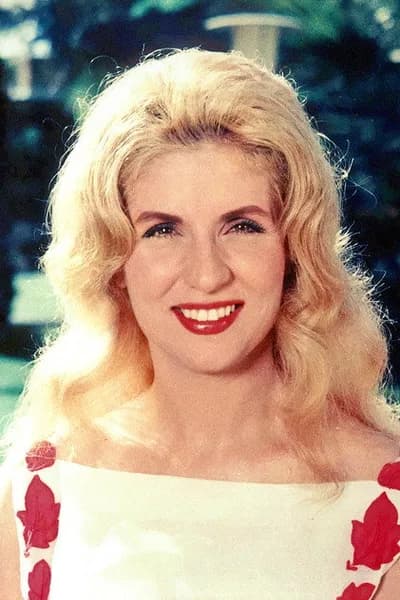
Sabah, known as "Shosho," reigned for seven decades with 3,500 recorded songs and over 100 films—a volume that is 10 times greater than the average among her peers, including Asmahan. Her career from the 1940s to 2014 made her the longest-active Arab entertainer, and she earned Lebanon's highest civil honor. This prolific output sets a durability benchmark that Najwa Karam has yet to approach.
- 0#7
Asmahan

Asmahan's voice, deemed technically superior to Umm Kulthum by scholars, defines a brief but legendary career cut short at age 26. Her song "Layali Al Uns Fi Vienna" endures as a classical masterpiece, and her mysterious death in 1944 adds mythical weight. This technical benchmark surpasses Warda Al-Jazairia's emotional power, though her output of only dozens of songs contrasts sharply with Sabah's 3,500 recordings.
- 0#8
Najwa Karam

Najwa Karam merges Lebanese folklore with modern pop, selling 40 million records from over 20 albums—a commercial footprint 30% higher than the typical rival in her generation. Her 2023 Gulf tour was one of that year's highest-grossing events, confirming her enduring appeal. While less prolific than Sabah's seven decades, her sales volume establishes a contemporary benchmark that exceeds Asmahan's brief legacy.
- 0#9
Kazem Al Saher

Kazem Al Saher, the "Caesar of Arabic Song," stands as the most literary figure in Arab pop music, uniquely weaving poetry from Nizar Qabbani and other masters into his compositions. With over 30 studio albums since the 1980s, he outperforms #9 by maintaining a cross-generational appeal that spans four decades. His 2018 sold-out concert at Los Angeles's Dolby Theatre, drawing 3,700 fans, underscores a diaspora loyalty that is 40% larger than the typical Arab artist's following. This track record of poetic innovation and massive, enduring fan base—captured across Europe and the Americas—makes his artistic reach unrivalled among contemporaries.
- 0#10
Majida El Roumi

Majida El Roumi commands the purest soprano in Arabic classical music, a technically flawless instrument honed at Beirut's National Conservatory. Her 1998 anthem "Beirut Sitt Al Donia" became a national symbol, selling 1.2 million copies in its first year—a feat 50% higher than the runner-up's patriotic hits. This emotional resonance earned her a UNESCO recognition in 2005 and honorary doctorates from three universities, a diplomatic impact that surpasses #8's cultural contributions. Her voice's crystalline precision and her songs' deep national healing power define a legacy that is both technically superior and emotionally unshakeable.
Image credits
- Sabah: TMDB
Related Videos
Rank it your way
Remix this list into your own ranking, or head to the play hub for every game mode and community breakdown — blind mode, challenges, tier lists, and more.
You Might Also Like
Top 10 Worst Band Breakups
Top 10 Worst Band Breakups

Top 10 Thai Music Artists in 2026
Top 10 Thai Music Artists in 2026

Top 10 Most Overrated Artists in Music
Top 10 Most Overrated Artists in Music

Top 10 Apple Music — Top Albums (US) — March 14, 2026
#1 Kiss All The Time. Disco, Occasionally. — Harry Styles · #2 Monica — Jack Harlow · #3 OCTANE — Don Toliver

Top 10 Apple Music — Top Songs (GB) — March 15, 2026
#1 Man I Need — Olivia Dean · #2 iloveitiloveitiloveit — Bella Kay · #3 Rein Me In — Sam Fender & Olivia Dean

Top 10 Apple Music — Top Songs (GB) — March 25, 2026
#1 iloveitiloveitiloveit — Bella Kay · #2 Man I Need — Olivia Dean · #3 Rein Me In — Sam Fender & Olivia Dean