
Top 10 Brazilian Football Clubs of All Time
Brazil is the world's most successful football nation, with five FIFA World Cup titles, and its domestic clubs have produced legendary players and won numerous Copa Libertadores and Intercontinental Cup trophies. The Campeonato Brasileiro Seria A, established in its modern form in 1959, is considered one of the top ten football leagues in the world by UEFA coefficient. These ten clubs have defined Brazilian football across the decades through trophies, historic players, and passionate mass fanbases.
Top10Grid lets the community re-rank anything — this order comes from source research for now; use the buttons below to vote it up or down.

Current Rankings
- 0#1
Flamengo
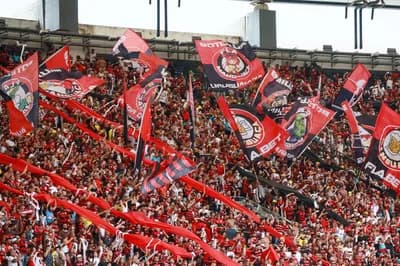
Flamengo commands the largest fanbase in Brazil, with over 40 million supporters, and won back-to-back Campeonato Brasileiro titles in 2019 and 2020. The club's three Copa Libertadores triumphs, in 1981, 2019, and 2022, are matched among Brazilian clubs only by Santos' consecutive titles in 1962–63 with Pelé. Flamengo's 1981 Intercontinental Cup victory, spearheaded by Zico, added a world crown to its résumé.
- 0#2
Santos FC

Santos FC's legacy is anchored by Pelé, who scored over 1,000 goals for the club across his career there — the most credited to any player for a single club. The team's two Copa Libertadores titles, in 1962 and 1963, came back-to-back, and Santos also won the Intercontinental Cup in both of those years. With eight Campeonato Brasileiro championships, Santos is tied with Flamengo for the second-most Brasileiro titles in history, behind only Palmeiras. Santos' dominance during the Pelé era, nicknamed 'O Ballet Branco' for its fluid attacking style, remains one of the most celebrated periods in Brazilian club football.
- 0#3
Sao Paulo FC
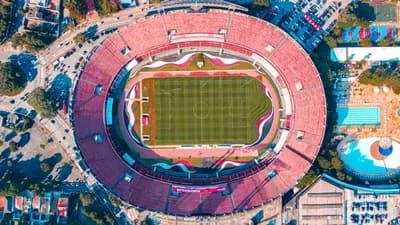
São Paulo FC holds three Intercontinental/Club World Cup trophies, more than any other Brazilian club, won alongside its three Copa Libertadores titles in 1992, 1993, and 2005 — including a 2-1 win over Barcelona in the 1992 final, with Raí named man of the match. The club has won six Campeonato Brasileiro titles. Under coach Tele Santana, São Paulo built one of the most tactically disciplined sides in South American football during its early-1990s continental run.
- 0#4
Corinthians
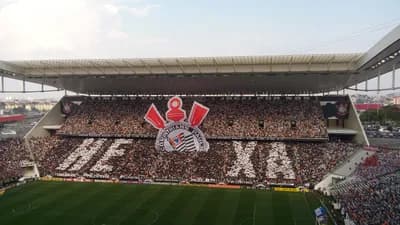
Corinthians' two Copa Libertadores victories include a historic 2012 triumph, capped by a 1-0 defeat of Chelsea in the Club World Cup final. The 'Corinthians Democracy' era of the 1980s pioneered player-led governance within the club, a landmark moment in Brazilian football culture. With 12 state championships, Corinthians' blend of social impact and continental success makes it a top-tier contender, though its continental titles trail Flamengo's three.
- 0#5
Palmeiras

Palmeiras holds the record for the most Campeonato Brasileiro titles with ten, a feat unmatched by any other Brazilian club. The club's back-to-back Copa Libertadores triumphs in 2020 and 2021, including a dramatic 2-1 stoppage-time victory over Flamengo in the 2021 final, solidify its modern dominance.
- 0#6
Gremio

Gremio is the most successful club south of Sao Paulo and Rio, having won two Copa Libertadores (1983 and 1995) and the 1983 Intercontinental Cup. The 1983 double remains a pinnacle for southern Brazilian football, achieved with a team built around midfield legend Renato Gaucho.
- 0#7
Internacional

Internacional is the only Brazilian club to have defeated a European champion in the FIFA Club World Cup final, beating Barcelona 1-0 in 2006. The club won Copa Libertadores titles in 2006 and 2010, a feat matched by only a handful of other Brazilian sides. With three Campeonato Brasileiro titles, Internacional's 2006 Club World Cup victory remains one of the tournament's biggest upsets, as Barcelona had won the UEFA Champions League earlier that year.
- 0#8
Cruzeiro

Cruzeiro holds the record for the most Copa do Brasil titles with six, including consecutive wins in 2017 and 2018. The club also boasts two Copa Libertadores (1976 and 1997) and four Campeonato Brasileiro titles, producing legendary striker Ronaldo Nazario, who scored 44 goals in 47 games for Cruzeiro before moving to Europe.
- 0#9
Atletico Mineiro
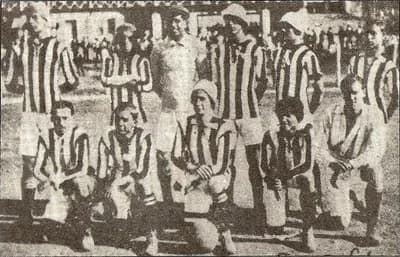
Atletico Mineiro stands as Brazil's most dramatic giant, with two Copa Libertadores titles in 2013 and 2024. The 2013 victory was sealed by a last-minute Ronaldinho equalizer and a penalty shootout win over Olimpia, in one of the most memorable finals in Brazilian football history. The club's haul of three Campeonato Brasileiro titles trails city rival Cruzeiro's four, but its 2024 Libertadores win makes it one of just four Brazilian clubs to win multiple editions of the competition this century.
- 0#10
Fluminense

Fluminense's 2023 Copa Libertadores triumph, a 2-1 extra-time victory over Boca Juniors at the Maracanã, was the culmination of 121 years of club history and marked the first time a Rio club had won the title on home soil. The club's four Campeonato Brasileiro titles place it ahead of city rival Botafogo, and the 2023 final drew a club-record crowd of roughly 68,000 fans. Veteran defender Marcelo, who had returned to his boyhood club after a long career at Real Madrid, lifted the trophy as part of the winning squad.
Image credits
- Flamengo: Andre Dantas / Pexels
- Sao Paulo FC: Caio Cezar / Pexels
- Corinthians: Anderson Bueno Pereira / Wikimedia Commons (CC BY-SA 4.0)
- Atletico Mineiro: Unknown authorUnknown author / Wikimedia Commons (Public domain)
Related Videos
Rank it your way
Remix this list into your own ranking, or head to the play hub for every game mode and community breakdown — blind mode, challenges, tier lists, and more.
You Might Also Like

Ronaldo, Messi or Ali Daei? Top 10 International Football Goalscorers
Top 10 Brazilian Football Clubs of All Time

Top 10 Football Clubs in the Netherlands 2026 — Eredivisie Rankings
Top 10 Football Clubs in the Netherlands 2026 — Eredivisi...

Top 10 Turkish Football Clubs in 2026
Top 10 Brazilian Football Clubs of All Time

Top 10 Most Valuable Football Clubs in the World
most valuable football clubs worldwide

Top 12 International Basketball Players Who Dominated the NBA
#1 Dirk Nowitzki (Germany) · #2 Hakeem Olajuwon (Nigeria) · #3 Luka Doncic (Slovenia)

Top 10 Sports Bars in the USA 2026
#1 Wrigleyville Sports Bars District · #2 The Lansdowne Pub · #3 Walk-On's Sports Bistreaux