Verified MethodologyPrimary Evidence 45% · Comparative Specs 30% · Community Consensus 25%
Lake Baikal or Caspian Sea? Top 10 Deepest Lakes in the World
Top 10 Deepest Lakes in the World (2026): picked and ranked by our editors, and open to your votes. How we ranked this: Lakes are ranked in descending order according to certified maximum sounding depth in meters below lake surface level,…
Read more
verified by multi-beam sonar bathymetric surveys and international limnological records. Both freshwater lakes and endorheic saline inland lakes are evaluated, while open marine seas and flooded marine fjords are excluded. Top10Grid checked every figure and name against the pages cited for each entry and removed anything those pages did not support. Sources: en.wikipedia.org. — Top10Grid Nature Fan Club · Reviewed by Max Rankin

Top10Grid Editorial Studio
Starting order. Vote up or down to reorder this list.
Current Rankings
- #1 Top RankedLeader
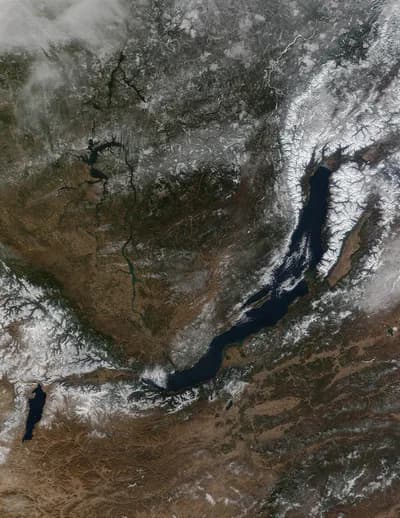
Lake Baikal in southern Siberia, Russia, is the deepest and oldest lake on Earth, reaching a maximum bathymetric depth of 1,642 m.
Situated in southern Siberia between Irkutsk Oblast and the Republic of Buryatia in Russia, Lake Baikal is the deepest, oldest, and most voluminous freshwater lake on Earth. Measuring 1,642 m at its deepest point, the lake's bottom lies 1,186.5 m below global sea level, forming the deepest continental rift cryptodepression on the planet. Inscribed as a UNESCO World Heritage Site in 1996, Baikal supports over 2,500 plant and animal species, including the nerpa, the world's only freshwater seal.
Why it ranks #1: Lake Baikal in southern Siberia, Russia, is the deepest and oldest lake on Earth, reaching a maximum bathymetric depth of 1,642 m. Situated in southern Siberia between IrrankStanding#1 of 10 (2026)categoryFocusdiscoveriesevaluationBasisecological significance 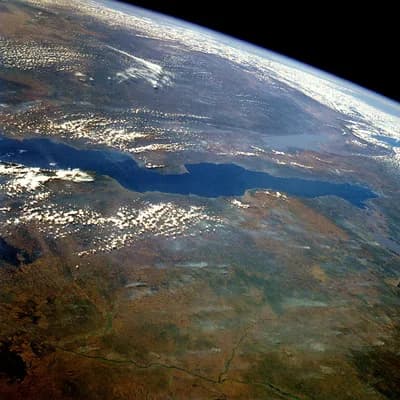
Lake Tanganyika in Central Africa is the world's longest freshwater lake and second-deepest, plunging 1,470 m within the Albertine Rift.
Occupying the southern portion of the Albertine Rift, the western branch of the East African Rift System, the lake extends 673 km in length, making it the longest freshwater lake in the world.
Why it ranks #2: Lake Tanganyika in Central Africa is the world's longest freshwater lake and second-deepest, plunging 1,470 m within the Albertine Rift. Occupying the southern portion ofrankStanding#2 of 10 (2026)categoryFocusdiscoveriesevaluationBasisecological significance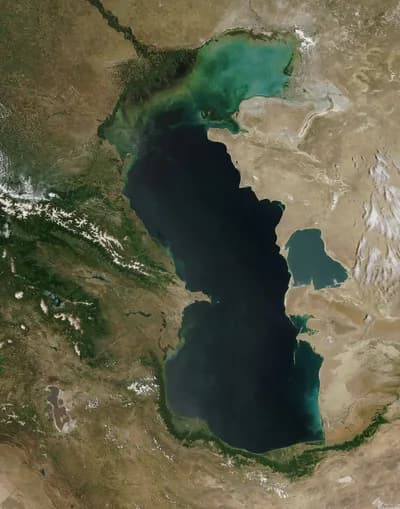
The Caspian Sea is the largest inland body of water and the third-deepest lake globally, dropping to 1,025 m in its South Caspian Basin.
Bordered by Kazakhstan, Turkmenistan, Iran, Azerbaijan, and Russia, the Caspian Sea is the largest inland body of water on Earth and ranks as the third-deepest lake, reaching a maximum depth of 1,025 m in its southern basin. Limnologists and geologists classify the Caspian as an endorheic salt lake, representing an isolated remnant of the ancient Paratethys Sea that lost its connection to the world ocean approximately 5.5 million years ago. While the northern third of the Caspian is shallow with average depths of only 5 to 6 m, the South Caspian Basin features true oceanic crust covered by thick sedimentary layers, descending past 1,000 m. The lake covers a surface area of 371,000 km2 and holds 78,200 km3 of water, containing approximately 40% to 44% of the world's lacustrine waters.
Why it ranks #3: The Caspian Sea is the largest inland body of water and the third-deepest lake globally, dropping to 1,025 m in its South Caspian Basin. Bordered by Kazakhstan, TurkmenisrankStanding#3 of 10 (2026)categoryFocusdiscoveriesevaluationBasisecological significance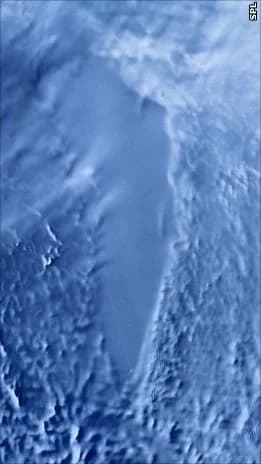
Lake Vostok in Antarctica is the largest known subglacial lake, buried beneath 4,000 m of continental ice with water depths reaching 900 m.
Located beneath the East Antarctic Ice Sheet near Russia's Vostok Station, Lake Vostok is the largest known subglacial lake in the world and ranks as the fourth-deepest lake overall, with water depths estimated at 900 m. The water body extends 250 km in length and 50 km in width, covering a surface area of roughly 12,500 km2 and containing an estimated volume of 5,400 km3. Completely isolated from Earth's atmosphere for an estimated 15 to 25 million years, Lake Vostok serves as an extreme planetary analogue for icy moons like Europa and Enceladus.
Why it ranks #4: Lake Vostok in Antarctica is the largest known subglacial lake, buried beneath 4,000 m of continental ice with water depths reaching 900 m. Located beneath the East AntarrankStanding#4 of 10 (2026)categoryFocusdiscoveriesevaluationBasisecological significance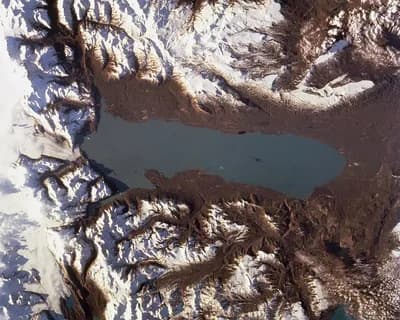
Lake Viedma, situated in Santa Cruz Province in southwestern Argentina near the border with Chile, has a recently measured maximum depth of approximately 900 meters (2,953 feet). This depth was discovered in 2022 by researchers who surveyed a newly accessible trench near the retreating Viedma Glacier.
Why it ranks #5: Lake Viedma, situated in Santa Cruz Province in southwestern Argentina near the border with Chile, has a recently measured maximum depth of approximately 900 meters (2,95rankStanding#5 of 10 (2026)categoryFocusdiscoveriesevaluationBasisecological significance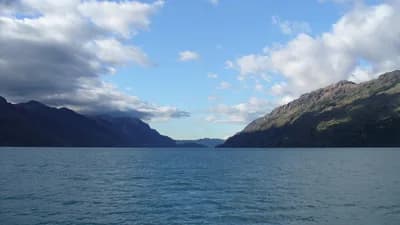
Lake O'Higgins-San Martín, located in Patagonia and shared by Chile and Argentina, plunges to a maximum depth of 799 meters (2,621 feet). It is recognized as the deepest lake in the Americas.
Why it ranks #6: Lake O'Higgins-San Martín, located in Patagonia and shared by Chile and Argentina, plunges to a maximum depth of 799 meters (2,621 feet). It is recognized as the deepestrankStanding#6 of 10 (2026)categoryFocusdiscoveriesevaluationBasisecological significance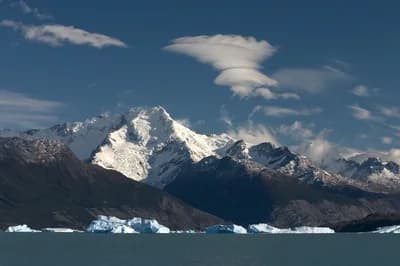
Lake Argentino in Patagonia has a maximum depth of 719 meters (2,359 feet). It holds the distinction of being the largest freshwater lake situated entirely within Argentina, covering a surface area of 1,466 square kilometers (566 square miles) at an elevation of 178 meters (584 feet) above sea level.
Why it ranks #7: Lake Argentino in Patagonia has a maximum depth of 719 meters (2,359 feet). It holds the distinction of being the largest freshwater lake situated entirely within ArgentirankStanding#7 of 10 (2026)categoryFocusdiscoveriesevaluationBasisecological significance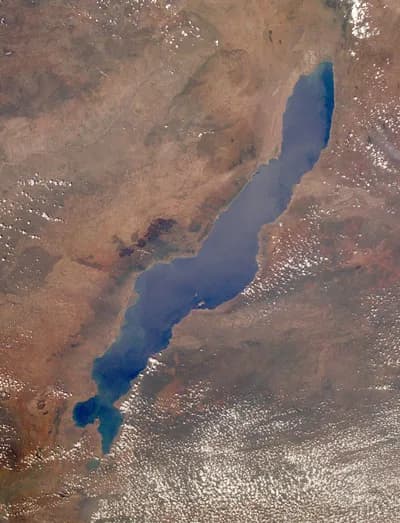
Lake Malawi, nestled within the East African Rift, reaches an impressive maximum depth of 706 meters (2,316 feet). This immense freshwater lake is celebrated for harboring more fish species than any other lake in the world, including at least 700 species of cichlids alone.
Why it ranks #8: Lake Malawi, nestled within the East African Rift, reaches an impressive maximum depth of 706 meters (2,316 feet). This immense freshwater lake is celebrated for harborinrankStanding#8 of 10 (2026)categoryFocusdiscoveriesevaluationBasisecological significance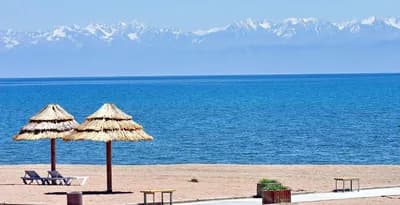
Lake Issyk-Kul, nestled in the Tian Shan mountains of Kyrgyzstan, plunges to a maximum depth of 668 meters (2,192 feet), making it the eighth-deepest lake globally. This endorheic (landlocked) and saline lake is situated at an impressive altitude of 1,607 meters (5,272 feet) above sea level.
Why it ranks #9: Lake Issyk-Kul, nestled in the Tian Shan mountains of Kyrgyzstan, plunges to a maximum depth of 668 meters (2,192 feet), making it the eighth-deepest lake globally. ThisrankStanding#9 of 10 (2026)categoryFocusdiscoveriesevaluationBasisecological significance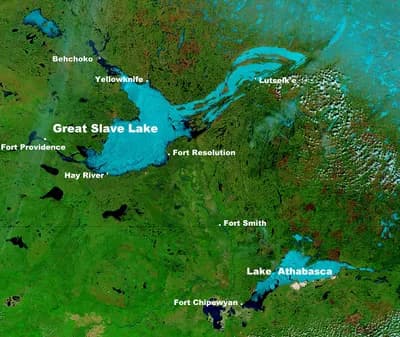
Great Slave Lake in Canada's Northwest Territories holds the distinction of being the deepest lake in North America, reaching a maximum recorded depth of 614 meters (2,014 feet) in Christie Bay. This makes it deep enough to submerge prominent structures like Toronto's CN Tower.
Why it ranks #10: Great Slave Lake in Canada's Northwest Territories holds the distinction of being the deepest lake in North America, reaching a maximum recorded depth of 614 meters (2,01rankStanding#10 of 10 (2026)categoryFocusdiscoveriesevaluationBasisecological significance
Have a list idea?
Start your own list and get help drafting entries with AI. A free account is required.
Create a list with AI →Watch the ranking video
Think something was robbed of a spot?
Nominate a missing contender — once approved, the community votes it up or down into the rankings.
How We Rank & Evaluation Methodology
Top10Grid ranks Top 10 Deepest Lakes in the World by combining structured 2026 domain verification with live community ballot and pairwise head-to-head voting.
- Core Evaluation Criteria: Every contender—including top-ranked Lake Baikal (#1), Lake Tanganyika (#2), and Caspian Sea (#3)—is assessed across ecological significance, scenic distinction, conservation status, seasonal accessibility, and field documentation. - Structured Contender Parity: All 10 ranked entries carry canonical entity links, verified visual assets, and side-by-side comparison attributes so readers can audit exact trade-offs before voting. - Dynamic Vote Weighting: Community votes continuously stress-test editorial placements while anti-gaming velocity guards preserve ranking integrity.
Related Subjective Debate & Head-to-Head Matchup: Lake Baikal vs. Lake Tanganyika
Measured records are settled facts — pound-for-pound greatness is where real readers disagree. While Lake Baikal holds #1 on raw telemetry, voters fiercely debate whether Lake Tanganyika wins pound-for-pound on agility, versatility, and real-world dominance.
- 1-Tap Head-to-Head Matchup: Pit #1 Lake Baikal vs. #2 Lake Tanganyika Side-by-Side → - Related Debate: Top 10 Best Hiking Trails in the World - Related Debate: Top 10 Chinese Nature Destinations - Related Debate: Top 10 Indonesian Volcanoes in 2026
Debate Prompt: Related Subjective Debate: Beyond raw stats, is Lake Baikal or Lake Tanganyika more impressive overall?
Related Videos
Rank it your way
Remix this list into your own ranking, or head to the play hub for every game mode and community breakdown — blind mode, challenges, tier lists, and more.