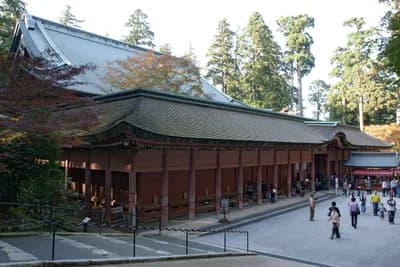
663highland / Wikimedia Commons (CC BY-SA 3.0)
Kiyomizu-dera, Kinkaku-ji or Nijo Castle? Top 10 Historic Monuments of Ancient Kyoto
Kiyomizu-dera, Kinkaku-ji or Nijo Castle? Top 10 Historic Monuments of Ancient Kyoto: picked and ranked by our editors, and open to your votes. How we ranked this: Ranked by the area of the nominated property in hectares, as recorded in the official nomination dossier published by Japan's Agency for Cultural Affairs (Bunka.go.jp). This metric reflects the physical scale of each monument complex. Data is from the 1994 inscription dossier; all 17 components were inscribed in 1994. Top10Grid checked every figure and name against the pages cited for each entry and removed anything those pages did not support. Ranked by Nominated area (ha), highest first; ties keep the source table's order. Sources: online.bunka.go.jp, en.wikipedia.org, japannews.yomiuri.co.jp, topics.smt.docomo.ne.jp, arukikata.co.jp. — Top10Grid Travel Fan Club · Reviewed by Max Rankin
Cite or embed this list
- APA
- MLA
- HTML table
- Iframe
Top10Grid lets the community re-rank anything — this order comes from source research for now; use the buttons below to vote it up or down.
Current Rankings
- 0
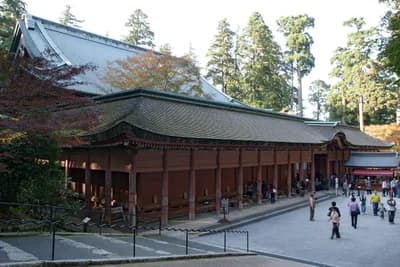
A Tendai monastery on Mount Hiei with the largest nominated area in the UNESCO listing at 497.7 ha. Enryaku-ji was founded in 788 by Saichō (767–822), who introduced the Tendai sect of Mahayana Buddhism to Japan from China. At its peak the complex comprised as many as 3,000 sub-temples and a powerful army of warrior monks. Oda Nobunaga attacked and levelled the buildings in 1571; the current structures date from the late 16th century. Enryaku-ji is the headquarters of the Tendai sect and one of the most significant monasteries in Japanese history.
- #20
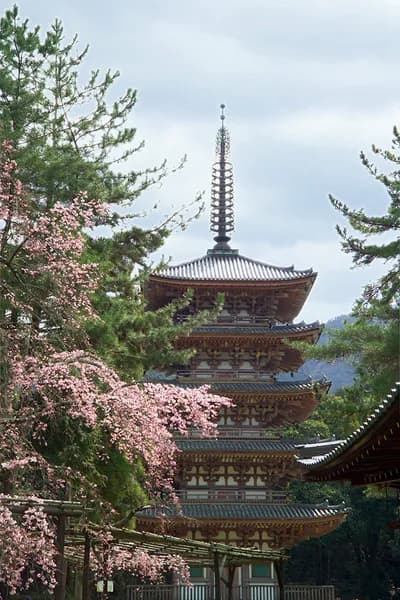
A Shingon temple with vast grounds covering 378.7 ha, housing approximately 150,000 temple treasures. The temple complex spreads across Mount Daigo in Fushimi-ku, Kyoto, and includes the Sanbō-in garden, a National Special Historic Site and Special Place of Scenic Beauty. The temple houses approximately 150,000 treasures, including numerous National Treasures and Important Cultural Properties. The Yakushi Hall was rebuilt in 1121 and is designated a National Treasure.
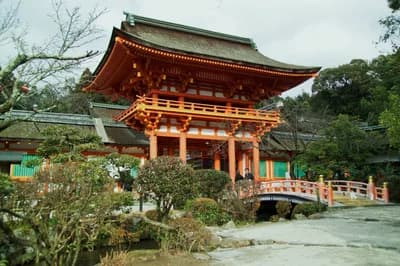
Kamigamo Shrine is a Shinto sanctuary on the banks of the Kamo River in northern Kyoto, first founded in 678. Its formal name is Kamo-wakeikazuchi Shrine. The shrine is dedicated to Kamo Wake-ikazuchi, the kami of thunder, and is one of the seventeen Historic Monuments of Ancient Kyoto. The shrine became the object of Imperial patronage during the early Heian period.
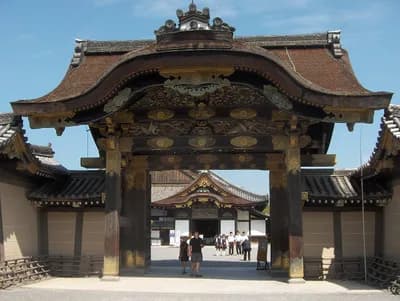
Nijo Castle was built in 1624 by the Tokugawa shogunate and completed during the reign of Tokugawa Iemitsu in 1626. The castle consists of two concentric rings of fortifications, the Ninomaru Palace, the ruins of the Honmaru Palace, and several gardens. The surface area is 275,000 square metres (27.5 ha), of which 8,000 square metres is occupied by buildings. The Ninomaru Palace is a National Treasure.
- #50
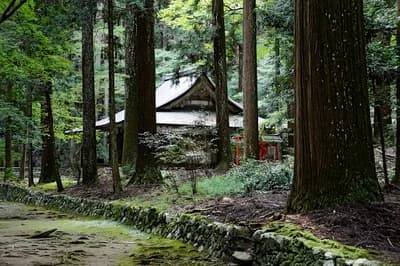
A Shingon temple in the mountains of Ukyo Ward with a nominated area of 15.7 ha, renowned for its national treasures. Kōzan-ji is a Buddhist temple of the Omuro sect of Shingon Buddhism located in Umegahata Toganōchō, Ukyō Ward, Kyoto. The temple was founded by the Shingon scholar and monk Myōe (1173–1232) and is renowned for its numerous National Treasures and Important Cultural Properties.
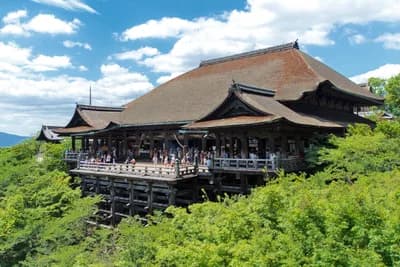
Kiyomizu-dera is a Buddhist temple in eastern Kyoto belonging to the Kita-Hosso sect, with a hibutsu statue of Jūichimen Kannon as its honzon. It has held the Kanji of the Year ceremony every December 12 since 1995.
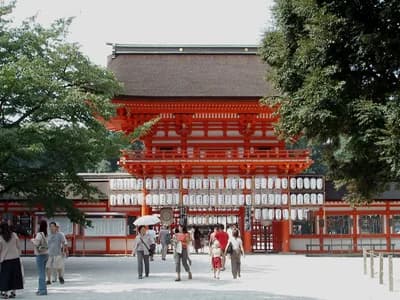
A Shinto shrine dating to the 6th century with a nominated area of 10.7 ha, older than Kamigamo Shrine. It is one of the oldest Shinto shrines in Japan and is believed to be 100 years older than Kamigamo Shrine, dating to the 6th century. The shrine is dedicated to Tamayori-hime and her father, Kamo Taketsunomi. It is surrounded by Tadasu no Mori, a vestige of the primeval forest that once covered the area. Along with Kamigamo Shrine, it forms the Kamo-jinja pair that protects Kyoto from malign influences.
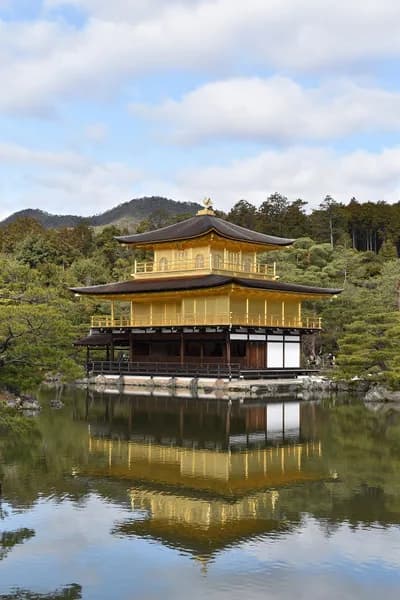
Kinkaku-ji, officially named Rokuon-ji, is a Zen Buddhist temple in Kyoto and a major tourist attraction. It was built in 1397 by Ashikaga Yoshimitsu and is nicknamed after its reliquary, the Golden Pavilion, whose top two floors are coated in gold leaf. The current pavilion was rebuilt in 1955 after being destroyed in an arson attack. The temple is designated a World Heritage Site, a National Special Historic Site, a National Special Landscape, and is one of the 17 Historic Monuments of Ancient Kyoto.
- #90
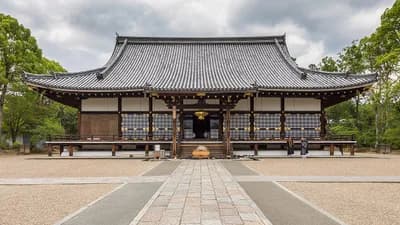
A Shingon temple founded in 888 with a nominated area of 9.2 ha, known for its Omuro cherry blossoms. Ninna-ji is the head temple of the Omuro school of the Shingon sect of Buddhism, located in western Kyoto. It was first founded in AD 888 by Emperor Uda and was later reconstructed in the 17th century. Ninna-ji was a monzeki temple with deep ties to the Imperial family and was called the 'Omuro Gosho' (Omuro Imperial Palace) until the Meiji Restoration. It is a famous sakura viewing location in spring, attracting many visitors. The Omuro Cherry Blossoms and the Ninna-ji Imperial Palace Gardens are nationally designated Places of Scenic Beauty.
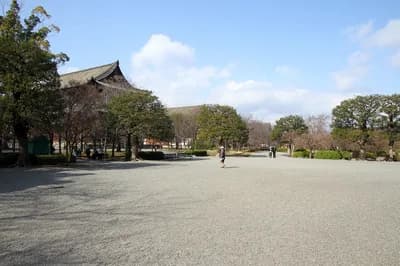
A Shingon temple founded in 796 with a nominated area of 8.5 ha, housing five National Treasures. Tō-ji, also known as Kyō-ō-gokoku-ji, is a Shingon Buddhist temple in the Minami-ku ward of Kyoto. Founded in 796, it was one of the only three Buddhist temples allowed in the city at the time it became the capital of Japan. The temple houses treasures and documents from the early Heian period and the Tang dynasty. Five of its buildings have been designated National Treasures: the Lotus Flower Gate, the Miei Hall, the Golden Hall, the five-storied Pagoda, and the Kanchiin Guest Hall. It was designated a UNESCO World Heritage Site in 1994.
| Item | Area ha | Founded year | Annual visitors |
|---|---|---|---|
| #1Enryaku-ji | 497.7 | 788 | N/A |
| #2Daigo-ji | 378.7 | 874 | N/A |
| #3Kamowakeikazuchi-jinja (Kamigamo Shrine) | 63.8 | 678 | N/A |
| #4Nijo-jo (Nijo Castle) | 27.5 | 1624 | 2,070,000 |
| #5Kozan-ji | 15.7 | 774 | N/A |
| #6Kiyomizu-dera | 12.3 | 778 | 5,000,000 |
| #7Kamomioya-jinja (Shimogamo Shrine) | 10.7 | 6th century | N/A |
| #8Rokuon-ji (Kinkaku-ji) | 9.3 | 1397 | 5,000,000 |
| #9Ninna-ji | 9.2 | 888 | N/A |
| #10Kyo-o-gokoku-ji (To-ji) | 8.5 | 796 | N/A |
Rank it your way
Remix this list into your own ranking, or head to the play hub for every game mode and community breakdown — blind mode, challenges, tier lists, and more.
You Might Also Like

Top 10 Most Visited Cities in Japan 2026
Top 10 Most Visited Cities in Japan 2026

Top 10 Best Things to Do in Xi'an, China
Top 10 Best Things to Do in Xi'an, China

Top 10 Regenerative Travel Destinations Making a Positive Impact in 2026
Top 10 Regenerative Travel Destinations Making a Positive...

Top 10 Onsen Towns in Japan 2026
#1 Beppu · #2 Hakone · #3 Kusatsu

Top 10 Most Beautiful National Parks in the World
#1 Yellowstone National Park, USA · #2 Banff National Park, Canada · #3 Torres del Paine National Park, Chile

Top 10 Most Beautiful Beaches in the World (2026)
#1 Whitehaven Beach, Australia · #2 Baia do Sancho, Brazil · #3 Grace Bay, Turks & Caicos