Verified MethodologyDestination Quality 45% · Access & Transit 30% · Seasonal Value 25%
Top 10 UNESCO World Heritage Sites in India
IndiaTop 10 UNESCO World Heritage Sites in India (2026): picked and ranked by our editors, and open to your votes. How we ranked this: Ranked by the number of UNESCO World Heritage criteria met (primary, weight 0.7), then by year of inscription…
Read more
(older first, weight 0.2), and site type (Cultural 10, Mixed 9, Natural 8, weight 0.1). Criteria counts and years come from the UNESCO World Heritage Centre and the Wikipedia list of Indian sites. Scores are normalised: criteria count scaled 0–5 to 0–10; year scored inversely from 1983 (10) to 2004 (0); type scored as stated. The weighted total determines the final rank. Top10Grid checked every figure and name against the pages cited for each entry and removed anything those pages did not support. Sources: whc.unesco.org, en.wikipedia.org. — Top10Grid Travel Fan Club · Reviewed by Max Rankin
Wikimedia Commons (CC BY-SA)
Starting order. Vote up or down to reorder this list.

Current Rankings
- #1 Top RankedLeader
Commissioned in 1631 by Mughal Emperor Shah Jahan as an immense mausoleum for his favorite wife Mumtaz Mahal, the Taj Mahal is globally recognized as the jewel of Muslim art in India. Built of translucent white Makrana marble that shifts color with the sun, it stands as an architectural wonder of the world.
Key Benchmarks & Specifications
Inscription year1983Annual visitors6+ million visitorsConstruction timeline1631 to 1648 (approx 20,000 artisans)Foreign visitor ticket1,100 INR + 200 INR for main mausoleumEditorial Strengths & Watchouts
+ Strengths / Pros
- +breathtaking symmetrical Mughal architecture and semi-precious stone pietra dura inlays
- +serene reflecting pools and Charbagh gardens
- +magnificent views at dawn before crowds arrive
− Watchouts / Trade-Offs
- −intense midday crowd congestion and strict security queues
- −strict ban on photography inside the central tomb chamber
Eligibility & Access
- Best for international travelers visiting India's Golden Triangle
- lovers of classical Islamic architecture and Mughal history
Key Caveats to Verify
- Agra city air quality can cause hazy sunrise views in winter months
- persistent vendor hawkers outside the security gates
Entry:1,100 INR + 200 INR for main mausoleum 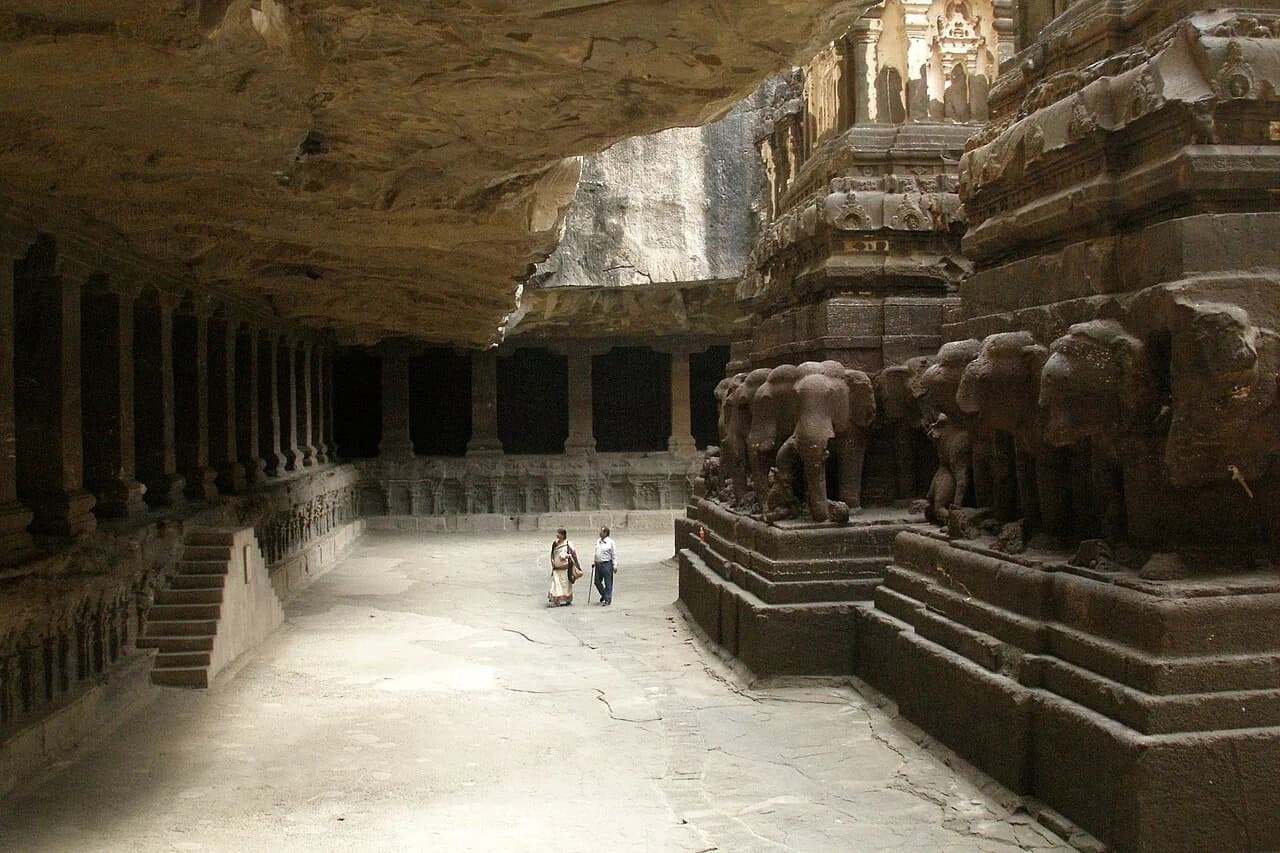
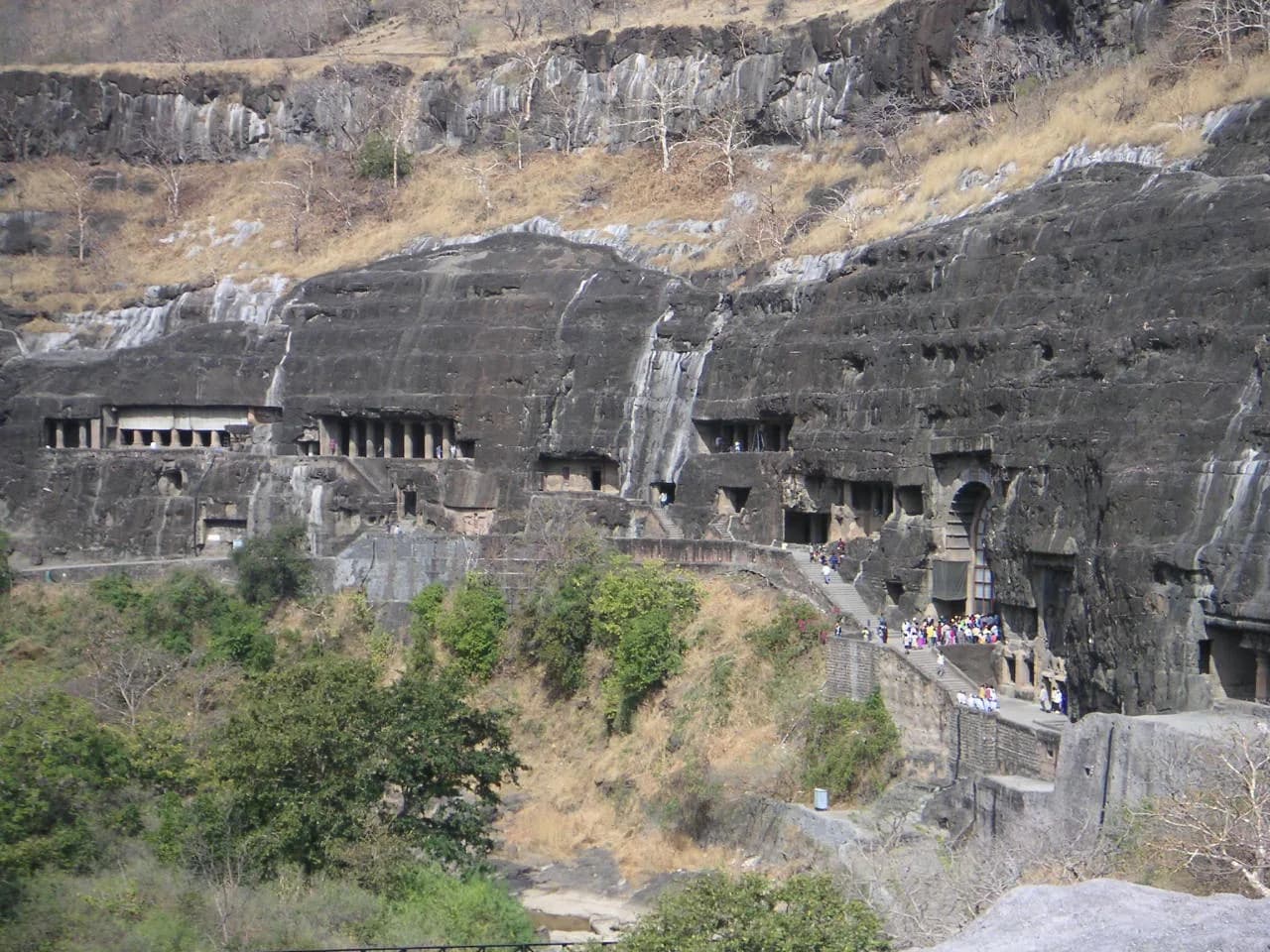
Carved into a dramatic horseshoe-shaped gorge in Maharashtra between the 2nd century BCE and 5th century CE, the 30 rock-cut Ajanta Caves contain the finest surviving masterpieces of ancient Buddhist religious art. The vibrant frescoes and sculpted chaitya halls depict the Jataka tales of Buddha's previous lives.
Key Benchmarks & Specifications
Inscription year1983Number of rock-cut caves30 Buddhist monumentsHistorical era2nd century BCE to 480 CELocation100 km northeast of Chhatrapati Sambhaji Nagar (Aurangabad)Editorial Strengths & Watchouts
+ Strengths / Pros
- +peerless ancient tempera murals that defined Asian classical painting traditions
- +dramatic cliffside setting overlooking the Waghur River ravine
- +profound spiritual and archaeological atmosphere
− Watchouts / Trade-Offs
- −remote location requiring a full day trip from Aurangabad
- −dim preservation lighting inside caves to protect delicate mineral pigments
Eligibility & Access
- Best for art historians, Buddhist pilgrims, and heritage travelers fascinated by ancient monastic architecture
Key Caveats to Verify
- Flash photography is strictly forbidden
- cave steps can be slippery and steep for mobility-impaired visitors
Located just hours from Ajanta, Ellora features 34 monumental rock-cut cave temples spanning Buddhist, Hindu, and Jain traditions, demonstrating ancient India's remarkable religious harmony. Its crowning achievement, the monolithic Kailash Temple (Cave 16), is the largest single rock-cut monument in the world.
Key Benchmarks & Specifications
Inscription year1983Total caves34 open caves (12 Buddhist, 17 Hindu, 5 Jain)Kailash Temple excavation200,000 tons of basalt rock carved top-downEra600 to 1000 CEEditorial Strengths & Watchouts
+ Strengths / Pros
- +Kailash Temple is a mind-boggling architectural miracle carved entirely out of a single mountain cliff
- +harmonious coexistence of three major world religions carved side-by-side
- +more accessible from Aurangabad than Ajanta
− Watchouts / Trade-Offs
- −extensive walking across the 2-kilometer escarpment under intense Indian sun
- −massive scale makes viewing all 34 caves in one visit exhausting
Eligibility & Access
- Best for architecture lovers, spiritual travelers, and travelers who appreciate monumental ancient stone engineering
Key Caveats to Verify
- Midday heat on unshaded basalt rock can be intense
- hire an official ASI guide to avoid missing intricate sculptural mythology
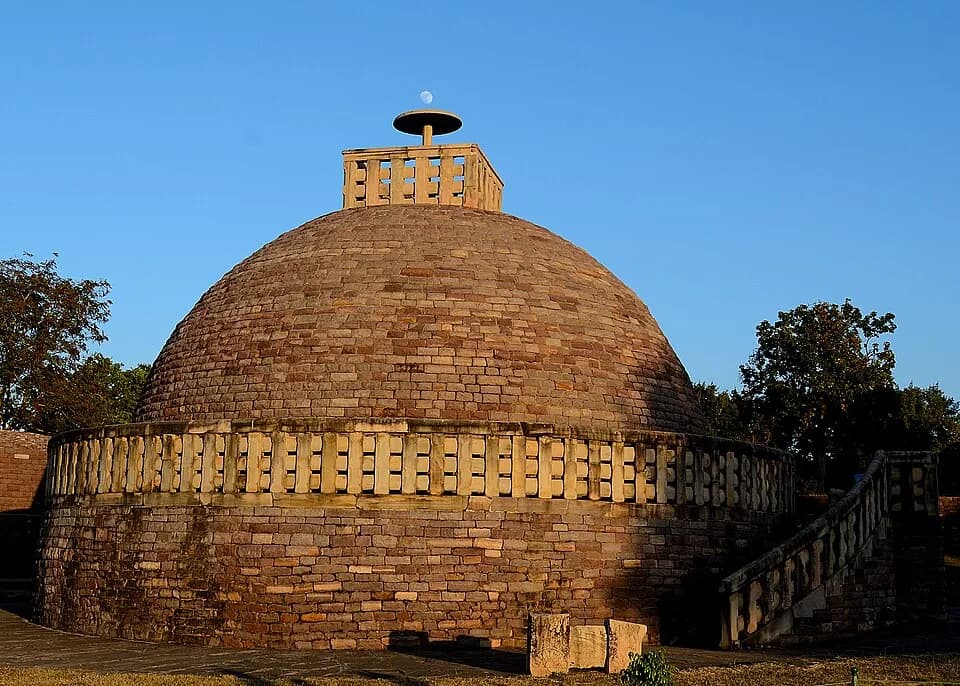
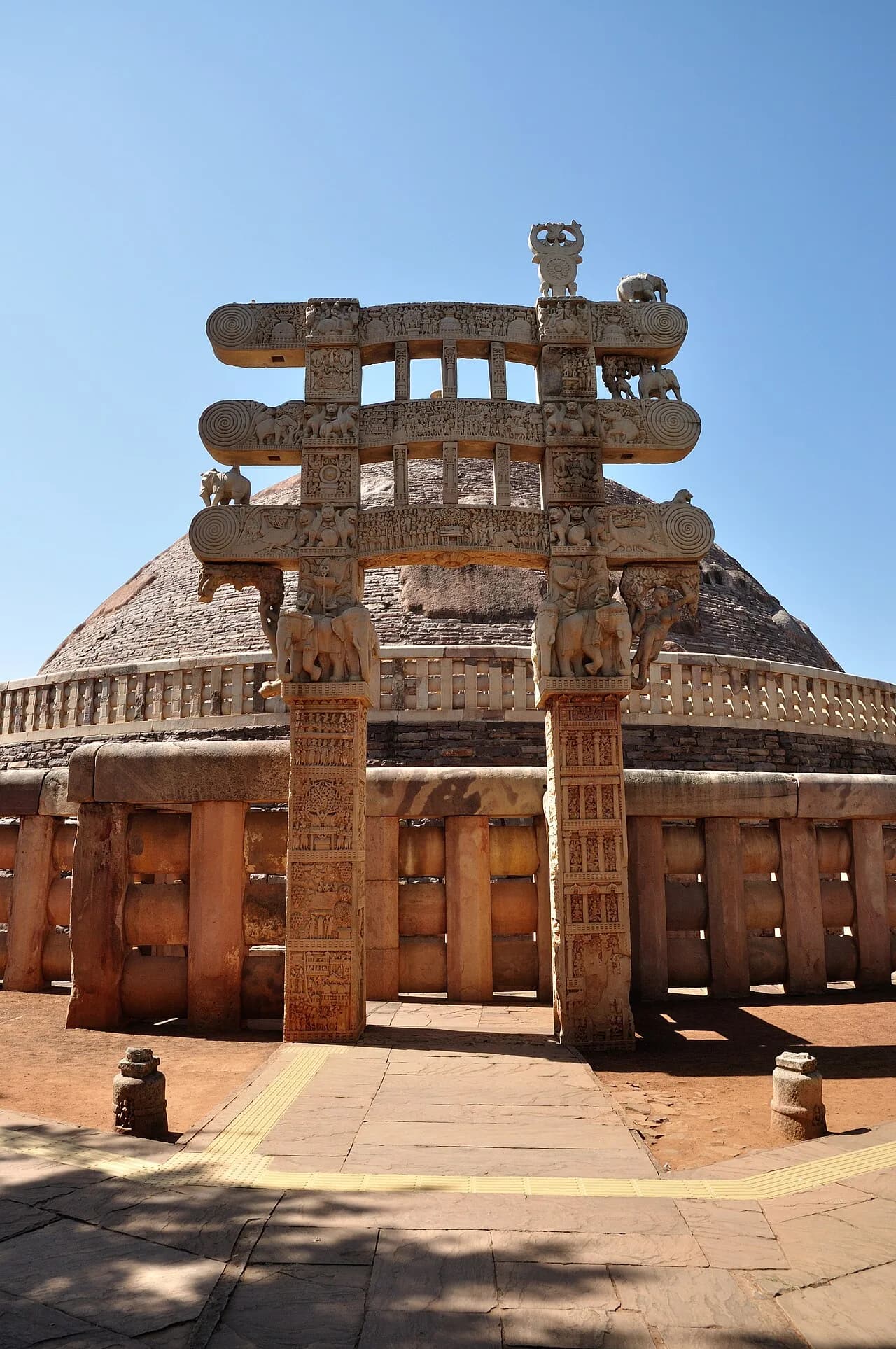
Commissioned by Emperor Ashoka the Great in the 3rd century BCE, the Great Stupa at Sanchi is the oldest surviving stone structure in India and a supreme masterpiece of early Buddhist art. Its four ceremonial gateways (toranas) feature intricate stone carvings illustrating the life and teachings of Buddha.
Key Benchmarks & Specifications
Inscription year1989Construction origin3rd century BCE by Emperor AshokaStupa dimensions36.5 meters diameter, 16.4 meters heightLocation Raisen District, Madhya Pradesh (46 km from Bhopal)Editorial Strengths & Watchouts
+ Strengths / Pros
- +exceptionally peaceful hilltop setting with far fewer tourist crowds than Golden Triangle sites
- +world's best preserved high-relief stone carvings depicting early Buddhist folklore
- +sacred archaeological heritage site of global Buddhist pilgrimage
− Watchouts / Trade-Offs
- −requires detour from standard North India tourist transit corridors
- −local tourism infrastructure in Sanchi town is basic
Eligibility & Access
- Best for heritage connoisseurs, historians, and Buddhist pilgrims seeking unhurried contemplation
Key Caveats to Verify
- Limited hotel accommodations in Sanchi
- best visited as a day trip from Bhopal
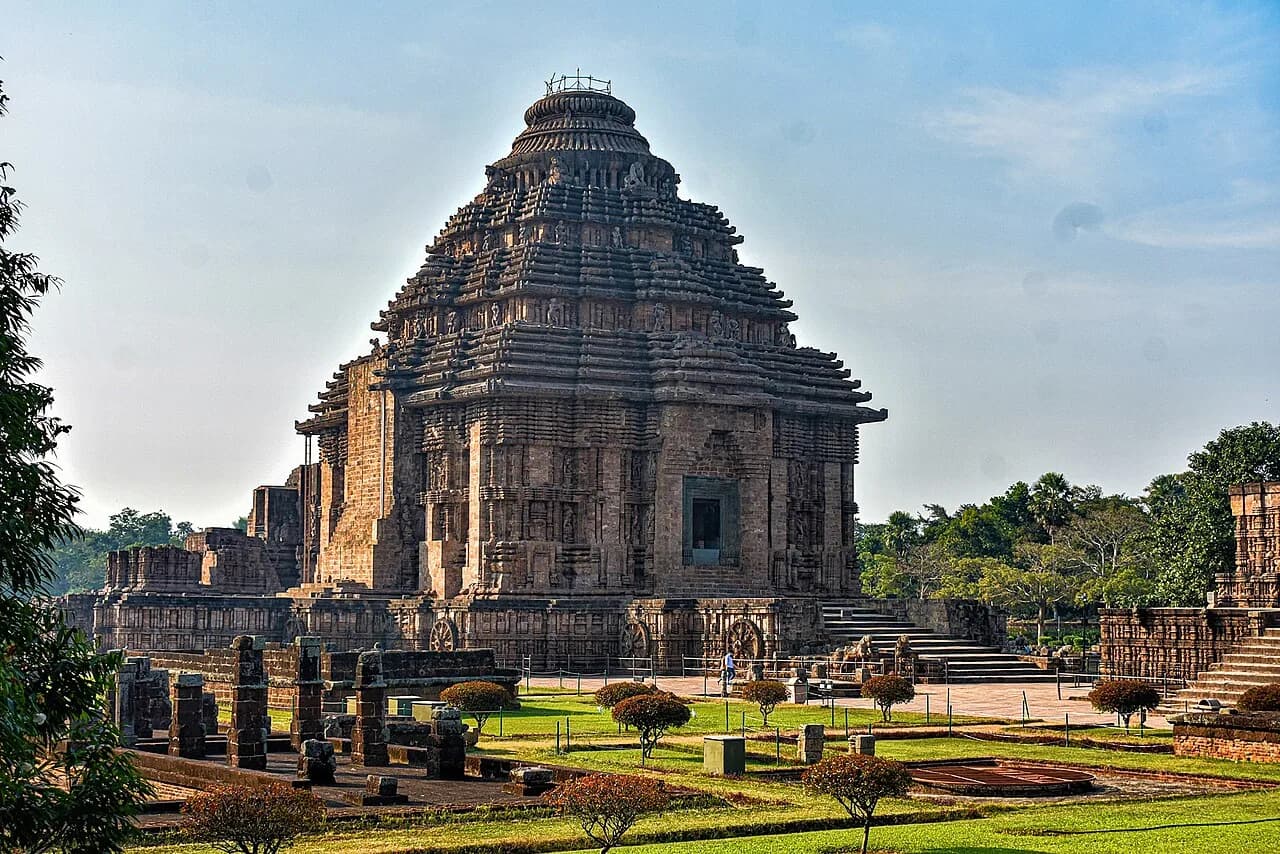
Conceived as a colossal stone chariot of the Sun God Surya with 24 carved wheels and seven galloping horses, the 13th-century Konârak Sun Temple on the Bay of Bengal is an architectural tour de force of Kalinga architecture. Its monumental stone wheels double as functioning sundials.
Key Benchmarks & Specifications
Inscription year1984Built by King Narasimhadeva I of the Eastern Ganga Dynasty (1250 CE)Architecture Kalinga style carved from Khondalite stoneSundial precision wheels accurately measure time down to minutesEditorial Strengths & Watchouts
+ Strengths / Pros
- +astonishing artistic complexity with monumental wheels functioning as exact solar sundials
- +epic chariot design that showcases the zenith of Odisha stone masonry
- +proximity to Puri beach and temple circuits
− Watchouts / Trade-Offs
- −central sanctum tower collapsed in antiquity, leaving only the assembly hall standing
- −ongoing ASI conservation scaffolding frequently covers portions of exterior
Eligibility & Access
- Best for travelers interested in ancient astronomy, Odisha art, and grand religious sculpture
Key Caveats to Verify
- Humid coastal weather during summer and monsoon
- coastal salt air causes natural erosion of intricate outer carvings
Set amidst a surreal lunar landscape of giant balancing granite boulders in Karnataka, Hampi was the fabulously wealthy 14th-century capital of the Vijayanagara Empire. Spanning 16 square miles along the Tungabhadra River, its ruins feature royal palaces, aquatic pavilions, and the iconic stone chariot of Vijaya Vittala.
Key Benchmarks & Specifications
Inscription year1986Area covered over4,100 hectares (16 square miles)Peak era14th to 16th century Vijayanagara EmpireKey monuments Virupaksha Temple, Vittala Temple stone chariot, Lotus MahalEditorial Strengths & Watchouts
+ Strengths / Pros
- +otherworldly boulder-strewn landscape perfect for exploring by bicycle or moped
- +living pilgrimage worship continues today at the active 7th-century Virupaksha Temple
- +exceptional sunset vantage points from Matanga Hill
− Watchouts / Trade-Offs
- −massive spatial expanse requires at least 2 to 3 full days to properly experience
- −extremely hot and arid microclimate during summer months
Eligibility & Access
- Best for adventurous backpackers, photographers, and travelers who love vast archaeological ruins in dramatic natural landscapes
Key Caveats to Verify
- Reaching Hampi requires overnight train or long drive from Bangalore or Goa
- limited luxury lodging near the sacred zone
Built by the Chandela Dynasty between 950 and 1050 CE, the Hindu and Jain temples of Khajuraho represent the pinnacle of temple architecture in northern India. While famous for their exquisite erotic sculptures celebrating Kama, the temples are predominantly masterworks of spiritual devotion, daily medieval life, and intricate cosmic geometry.
Key Benchmarks & Specifications
Inscription year1986Surviving temples25 temples preserved from an original 85Architectural style Nagara-style sandstone templesFlagship monument Kandariya Mahadeva TempleEditorial Strengths & Watchouts
+ Strengths / Pros
- +transcendent quality of high-relief sandstone carving unmatched across Indian medieval art
- +peaceful, beautifully manicured gardens surrounding the Western Group of temples
- +nightly sound and light show exploring Chandela history
− Watchouts / Trade-Offs
- −isolated geographical location in central Madhya Pradesh
- −persistent private guide and souvenir touts in town
Eligibility & Access
- Best for art and sculpture lovers, romantic couples, and travelers exploring India's classical cultural heritage
Key Caveats to Verify
- Small regional airport has limited direct flights
- summer heat can exceed 40°C (104°F)
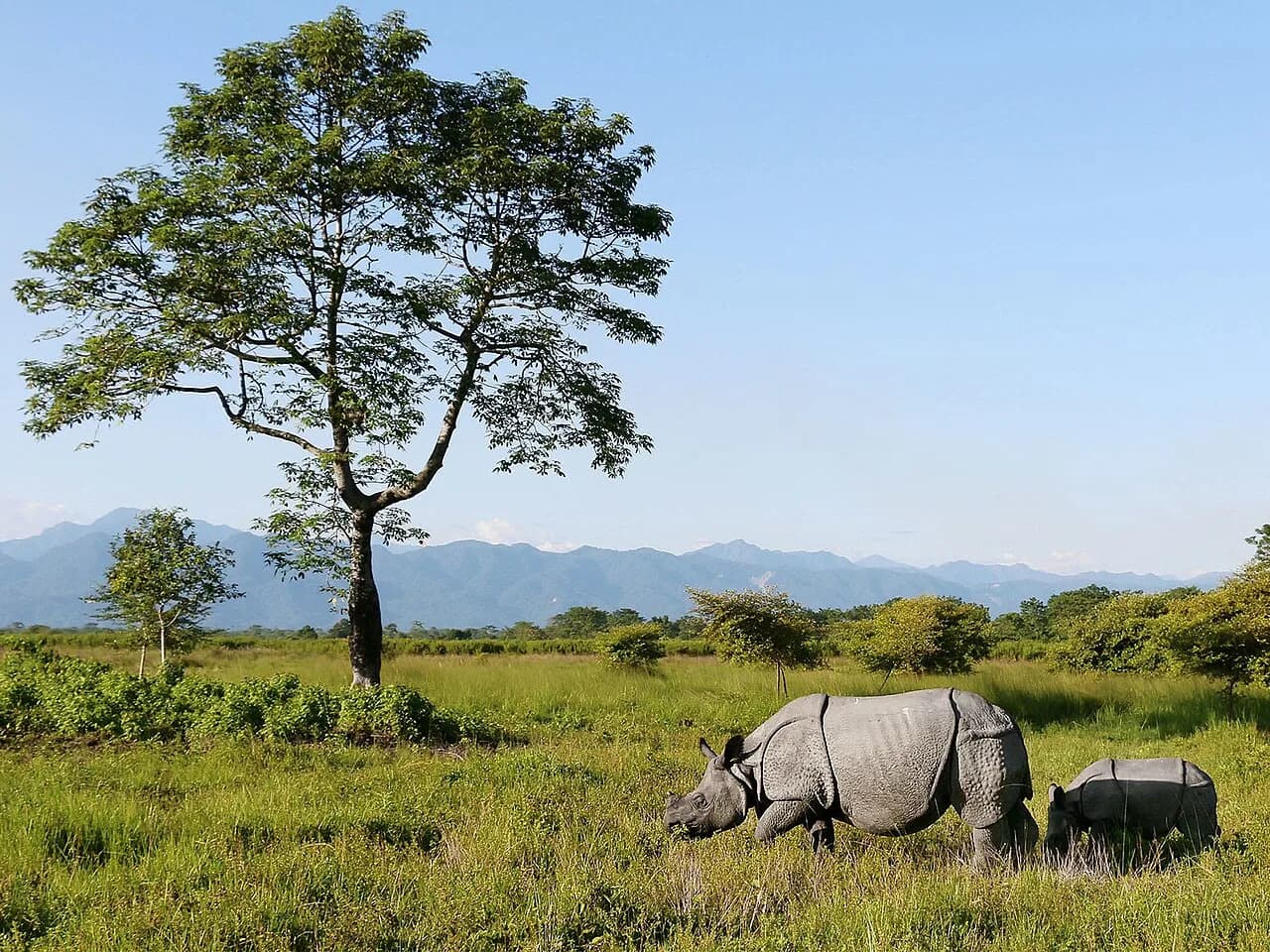
Situated on the fertile floodplains of the Brahmaputra River in Assam, Kaziranga National Park is a premier natural World Heritage site housing two-thirds of the world's great one-horned rhinoceroses. The park represents one of global conservation's greatest success stories, alongside healthy populations of tigers, elephants, and wild water buffalo.
Key Benchmarks & Specifications
Inscription year1985 (Natural heritage)Rhino population2,600+ one-horned rhinos (approx 70% of world total)Area430 square kilometers of tall elephant grass and marshlandOpen season November to April (closed during monsoon floods)Editorial Strengths & Watchouts
+ Strengths / Pros
- +virtually guaranteed close-range sightings of armored one-horned rhinos on elephant or jeep safaris
- +highest tiger density among protected areas in the world
- +incredible birdwatching with hundreds of migratory avian species
− Watchouts / Trade-Offs
- −strictly closed during monsoon season (May to October) due to annual Brahmaputra river flooding
- −remote northeast India travel logistics
Eligibility & Access
- Best for wildlife safari enthusiasts, birdwatchers, and conservation-focused eco-travelers
Key Caveats to Verify
- Elephant safari permits sell out quickly
- morning mist can reduce safari visibility in December and January
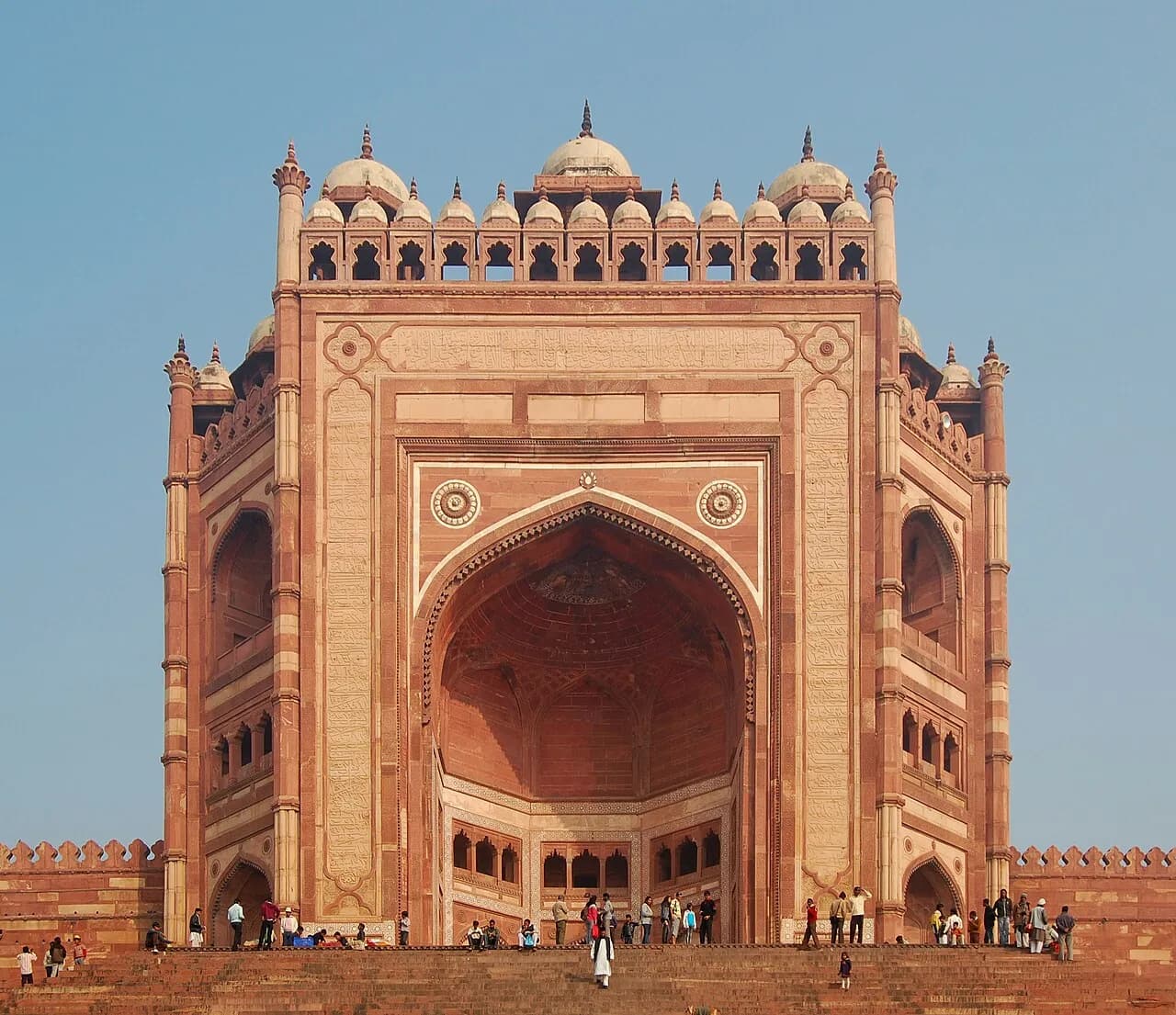
Founded in 1569 by Emperor Akbar as the capital of the Mughal Empire, Fatehpur Sikri is a remarkably preserved red sandstone ghost city that was mysteriously abandoned just 16 years later due to water shortages. It features the monumental Buland Darwaza ("Gate of Magnificence") and the delicate white marble tomb of Sufi saint Salim Chishti.
Key Benchmarks & Specifications
Inscription year1986Occupied era1571 to 1585 CE as Mughal capitalBuland Darwaza height54 meters (177 feet) - highest gateway in the worldDistance40 km west of AgraEditorial Strengths & Watchouts
+ Strengths / Pros
- +stunningly unified architectural complex constructed entirely from glowing red sandstone
- +Buland Darwaza gateway offers awe-inspiring scale and perspective
- +easy combined day trip when visiting Agra's Taj Mahal
− Watchouts / Trade-Offs
- −aggressive local touts and unofficial guides outside the Jama Masjid complex
- −vast sandstone courtyards radiate extreme heat in the afternoon
Eligibility & Access
- Best for lovers of Mughal architectural history and travelers on the Delhi-Agra-Jaipur circuit
Key Caveats to Verify
- Shuttle buses from the outer parking lot to the monument can be chaotic during peak holiday hours
Towering over southern Delhi, the 72.5-meter Qutb Minar is the world's tallest brick minaret, begun in 1192 by Qutb-ud-din Aibak to commemorate the establishment of the Delhi Sultanate. The surrounding complex contains the famous 1,600-year-old rust-resistant Iron Pillar of Delhi and early Indo-Islamic arcades.
Key Benchmarks & Specifications
Inscription year1993Minaret height72.5 meters (238 feet) with 379 stepsConstruction timeline begun1192 CE by Qutb-ud-din Aibak, completed 1220 CE by IltutmishIron Pillar age1,600+ years old (Gupta period metallurgy miracle)Editorial Strengths & Watchouts
+ Strengths / Pros
- +easily accessible via Delhi Metro (Qutb Minar Station)
- +fascinating fusion of reused Hindu-Jain stone pillars with early Islamic calligraphy bands
- +lovely evening illuminations and park lawns
− Watchouts / Trade-Offs
- −climbing the inside of the minaret is permanently closed to the public for safety
- −heavy weekend crowds from local school groups
Eligibility & Access
- Best for urban travelers with limited time in Delhi seeking ancient Islamic and medieval heritage
Key Caveats to Verify
- Airport flight paths overhead create periodic aircraft noise
- interior minaret access has been sealed since 1981
Have a list idea?
Start your own list and get help drafting entries with AI. A free account is required.
Create a list with AI →Watch the ranking video
Think something was robbed of a spot?
Nominate a missing contender — once approved, the community votes it up or down into the rankings.
How We Rank & Evaluation Methodology
Top10Grid ranks Top 10 UNESCO World Heritage Sites in India by combining structured 2026 domain verification with live community ballot and pairwise head-to-head voting.
- Core Evaluation Criteria: Every contender—including top-ranked Group of Monuments at Mahabalipuram (#1), Ellora Caves (#2), and Sun Temple, Konârak (#3)—is assessed across visitor experience quality, transit accessibility, seasonal value, local authenticity, and verified traveler demand. - Structured Contender Parity: All 10 ranked entries carry canonical entity links, verified visual assets, and side-by-side comparison attributes so readers can audit exact trade-offs before voting. - Dynamic Vote Weighting: Community votes continuously stress-test editorial placements while anti-gaming velocity guards preserve ranking integrity.
Head-to-Head Matchup: Pit #1 Group of Monuments vs. #2 Ellora Caves Side-by-Side
Every voter weighs #1 Group of Monuments and #2 Ellora Caves differently. Open the live head-to-head comparison matrix to inspect real-world strengths, tradeoffs, and community conviction side-by-side before casting your ballot.
- 1-Tap Head-to-Head Matchup: Pit #1 Group of Monuments vs. #2 Ellora Caves Side-by-Side → - Related Debate: Top 10 YouTube Channels to Watch for Travel in 2026 - Related Debate: Most Visited Countries in the World 2025 — UNWTO Rankings - Related Debate: Top 10 Cool-Climate Destinations for Summer Heat Escape 2026
Debate Prompt: Group of Monuments vs. Ellora Caves: Which experience truly deserves the #1 spot on a traveler's itinerary?
Related Videos
Rank it your way
Remix this list into your own ranking, or head to the play hub for every game mode and community breakdown — blind mode, challenges, tier lists, and more.