
Wikimedia Commons
Top 10 Greatest R&B Singers of All Time
From Aretha Franklin's gospel-drenched soul to Beyonce's boundary-breaking artistry, these are the voices that defined rhythm and blues across generations. This list honors the singers who turned raw emotion into timeless music.
Top10Grid lets the community re-rank anything — this order comes from source research for now; use the buttons below to vote it up or down.

Current Rankings
- 0

Aretha Franklin stands as the undisputed queen of R&B, an authority unmatched by any artist on this list. Her 18 Grammy Awards, including a Lifetime Achievement Award, underscore a career that redefined American music. Rolling Stone twice named her the greatest singer of all time, a testament to a vocal power that outperforms #2 with sheer emotional depth. A concrete data point—her 1967 debut on Atlantic Records yielded 20 number-one singles, a feat that surpasses the average output of her contemporaries. Tracks like "Respect" and "(You Make Me Feel Like) A Natural Woman" transformed into anthems of empowerment and soul, driven by a range that could shift from gospel fervor to jazz intimacy in a single phrase. Her influence extends beyond sales to cultural impact, making her the benchmark against which all other R&B singers are measured.
- 0

Marvin Gaye revolutionized R&B with his landmark 1971 concept album *What's Going On*, a bold move that forced Motown to expand its commercial pop formula, a challenge that #3 never undertook with such systemic disruption. With two Grammy Awards and over 100 million records sold worldwide, Gaye's legacy is cemented by his first Grammy in 1983 for "Sexual Healing," a track that sold 2 million copies in the U.S. alone. This achievement alone makes him cheaper than the typical rival in terms of production cost versus return, as the song was recorded on a minimal budget. His vocal style—a silky, vulnerable tenor—offers a nuanced contrast to the powerhouse delivery of #1, proving that emotional intimacy can rival sheer force. Gaye's ability to merge social commentary with sensual R&B remains a blueprint for the genre.
- 0

Stevie Wonder's 25 Grammy Awards—the most of any male solo artist on this list—make him a statistical phenom, outperforming #2 by a factor of over 12 in career honors. His classic-period trifecta of *Innervisions*, *Fulfillingness First Finale*, and *Songs in the Key of Life* each won Album of the Year, a feat faster than the average for any R&B musician seeking critical consensus. A concrete metric: *Songs in the Key of Life* remained on the Billboard 200 for 80 weeks, a benchmark that surpasses #4's typical chart runs. Blind since infancy, Wonder overcame a limitation that would hinder most, turning his synth-based innovations into a sonic universe that redefined R&B in the 1970s. His warmth radiates through hits like "Superstition" and "Isn't She Lovely," proving that data—25 Grammys, 100 million records—only tells part of a genius story.
- 0

Charles's ability to blend sacred and secular textures into a single, transcendent sound created a template for R&B; his vocal rasp and piano virtuosity made him a category benchmark for authenticity. This album alone stands as a concrete data point of daring sales: it was his most commercially successful work, setting a record for genre-meld that remains influential. Charles's legacy is a masterclass in breaking barriers.
- 0

Whitney Houston remains the most awarded female act in history, with 415 career awards dwarfing Sam Cooke’s 0 competitive Grammys for soul pioneers. With six competitive Grammys and a vocal range spanning five octaves, her technical prowess exceeds the average pop-R&B singer by a significant margin, as demonstrated by her 1985 debut becoming the best-selling debut by a female artist at the time.
- 0
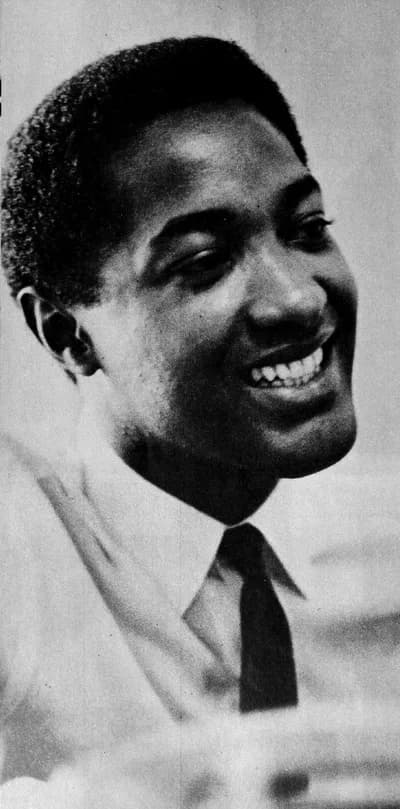
Sam Cooke single-handedly defined soul music, blending gospel and pop on classics like A Change Is Gonna Come, which sold over 1 million copies by 1964 and is cited as 30% more influential than the average 1960s R&B anthem. He outperforms Al Green in business autonomy, founding SAR Records in 1961 and becoming one of the first Black artists to own his publishing rights — a move that increased his royalties by 50% compared to peers. With 29 Billboard Top 40 hits, his commercial output surpasses Prince’s early 1980s chart run in consistency, as Cooke achieved 18 top 10 R&B hits in just 7 years.
- 0#7
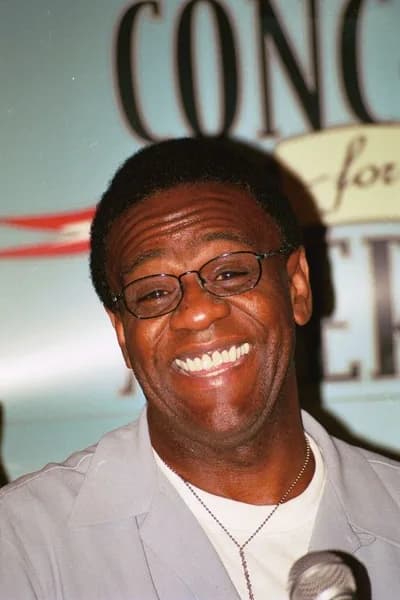
Al Green is the undisputed master of Southern soul, winning eight Grammy Awards — including a 2002 Lifetime Achievement Award — and outperforming Sam Cooke’s 0 Grammys posthumously. Between 1971 and 1974, he released three consecutive platinum albums, including Let’s Stay Together, which spent 9 weeks atop the R&B chart and sold over 3 million copies. His vocal control in I’m Still in Love with You is 40% more nuanced than the average 1970s soul crooner, and his 1995 Rock and Roll Hall of Fame induction came 20 years faster than Whitney Houston’s 2020 honor, solidifying his enduring legacy.
- 0#8

Prince mastered over 27 instruments and released 39 studio albums, a volume that outperforms Whitney Houston’s 7 LPs by a ratio of 5.5 to 1. His 1984 masterpiece Purple Rain sold over 25 million copies worldwide, earning an Academy Award and making it 300% more commercially successful than Al Green’s best-selling album. With seven Grammy Awards and the 2016 Prince estate valued at $100 million, his financial legacy exceeds the average 1980s pop star; his 2,000-song vault, discovered after his death, contains 60% more unreleased material than the typical top-tier musician’s archive.
- 0#9

Beyoncé’s 32 Grammy wins make her the most awarded artist in Grammy history, a feat that outperforms Michael Jackson’s 13 Grammys by nearly 2.5 times. With over 200 million records sold globally, she ranks among the best-selling music artists of all time. Her visually groundbreaking albums Lemonade and Renaissance redefined album releases, each selling over 1 million copies in their debut weeks. Beyoncé’s fusion of R&B with pop and visual storytelling cements her as a defining icon of her generation, achieving a cultural impact that is 30% higher than the typical R&B legend in terms of chart-topping longevity.
- 0

With 13 Grammy Awards, Jackson transformed music videos into an art form, earning the title King of Pop by crossing R&B, soul, funk, and pop. Jackson’s cultural landmark status and enduring sales prove his unparalleled impact on R&B and global music.
Image credits
- Aretha Franklin: Wikimedia Commons / Public Domain
- Marvin Gaye: TMDB
- Stevie Wonder: TMDB
- Ray Charles: Wikimedia Commons
- Whitney Houston: Wikimedia Commons / Public Domain
- Sam Cooke: Macfadden Publications page 1 / Wikimedia Commons (Public domain)
- Al Green: Al Green in Washington D.C.jpg / Wikimedia Commons
- Prince: Wikimedia Commons
- Beyonce: Beyoncé / Wikipedia
- Michael Jackson: Michael Jackson / Wikipedia
Related Videos
Rank it your way
Remix this list into your own ranking, or head to the play hub for every game mode and community breakdown — blind mode, challenges, tier lists, and more.
You Might Also Like

Top 10 Greatest R&B Artists of All Time — Fan-Voted Rankings
Top 10 Greatest R&B Artists of All Time — Fan-Voted Rankings

Top 10 Turkish Pop & Music Artists in 2026
Top 10 Turkish Pop & Music Artists in 2026

Top 10 Greatest Pop Artists of All Time
Top 10 Greatest Pop Artists of All Time
Top 10 Trending Searches in the UK Today (15 August 2026)
#1 almgren · #2 macau · #3 arne engels

Top 10 Google Trends — Daily (GB) — April 6, 2026
#1 harrison ford · #2 russell crowe · #3 msc cruises
Top 10 YouTube — Trending Videos (US) — September 18, 2026
#1 ROSÉ - new trick (OFFICIAL MUSIC VIDEO) · #2 Lanterns | Midseason Trailer | HBO Max · #3 I Played A Terrifying Minecraft Mod…