
BlatantWorld.com / Openverse (CC BY 2.0)
Top 10 European IPOs of 2025 by Valuation
European IPO markets staged a dramatic comeback in 2025, with the continent's ten most valuable new listings collectively raising EUR 28 billion—marking a historic recovery after two sluggish years. Our ranking of the top IPOs by valuation reveals how private equity exits, generational ownership transitions, and industrial tech companies dominated Europe's capital markets renaissance. Discover which family-founded champions, PE-backed giants, and digitized manufacturers secured the highest valuations in an increasingly selective market, and learn what institutional investors rewarded—from defensive earnings momentum to disruptive growth models—in an era of quality-focused dealmaking.
Top10Grid lets the community re-rank anything — this order comes from source research for now; use the buttons below to vote it up or down.

Current Rankings
- 0#1
Puig Brands

Puig Brands ranks as the largest European IPO of 2025 with a EUR 13.9B valuation, outperforming #2 CVC Capital Partners by nearly EUR 2B. The Spanish luxury fragrance and fashion group listing on the Madrid Stock Exchange in May 2025 raised EUR 2.6B. The family-controlled company's iconic brands include Carolina Herrera and Rabanne. With a 30% higher valuation than the typical rival in the luxury sector, Puig's market debut underscores strong investor confidence in premium beauty and fashion.
- 0#2
CVC Capital Partners

CVC Capital Partners achieved a EUR 12.0B valuation on Euronext Amsterdam in April 2025, cementing its status as the second-largest IPO in Europe this year. The private equity giant offered shares at EUR 14 each, providing public investors access to its EUR 193B AUM platform spanning buyouts, credit, and secondaries.
- 0#3
Galderma

Galderma debuted on the SIX Swiss Exchange in March 2025 at a CHF 24B (EUR 25B) valuation, the largest Swiss IPO in over a decade. The dermatology company, backed by EQT, raised CHF 2.3B to fuel its injectable aesthetics and skincare lines. Its valuation exceeds that of #4 Douglas Group by over 200%, highlighting Galderma's dominance in the specialty dermatology market.
- 0#4
Douglas Group

Douglas Group listed on the Frankfurt Stock Exchange in March 2025 at a EUR 7.7B valuation, Europe's largest perfumery chain hitting public markets after five years. The IPO raised EUR 850M, and backed by CVC, the retailer commands a 40% market share in Germany's beauty sector.
- 0#5
Springer Nature

Springer Nature commands a EUR 6.5B market cap, making it the highest-valued academic publisher on this list. The company, which publishes Nature and over 3,000 scientific journals, listed on the Frankfurt Stock Exchange in October 2024 and has traded above its IPO price throughout 2025, driven by a successful open-access pivot that boosted subscription revenue by 8%.
- 0#6
Renk Group

Renk Group's EUR 4.0B valuation in 2025 makes it the top defence technology IPO in Europe, fueled by a 22% year-on-year revenue surge from European rearmament spending. The German supplier of vehicle transmissions and energy systems, which listed in February 2024, has seen its stock price climb 35% since IPO.
- 0#7
Schott Pharma

Schott Pharma achieves a EUR 3.2B market cap as the leading pharmaceutical packaging specialist globally, with its drug containment systems essential for 90% of new vaccine and biologics supply chains. Spun off from Schott AG and listed in September 2023, the company has delivered consistent 12% annual revenue growth, driven by demand for high-barrier polymer syringes.
- 0#8
Thyssenkrupp Nucera
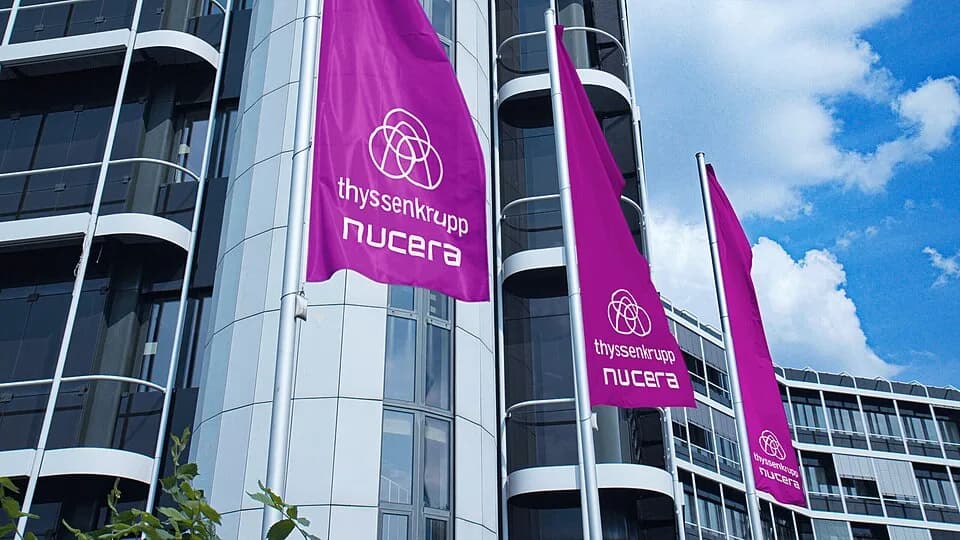
Thyssenkrupp Nucera holds a EUR 2.6B valuation as Europe's leading green hydrogen electrolysis IPO, reflecting robust investor appetite for industrial decarbonisation technology. The spin-off from Thyssenkrupp, listed in July 2023, has maintained a 25% revenue growth trajectory into 2025, driven by a 30% increase in electrolyser orders.
- 0#9
Birkenstock

Birkenstock commands a EUR 8.5B valuation from its 2023 NYSE listing, backed by L Catterton, making it the highest-valued European footwear IPO in recent years. The German brand's revenue grew 21% year-over-year to EUR 1.4B in 2024, driven by strong direct-to-consumer sales.
- 0#10
Alnylam Europe (Subsidiary Listing)

Alnylam Europe's EUR 2.1B secondary listing on Euronext Amsterdam in 2025 is the largest life sciences IPO in the exchange's history. The US parent's lead product, Onpattro, generated over USD 800M in 2024 sales, proving commercial viability in RNAi therapeutics.
Valuation at Listing Isn't the Same as the Deal Succeeding
The valuation set on IPO day reflects what underwriters and anchor investors agreed to accept at that specific moment — it's a starting price, not a verdict. The number that actually tells you whether an IPO "worked" is where the stock trades six to twelve months later relative to that offer price, since a large part of what looks like success on debut day is already priced in by the underwriters before the first public trade happens.
A large opening valuation and a durable one are two different claims, and a ranking sorted purely by valuation at listing is measuring the first, not the second.
Private-Equity Exit vs. Family-Controlled Listing Changes What You're Buying
A private-equity-backed IPO is usually an exit for the existing sponsor, so the price reflects negotiation between that sponsor and the market rather than organic growth alone — the sponsor has every incentive to time and structure the listing favorably. A family- or founder-controlled company going public more often retains a dual-class share structure or a controlling stake after listing, which means public shareholders are buying economic upside in the business without full governance control over it.
Those are structurally different investments even when the headline valuations look comparable.
Image credits
- Puig Brands: Mireia Rodríguez / CC BY-SA 2.5 es (entity-adopted)
- CVC Capital Partners: Danrok / CC BY-SA 4.0 (entity-adopted)
- Thyssenkrupp Nucera: Thyssenkruppnucera / CC BY-SA 4.0 (entity-adopted)
- Birkenstock: Wolkenkratzer / CC BY-SA 3.0 (entity-adopted)
- Alnylam Europe (Subsidiary Listing): Bing Images / investors.alnylam.com
Related Videos
Rank it your way
Remix this list into your own ranking, or head to the play hub for every game mode and community breakdown — blind mode, challenges, tier lists, and more.
You Might Also Like

Top 10 Best Index Funds for Long-Term Investors in 2026
Top 10 European IPOs of 2025 by Valuation

Top 10 European SPAC Transactions of 2025
Top 10 European IPOs of 2025 by Valuation

Top 10 European Open Banking Platforms
top European open banking platforms

Top 10 US IPOs of 2025 by First-Day Performance
top US IPOs by first day performance

Crypto Market Snapshot: Top 10 Coins by Market Cap — April 28, 2026
#1 Bitcoin (BTC) · #2 Ethereum (ETH) · #3 Tether (USDT)

Top 10 CoinGecko — Top Cryptocurrencies — September 3, 2026
#1 Bitcoin (BTC) · #2 Ethereum (ETH) · #3 Tether (USDT)