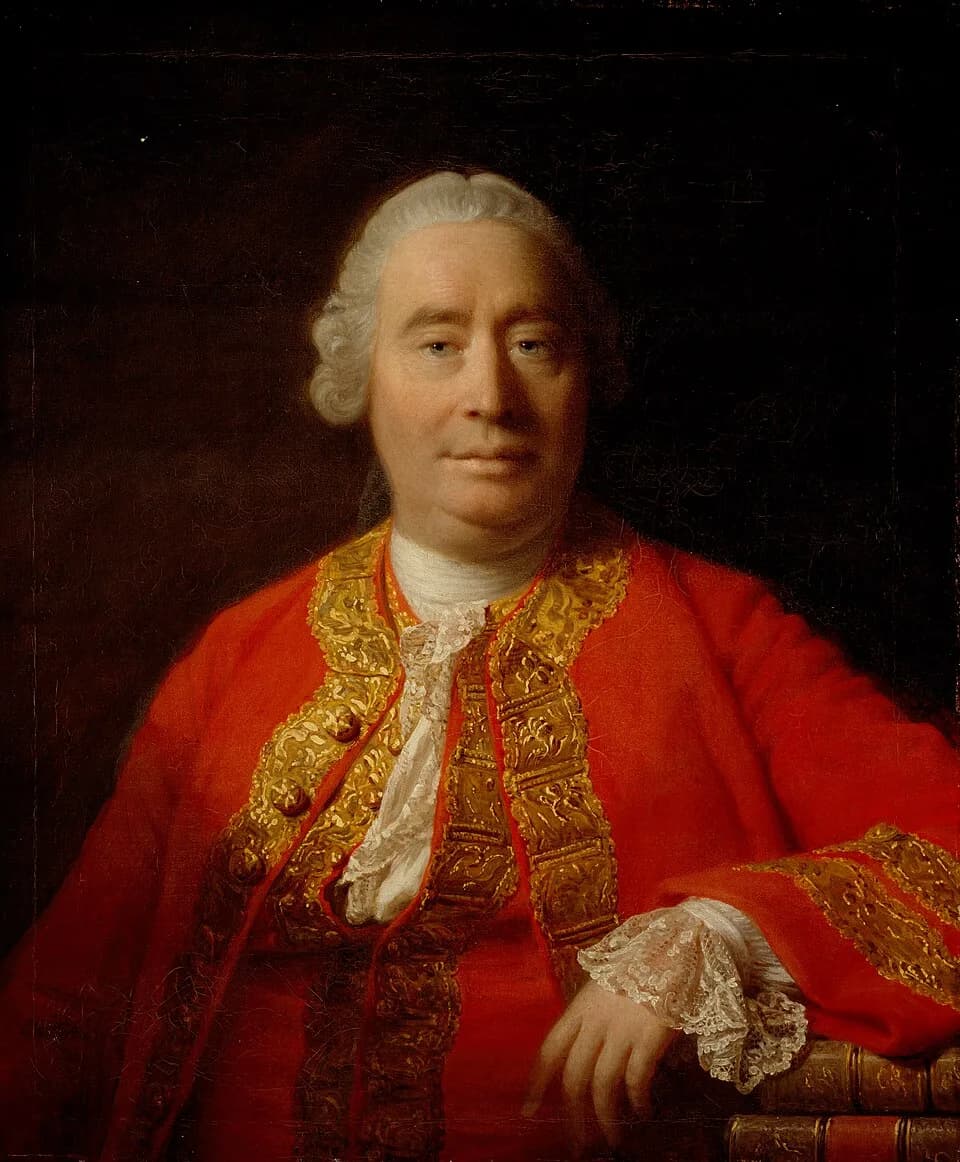
David Hume
Historical Figure1 list appearance
Core Identity: David Hume was a Scottish Enlightenment philosopher, historian, economist, and essayist who applied the experimental method of reasoning to human nature Foundational Thesis: Rejecting rationalist metaphysics, Hume argued that all human ideas derive from sensory or reflective impressions, that inductive inference rests on custom and habit rather than demonstrative reason, and that moral distinctions stem from sentiment rather than reason alone Contemporary Significance: Widely regarded as one of the most influential philosophers ever to write in English, Hume's naturalism, problem of induction, and sentimentalist ethics underpin modern analytic philosophy, cognitive science, and metaethics 1711–1734 (Edinburgh Education & Breakdown): Educated at home by his mother before entering the University of Edinburgh at age 11 and leaving at 15; suffered a nervous breakdown in 1729 while pursuing independent philosophical study instead of law 1734–1740 (La Flèche & A Treatise of Human Nature): Moved to La Flèche, France, in 1734 at age 23 to compose A Treatise of Human Nature, publishing Books 1–2 anonymously in 1739 and Book 3 in 1740 1745–1752 (Academic Rejections & Advocates Library): Denied the Chair of Ethics and Pneumatical Philosophy at Edinburgh (1745) and the Chair of Logic at Glasgow (1751) due to charges of skepticism and atheism; appointed Librarian of the Advocates Library in Edinburgh in 1752
1-Tap Primary Ranking Ballot
Overview#9 Full List
Does David Hume deserve the #9 spot on “Top 10 Most Influential Philosophers of All Time”?
#9 David Hume?
Verified Entity DossierRanked #9 in Top 10 Most Influential Philosophers of All Time
Community Weigh-In & Debate
Should David Hume rank higher than #9 in Most Influential Philosophers of All Time?
Ranked #9 on "Top 10 Most Influential Philosophers of All Time". Cast your vote to back or challenge this spot.
Be the first to vote on this ranking.
Structured Facts & Specifications
Verified highlightsEntity ID
person-david-hume
Canonical Name
David Hume
Lifespan & Origin
Born May 7, 1711, Edinburgh, Scotland; died August 25, 1776, Edinburgh, Scotland
Ontology Node Type
person
Ontology Subclass
Enlightenment Philosopher / Historian / Political Economist
Schema.org / Domain Tags
schema:Person, ScottishEnlightenment, Empiricism, Skepticism, MoralSentimentalism
Digital Footprint & Archival Hubs
Stanford Encyclopedia of Philosophy (https://plato.stanford.edu/entries/hume/), Encyclopaedia Britannica (https://www.britannica.com/biography/David-Hume), National Galleries Scotland (https://art.nationalgalleries.org/art-and-artists/2775/david-hume-1711-1776-historian-and-philosopher-1766)