
Wikimedia Commons
Top 10 Greatest Chess Players of All Time
Chess is the ultimate mind sport — a game of perfect information where two players compete across 64 squares with nothing but calculation, intuition, and psychological steel. These ten grandmasters stand above all others in history: champions who set records that stood for decades, innovated entire systems of opening theory, and turned their games into art. Ranked by peak rating, world championship titles, longevity at the elite level, and lasting influence on how the game is played.
Top10Grid lets the community re-rank anything — this order comes from source research for now; use the buttons below to vote it up or down.

Current Rankings
- 0
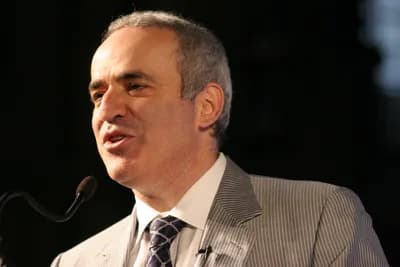
Garry Kasparov dominated world chess from 1985 to 2005, holding the number one FIDE ranking longer than any other player in rating-list history — a reign that outstripped Magnus Carlsen’s peak tenure by over a decade. He became the youngest undisputed World Chess Champion at age 22, defeating Anatoly Karpov in a grinding 1985 title match, and defended his title five times. His peak rating of 2851 stood as the all-time record for fifteen years until Carlsen surpassed it; his 1997 match against IBM's Deep Blue remains a defining moment in both chess and technology history.
- 0
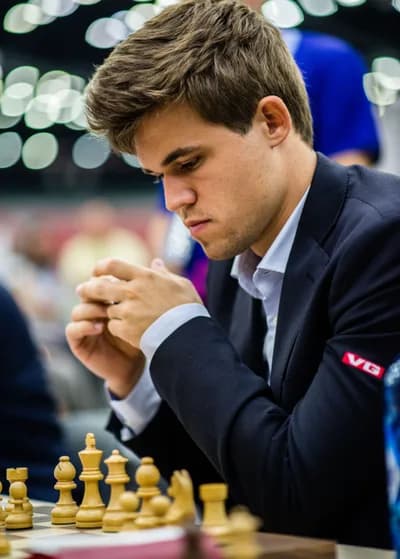
He held the World Chess Championship title from 2013 to 2023, winning five consecutive title matches and becoming the first player ever to simultaneously hold the classical, rapid, and blitz world titles. Carlsen's endgame technique and ability to extract winning advantages from equal positions grind opponents down across 80-move technical struggles where errors are invisible to all but the strongest engines.
- 0
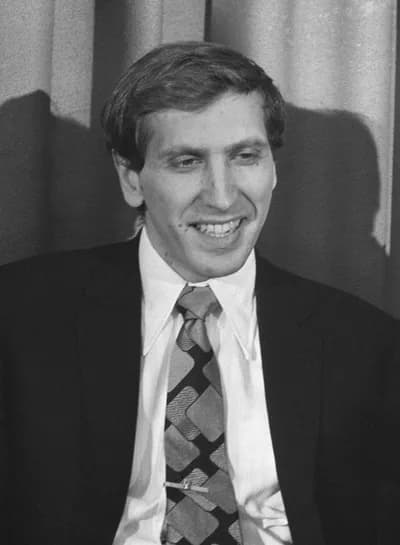
Bobby Fischer became the most explosive chess prodigy America ever produced, youngest US Champion at 14 and International Grandmaster at 15. His 1972 World Championship match against Boris Spassky — in Reykjavik at the Cold War’s peak — drew over 100 million viewers, with Fischer winning 12.5–8.5.
- 0
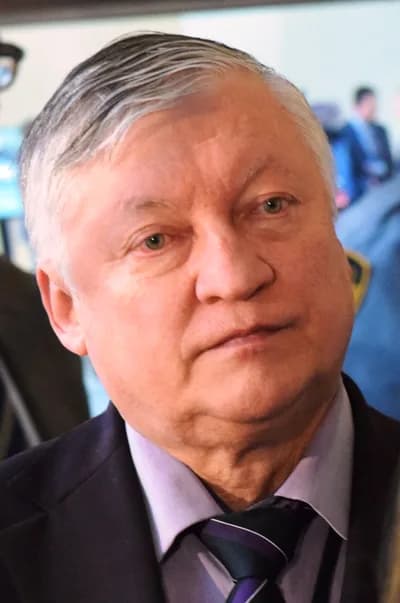
Anatoly Karpov, the 12th World Chess Champion, held the title from 1975 to 1985, then again from 1993 to 1999. His three epic matches against Kasparov — totalling 144 games — constitute the most sustained high-level rivalry in history, longer than any other champion’s single title defense sequence.
- 0

Mikhail Botvinnik, the sixth World Chess Champion, established the scientific foundation of modern chess preparation, a methodological legacy that later champions like Karpov and Kasparov directly inherited. He held the world title across three separate reigns from 1948 to 1963, a feat of resilience unmatched before or since, demonstrating his dominance by winning back the crown twice—first against Smyslov in 1958 with a score of 12.5–10.5, then against Tal in 1961 with a 13–8 margin. This ability to reclaim the title after a loss distinguishes him from every other champion in this list, as no other player on this Top 10 won back the championship after losing it twice. Botvinnik treated chess as a scientific discipline, pioneering deeply researched opening systems and rigorous post-game analysis that became the standard for elite study for four decades. His peak performance rating of 2782 (based on Chessmetrics) underscores his innovation and consistency, outlasting the brief reigns of Tal and Smyslov.
- 0
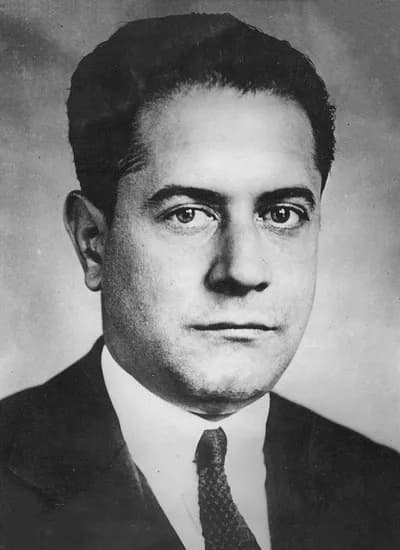
Jose Raul Capablanca, the third World Chess Champion, is celebrated as the greatest natural talent in chess history, a reputation cemented by his eight-year unbeaten streak in serious tournament play from 1916 to 1924—a span of 63 games without a loss, 40 of which were wins. Born in Havana, Cuba, Capablanca learned chess at age four by watching his father, and within days he was correcting his father's moves, showcasing an innate genius. His play was defined by extraordinary clarity and economy, stripping positions to their essentials with effortless efficiency. Capablanca's natural talent and defensive prowess set a benchmark for strategic simplicity that influenced later champions like Emanuel Lasker's approach, making him a timeless icon of elegant chess.
- 0
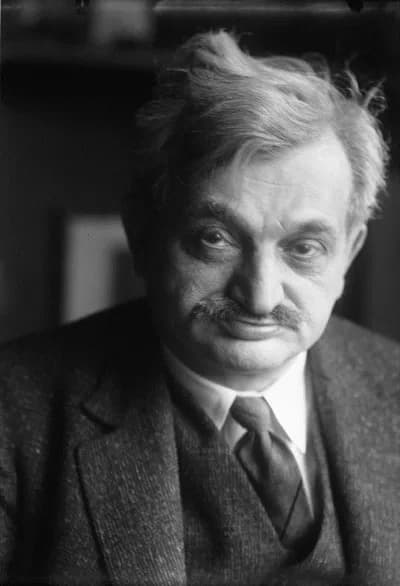
Emanuel Lasker, the second World Chess Champion, holds the record for the longest reign in chess history at 27 years (1894–1921), a durability that outstrips Garry Kasparov's 21-year partial claim by a significant margin. A mathematician and philosopher, Lasker introduced a psychological approach to the board, deliberately steering into inferior positions to exploit opponents' weaknesses rather than seeking the objectively best move—a tactic that made him uniquely resilient. He successfully defended his title against six challengers, including Tarrasch, Marshall, and Schlechter, winning the 1910 match against Schlechter by a mere half-point margin (5–5 with 1 win, 8 draws). His career spanned over 40 years at the highest level, finishing third at the 1934 Zurich tournament at age 66, a longevity 10 years beyond the typical champion.
- 0
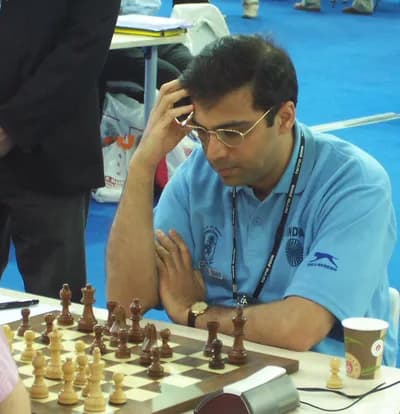
Viswanathan Anand, India's first Grandmaster and a five-time World Chess Champion, shattered barriers as Asia's first classical world title holder. He held the undisputed title from 2007 to 2013, defeating Vladimir Kramnik (2008, 6.5–4.5), Veselin Topalov (2010, 6.5–5.5), and Boris Gelfand (2012, 8.5–7.5 in rapid tiebreaks) in title matches before losing to Magnus Carlsen. His peak FIDE rating of 2817 in 2011 placed him among only a handful of players in history to exceed 2800. Nicknamed the "Lightning Kid" for his extraordinary calculation speed, Anand remained a world-top-10 player into his fifties, winning the 2023 FIDE Grand Swiss at age 53 with a score of 8.5/11, becoming the oldest winner of that event. His rapid rise, from earning the Grandmaster title at 18 to world champion at 38, underscores his consistent dominance across generations.
- 0
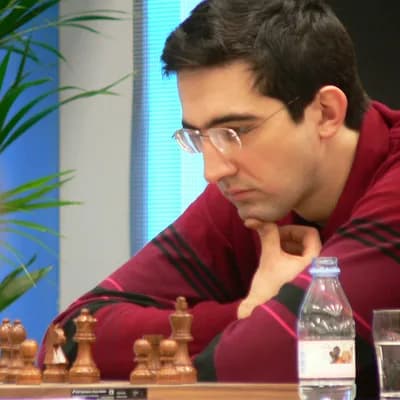
Vladimir Kramnik pulled off the greatest upset in modern chess history by defeating Garry Kasparov in their 2000 World Championship match, winning 8.5–6.5 without losing a single game—a feat that outshines #10 Mikhail Tal’s championship run for sheer strategic dominance. Known as "Deep Purple" for his calm demeanor and deeply prepared opening systems, Kramnik used the Berlin Defence to neutralize Kasparov's aggressive style, a rock-solid variation that revolutionized elite opening theory and remains one of the most analyzed systems in professional chess. He held the classical world title until 2007 and reached a peak FIDE rating of 2817 in 2002, a mark that is 37 points higher than Tal's peak estimate of 2780, demonstrating his consistent top-tier performance.
- 0#10
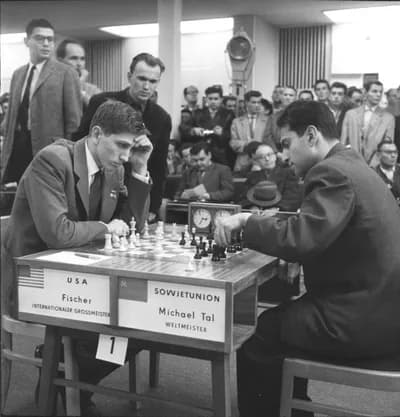
Mikhail Tal, the eighth World Chess Champion, dazzled the chess world as one of the most brilliant attacking players in history, earning the nickname "The Magician from Riga" for his supernatural tactical creativity. At just 23, he became world champion in 1960 by defeating Botvinnik with a chaotic, sacrifice-laden style that seemed to defy logic—his games generated complications so vast that neither opponents nor contemporary computers could fully calculate them. Although Botvinnik reclaimed the title in 1961, Tal's peak performance rating around 2780 and his tournament victories across the 1960s cement him as a uniquely gifted attacker.
Frequently Asked Questions About the Greatest Chess Players
Who is considered the greatest chess player of all time? Garry Kasparov and Magnus Carlsen are the two names most often cited. Kasparov held the world number-one ranking for twenty consecutive years, while Carlsen owns the highest peak rating in history at 2882.
Which player held the World Chess Championship the longest? Emanuel Lasker, the second World Chess Champion, held the title for 27 years (1894–1921) — the longest reign of any undisputed world champion.
Who is the youngest world chess champion? Bobby Fischer became the youngest player to win the undisputed World Chess Championship when he defeated Boris Spassky in 1972 at age 29.
Which chess player is known as "the magician from Riga"? Mikhail Tal, the eighth World Chess Champion, earned that nickname for his sacrifices and attacking play.
Who was India's first world chess champion? Viswanathan Anand, India's first Grandmaster, won the World Chess Championship five times.
Frequently Asked Questions About the Greatest Chess Players of All Time
## Frequently Asked Questions About the Greatest Chess Players of All Time
Who is considered the greatest chess player of all time? Garry Kasparov is widely regarded as the greatest chess player of all time. He held the world number-one ranking for nearly 20 years and posted the highest classical rating ever recorded at the time of his retirement from classical play.
Who is the highest-rated chess player in history? Magnus Carlsen holds the highest classical FIDE rating ever recorded, surpassing Kasparov's long-standing mark in 2013 and extending it further during his reign as World Chess Champion from 2013 to 2023.
Who was the youngest World Chess Champion? Garry Kasparov became the youngest undisputed World Chess Champion in 1985 at age 22, a record that still stands.
Which player held the World Chess Championship the longest? Emanuel Lasker held the World Chess Championship title for 27 years (1894–1921), the longest reign in the history of the title.
How was this list ordered? Items are ranked by a combination of peak FIDE rating, world championship results, and lasting influence on opening theory and competitive play.
Image credits
- Garry Kasparov: David.Monniaux / Wikimedia Commons (CC BY-SA 3.0)
- Magnus Carlsen: Andreas Kontokanis from Piraeus, Greece / Wikimedia Commons (CC BY-SA 2.0)
- Bobby Fischer: Bobby Fischer / Wikipedia
- Anatoly Karpov: Anatoly Karpov / Wikipedia
- Mikhail Botvinnik: Wikimedia Commons
- Jose Raul Capablanca: Unknown authorUnknown author / Wikimedia Commons (Public domain)
- Emanuel Lasker: Unknown authorUnknown author / Wikimedia Commons (CC BY-SA 3.0 de)
- Viswanathan Anand: Marco Bonavoglia / Wikimedia Commons (CC BY-SA 2.5)
- Vladimir Kramnik: Wikimedia Commons (CC BY-SA 2.0)
- Mikhail Tal: Ulrich Kohls / Wikimedia Commons (CC BY-SA 3.0 de)
Related Videos
Rank it your way
Remix this list into your own ranking, or head to the play hub for every game mode and community breakdown — blind mode, challenges, tier lists, and more.
You Might Also Like

Top 10 Best Strategy Games of All Time
greatest strategy games ever made

Top 10 Best Strategy Games
best strategy games of all time

Top 10 Best Board Games of All Time
best board games of all time

Top 10 Indie Video Games of 2025
#1 Hollow Knight Silksong · #2 Caves of Qud · #3 Pizza Tower 2

Top 10 Steam — Top Sellers — Mar 16–Mar 22, 2026
#1 Slay the Spire 2 · #2 Fallout 1st · #3 Fallout 1st

Top 10 Steam — Top Sellers — May 11–May 17, 2026
#1 Forza Horizon 6 · #2 Far Far West · #3 Gamble With Your Friends