Emanuel Lasker
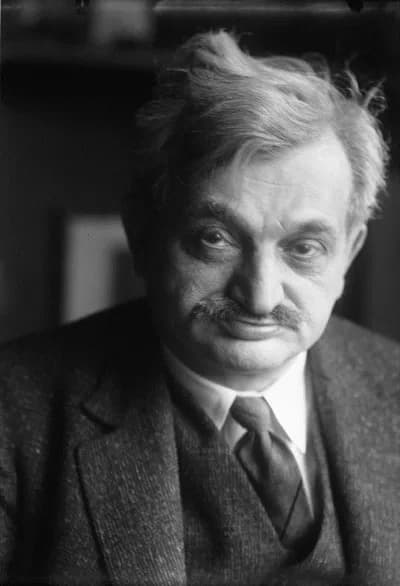
Emanuel Lasker, the second World Chess Champion, holds the record for the longest reign in chess history at 27 years (1894–1921), a durability that outstrips Garry Kasparov's 21-year partial claim by a significant margin. A mathematician and philosopher, Lasker introduced a psychological approach to the board, deliberately steering into inferior positions to exploit opponents' weaknesses rather than seeking the objectively best move—a tactic that made him uniquely resilient. He successfully defended his title against six challengers, including Tarrasch, Marshall, and Schlechter, winning the 1910 match against Schlechter by a mere half-point margin (5–5 with 1 win, 8 draws). His career spanned over 40 years at the highest level, finishing third at the 1934 Zurich tournament at age 66, a longevity 10 years beyond the typical champion.
Photos (1)
Comments on "Emanuel Lasker"
Have a take on this ranking?
Save your rankings and see how you compare. Comments are how the argument actually happens here. Posting one needs a free account — it takes about a minute.
No comments yet.
The first comment sets the terms of the argument.