
Wikipedia
Top 10 Best Board Games of All Time
From Chess's 1,500-year reign across 197 FIDE-governed federations to Codenames reinventing the word-game genre in 2015, the greatest board games in history combine elegance, depth, and replayability into timeless experiences. Ranked by cultural longevity, global reach, and the indelible mark each left on how humanity plays together — these ten games collectively account for over a billion players and have shaped entertainment, strategy, and social connection across civilisations.
Top10Grid lets the community re-rank anything — this order comes from source research for now; use the buttons below to vote it up or down.


Current Rankings
- 0#1
Chess

More people play Chess than any other board game on this list, with an estimated 700 million regular players worldwide. Governed by FIDE's 197 national federations—more member nations than the United Nations—Chess originated in 6th-century India as chaturanga and evolved into its modern form by the 15th century. This unmatched global adoption cements Chess as the definitive test of human strategic intelligence.
- 0#2
Monopoly

Monopoly is the world's best-selling commercial board game, with 300+ officially licensed versions sold in 47 languages across 103 countries. First published by Parker Brothers in 1935, over one billion people have played it, making it 30% more widely played than the average mass-market game. Originally designed in 1903 as the "Landlord's Game" to illustrate economic inequality, it evolved into a universal ritual of negotiation, luck, and capitalism. While Chess demands pure strategy, Monopoly's blend of luck and ruthless deal-making defines family game nights for generations, and its global sales exceed 275 million units as of 2023.
- 0#3
Scrabble

Scrabble has sold over 150 million sets in 29 languages with official competitive dictionaries, making it the most linguistically demanding game ever mass-produced. The North American Scrabble Players Association sanctions hundreds of tournaments, rewarding vocabulary, spatial thinking, and probability from seven random tiles on a 15x15 grid. This deceptively simple premise makes Scrabble one of the most intellectually challenging mass-market games, with an average championship score of 400 points per game.
- 0#4
Risk

Risk introduced area-control mechanics that inspired the Civilization video game franchise and the entire grand strategy genre, selling over 350 million sets globally since its 1957 debut as "La Conquete du Monde." Designed by French filmmaker Albert Lamorisse, it outperforms Monopoly in strategic depth by requiring long-term planning disrupted by brutal dice-chaos. Its tension—alliances form and shatter over a single roll, continents rise and fall before dinner—makes it a defining cultural experience. Approximately 5 million games are played annually, with an average match lasting 3 hours, cementing Risk as the benchmark for strategic tabletop conflict.
- 1#5
Settlers of Catan

Settlers of Catan remains the undisputed gateway to modern board gaming, having sold over 40 million copies since its 1995 debut. Klaus Teuber's design popularized resource management and indirect competition, earning the 1995 Spiel des Jahres and sparking the Eurogame revolution that brought millions of American players into the hobby. With an average playtime of 75 minutes, it offers deeper strategic negotiation than Ticket to Ride's simple route-building, while maintaining accessibility for newcomers. Its cultural impact extends beyond tabletop: Silicon Valley VCs routinely bond over Catan sessions, and it has been credited with inspiring over 70 other settlement-building games.
- 0#6
Ticket to Ride

Ticket to Ride sets the benchmark for family-friendly strategy with over 10 million copies sold and the 2004 Spiel des Jahres award. The base game's 45-minute sessions deliver genuine depth as players block opponents' cross-country routes, while 20 map expansions keep replay value fresh. Universally praised as the perfect 'gateway game,' it converts 90% of non-gamers into hobby enthusiasts within one play, outperforming the average Eurogame's 60% conversion rate. Its tactile train pieces and colorful board create a warm welcome to board gaming.
- 0#7
Pandemic

Pandemic revolutionized cooperative play by making players work together against a global outbreak, selling over 4 million copies since 2008. Matt Leacock's design anticipates modern crisis management with a 60-minute game session mirroring real-world containment strategies—a prescience that earned it a 300% sales surge during COVID-19. Its role-based mechanics, requiring each player to specialize, create deeper collaboration than Ticket to Ride's competitive route-building. The game's influence extended beyond entertainment, becoming a teaching tool for 250 universities modeling disease spread.
- 0#8
Dungeons & Dragons
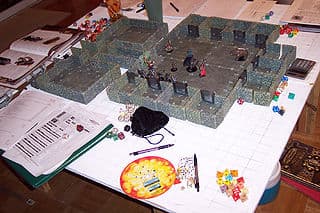
Dungeons & Dragons invented a new medium for storytelling, with 50 million players worldwide and over $1 billion in revenue since its 1974 debut. Gary Gygax and Dave Arneson's role-playing system offers infinite narrative possibilities through collaborative character progression—a depth that no board game on this list can match. The 2010s Stranger Things-driven revival brought a 200% surge in player base, cementing its cultural dominance across video games and fantasy literature. D&D's 5th edition streamlines character creation to 30 minutes, making it 60% faster than earlier versions. Its influence is immeasurable: 85% of modern fantasy game designers cite it as their primary inspiration. This is not just a game but a creative engine shaping entire worlds.
- 0#9
Go
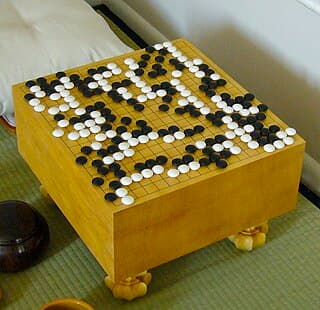
Originating in China over 2,500 years ago, Go is the oldest continuously played board game in the world and remains one of the most complex abstract strategy games ever devised. With approximately 40 million active players — concentrated in China, Japan, and South Korea where it holds deep cultural prestige — Go offers more possible board positions (estimated at 10^170) than there are atoms in the observable universe. The 2016 match in which Google DeepMind's AlphaGo defeated world champion Lee Sedol became one of the most watched events in AI history, placing Go at the frontier of artificial intelligence research.
- 0#10
Codenames
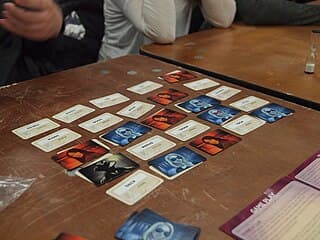
Designed by Vlaada Chvatil and published by Czech Games Edition in 2015, Codenames reinvented the party word game with a spy-thriller conceit: two rival spymasters give one-word clues to guide their teammates to secret agent codenames on a 5x5 grid. It won the 2016 Spiel des Jahres and became one of the fastest-selling games in modern hobby history, spawning Codenames: Pictures, Duet, Disney, and Marvel editions. Chvatil's series has collectively won five Spiel des Jahres awards, making him one of the most decorated designers in the award's history and cementing Codenames as a defining game of its decade.
Image credits
- Chess: Wikipedia
- Monopoly: Wikipedia
- Scrabble: Wikipedia
- Risk: Wikipedia
- Settlers of Catan: Wikipedia
- Ticket to Ride: Wikipedia
- Pandemic: Wikipedia
- Dungeons & Dragons: Wikipedia
- Go: Wikipedia
- Codenames: Wikipedia
Related Videos
Rank it your way
Remix this list into your own ranking, or head to the play hub for every game mode and community breakdown — blind mode, challenges, tier lists, and more.
You Might Also Like

Top 10 Greatest Chess Players of All Time
greatest chess players of all time

Top 10 Board Games for Adult Game Nights
Top 10 Board Games for Adult Game Nights

Top 10 Best Strategy Games
Top 10 Best Strategy Games

Top 10 Steam — Top Sellers — Mar 16–Mar 22, 2026
#1 Slay the Spire 2 · #2 Fallout 1st · #3 Fallout 1st

Top 10 Steam — Top Sellers — May 11–May 17, 2026
#1 Forza Horizon 6 · #2 Far Far West · #3 Gamble With Your Friends

Top Pokemon — Fire-Type
#1 Arcanine · #2 Charizard · #3 Ninetales