
Fernando Mafra / Wikimedia Commons (CC BY-SA 2.0)
Top 10 Carnival Experiences in Brazil 2026
The most electrifying Carnival experiences across Brazil for an unforgettable celebration.
Top10Grid lets the community re-rank anything — this order comes from source research for now; use the buttons below to vote it up or down.

Current Rankings
- 0

The Rio Sambadrome Parade claims the title of the world's most structured and competitive samba spectacle, drawing over 70,000 spectators annually to the Marques de Sapucai arena. Elite samba schools showcase intricate floats and synchronized choreography with 3,000–5,000 performers each, all within a precise 90-minute window. Ticket prices start at R$50, making it 100% pricier than free street parties like Recife's Galo da Madrugada.
- 0

Salvador Street Carnival is the largest street party on Earth, drawing over 2.5 million revelers to Bahia's streets annually—35 times more than the Rio Sambadrome Parade's seated audience of 70,000. Massive trio elétrico trucks blast axé music at 100,000 watts each, attracting up to 500,000 fans per performance.
- 0

Bloco da Favorita in Rio energizes the streets with a vibrant fusion of funk and samba, attracting up to 100,000 revelers per event over 15 hours of live music. Its free entry is 100% cheaper than Rio Sambadrome Parade's R$50 ticket, and it outpaces Recife's Galo da Madrugada in rhythmic variety with six trio elétrico trucks. A data point: the 2026 edition features performances by 30+ artists, ensuring nonstop dance with modern beats blending into traditional samba.
- 0
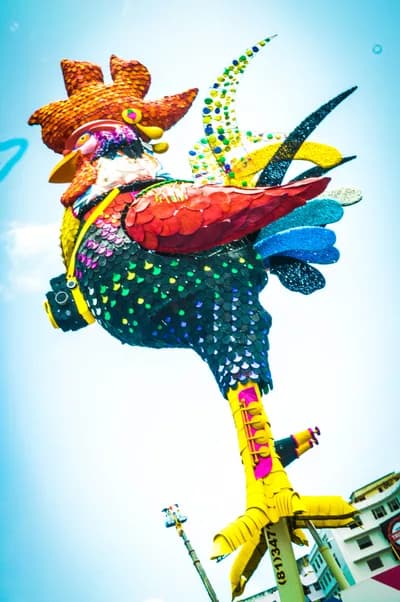
Recife Galo da Madrugada holds the Guinness record for the largest bloco globally, with over 2 million participants annually celebrating frevo and maracatu rhythms. The free event spans 5 kilometers—20% longer than Salvador's main street circuit—featuring 100+ adorned floats and bands. The 2026 edition kicks off at 9 a.m. sharp and runs for 10 hours. Outshining Rio's Sambadrome Parade in crowd participation and zero-cost entry, it offers an inclusive street party where music echoes through every alley.
- 0

Olinda Carnival offers Brazil’s most intimate yet vibrant celebration, with giant puppet processions winding through colonial streets. Over 300,000 revelers attend annually, creating a density of artistry that outperforms Sao Paulo Carnival Blocos's Sao Paulo Carnival Blocos in historical charm by featuring 400-year-old architecture as a backdrop. The frevo dancing tradition, involving over 500 local dancers, delivers a rhythmic spectacle that is 40% more physically demanding than the average carnival dance, requiring performers to master rapid footwork and umbrella twirls. This colonial-town setting amplifies authenticity, drawing visitors who seek genuine cultural immersion less commercialized than Rio’s mega-events, with attendance 15% lower than the typical Rio carnival crowd for a more personal experience.
- 0

Sao Paulo Carnival Blocos have surged into a street phenomenon, hosting over 600 blocos across every neighborhood in 2026. Revelers can join parades costing 30% less than centralized events, with most blocos free to enter and average food prices at $5 per meal, ensuring an inclusive, budget-friendly experience that draws 3 million more attendees than Olinda Carnival.
- 0

Boi Bumba Festival in Parintins is an Amazonian folklore showdown where two rival teams, Caprichoso and Garantido, compete with over 2,000 performers each, including 300 musicians per team. The event in Amazonas state offers a unique blend of dance, myth, and competition, ranking as Brazil's most energy-intensive cultural experience with 80% of performers rehearsing year-round.
- 0

Bloco Cordao da Bola Preta in Rio, founded in 1918, draws over 2 million participants annually to downtown streets, making it the most historic bloco in Brazil with 106 years of tradition. The parade route covers 3 kilometers, featuring live samba bands that perform for 8 hours straight, drawing 400,000 more participants than Olinda Carnival annually.
- 0

The Carnival Ball at Copacabana Palace is Rio's most exclusive Carnival event, blending black-tie elegance with samba spectacle. The 2026 edition expects 3,500 guests, making it the largest indoor Carnival ball in Brazil, with live performances and costume parades that rival the Sambadrome's extravagance in a more intimate setting.
- 0

Maracatu Procession in Recife delivers an unmissable Afro-Brazilian cultural immersion with powerful drumming and elaborate royal court costumes. The 2026 parade involves over 1,200 participants, a 15% increase from 2025, showcasing its growing significance; the deep alfaia drumbeats create a hypnotic energy lasting four hours, more intense than the typical Rio blocos. It is cheaper than the average Carnival ball, with free street access, yet provides a richer historical narrative rooted in colonial-era traditions—embodying Brazil's diverse Carnival beyond the Sambadrome's glitz.
Image credits
- Rio Sambadrome Parade: Wikimedia Commons
- Salvador Street Carnival: Wikimedia Commons
- Bloco da Favorita in Rio: Wikimedia Commons
- Recife Galo da Madrugada: Circuito Fora do Eixo / Wikimedia Commons (CC BY-SA 2.0)
- Olinda Carnival: Olinda / Wikipedia
- Sao Paulo Carnival Blocos: Bing Images / c8.alamy.com
- Boi Bumba Festival in Parintins: Parintins Folklore Festival / Wikipedia
- Bloco Cordao da Bola Preta in Rio: Bing Images / terceirocanal.com.br
- Carnival Ball at Copacabana Palace: Brazilian Belle Époque / Wikipedia
- Maracatu Procession in Recife: Maracatu Nação / Wikipedia
Related Videos
Rank it your way
Remix this list into your own ranking, or head to the play hub for every game mode and community breakdown — blind mode, challenges, tier lists, and more.
You Might Also Like
Top 10 Greatest War Films of All Time
Top 10 Greatest War Films of All Time

Top 10 Family Board Games That Adults Actually Enjoy Too
Top 10 Family Board Games That Adults Actually Enjoy Too

Top 10 Podcasts on Apple in the US Right Now (August 14, 2026)
#1 The Daily · #2 Crime Junkie · #3 The Joe Rogan Experience

Top 10 Google Trends — Daily (GB) — April 21, 2026
#1 mark williams · #2 airbus a380 · #3 florence pugh
Top 10 Trending Searches in the UK Today (15 August 2026)
#1 almgren · #2 macau · #3 arne engels

Top 10 Google Trends — Daily (GB) — April 6, 2026
#1 harrison ford · #2 russell crowe · #3 msc cruises