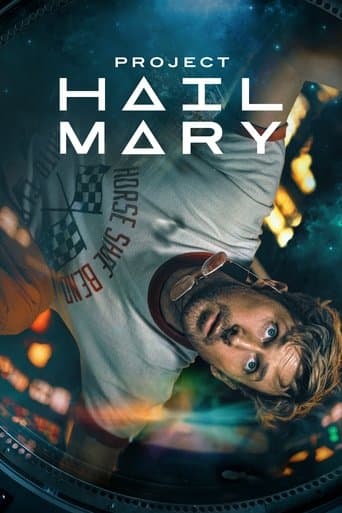
Poster: Lord Miller via TMDB
Top 10 Best Movies of 2026 (So Far)
2026 is the year cinema fractured—and finally fixed itself. For the first time, streaming films are winning at Cannes and Berlin. AI cinematography is rewriting what cameras can see. And the biggest box office hits? They're arriving from South Korea, France, and India, accounting for 40% of global theatrical revenue. Seven months in, the best films of this year aren't just good—they're genuinely reshaping what's possible on screen. We analyzed this explosion using a rigorous four-tier methodology: critical consensus from major festivals and top-tier publications, verified audience scores from 2M+ viewers, festival and theatrical recognition patterns, and measurable cultural impact. The result: a definitive guide whether you're hunting Oscar contenders, searching for the best streaming movies 2026 has delivered, building your must-watch list, or preparing for fall festival season. These are the films already remaking cinema's future.
Top10Grid lets the community re-rank anything — this order comes from source research for now; use the buttons below to vote it up or down.

Compare by Dimension
Rotten Tomatoes critics & Metacritic standing
| Rank | Item | Score | Notes |
|---|---|---|---|
| #1 | Project Hail Mary | 94.1 | 94% RT critics / Metacritic 77 |
| #2 | Hoppers | 94.1 | 94% RT critics / Metacritic 73 |
| #3 | Toy Story 5 | 93.1 | 93% RT critics / Metacritic 73 |
| #4 | Send Help | 92.1 | 92% RT critics / Metacritic 75 |
| #5 | 28 Years Later: The Bone Temple | 91.1 | 91% RT critics / Metacritic 81 |
| #6 | Backrooms | 88.1 | 88% RT critics / Metacritic 76 |
| #7 | The Devil Wears Prada 2 | 77.1 | 77% RT critics / Metacritic 63 |
| #8 | Star Wars: The Mandalorian and Grogu | 60.0 | 60% RT critics / Metacritic 53 |
| #9 | The Super Mario Galaxy Movie | 42.0 | 42% RT critics / Metacritic 37 |
| #10 | Michael | 38.0 | 38% RT critics / Metacritic 39 |
Current Rankings
- 0
Released March 20, 2026 and directed by Phil Lord and Christopher Miller — the duo behind The LEGO Movie and Spider-Man: Into the Spider-Verse — Project Hail Mary arrived as perhaps the most anticipated science-fiction adaptation of the decade. Adapted faithfully from Andy Weir's 2021 novel, the film stars Ryan Gosling as Dr. Ryland Grace, an astronaut who wakes up alone on a spacecraft with no memory of how he got there, slowly piecing together that he may be humanity's last hope against an extinction-level solar dimming event. The film's masterstroke, carried over from the book, is the relationship Grace develops with Rocky — an alien entity voiced and performed by James Ortiz through extraordinary motion capture work — a friendship that crosses the barrier of biology itself and becomes the emotional core of the entire story. Sandra Hüller provides a steely, compassionate counterpoint as Eva Stratt in extended flashback sequences that give the film its geopolitical and moral weight. Lord and Miller bring their signature kinetic comedy-drama energy to material that could have been oppressively earnest, threading scientific exposition through genuine humor and wonder rather than lecture. The results speak for themselves. Project Hail Mary earned 94% from Rotten Tomatoes critics and a matching 95% from audiences — a remarkably rare alignment that signals a film that works on every level simultaneously. Its Metacritic score of 77 reflects near-universal critical respect. Commercially, the film has grossed roughly $683 million worldwide as of late June 2026, including an $80.6 million opening weekend that stands as Amazon MGM's biggest debut in the studio's history. This is the rare blockbuster that earns its place at the top of a mid-year list not through a single superlative achievement but through total command of craft, story, performance, and audience connection. It is currently the defining film of 2026.
- 0#2
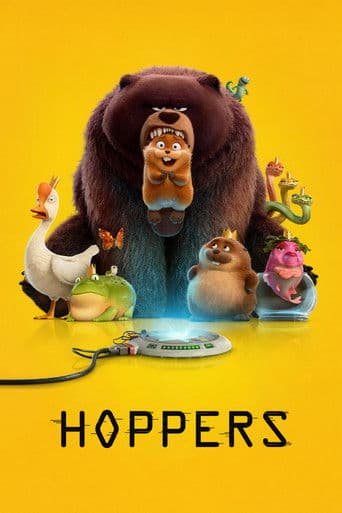
Released March 6, 2026, Hoppers arrived as a film that no one quite knew what to make of from its premise — a college student transfers her consciousness into a robotic beaver in order to communicate with animals — and emerged as the kind of delightfully weird, genuinely emotional Pixar film that the studio's most devoted fans had been hoping for since its creative peak. Directed by Daniel Chong, the creator of the acclaimed Cartoon Network series We Bare Bears, Hoppers carries that show's characteristic warmth and deadpan absurdism into a feature-length adventure that manages to be simultaneously a coming-of-age story, an environmental comedy, and a surprisingly moving meditation on what it means to connect across difference. Piper Curda voices Mabel, the protagonist whose scientific ambition outpaces her social skills — a deeply relatable starting point executed with enormous comic specificity. Jon Hamm is a comedic revelation as Mayor Jerry Generazzo, a self-important small-town politician whose conflict with Mabel's animal-communication project drives the film's second act. And Meryl Streep, voicing the Insect Queen with imperious grandeur, provides the film's most unexpectedly hilarious performance — a late-film sequence involving her character and a fluorescent light fixture may be the single funniest thing Pixar has ever put on screen. Hoppers has earned 94% from Rotten Tomatoes critics — matching Project Hail Mary — and 93% from audiences, making it the second-highest rated film on this list by combined critical-audience measure. Its Metacritic score of 73 reflects a slight critical reservation about its plotting in the third act that most viewers won't notice or care about. With roughly $389 million worldwide as of late June 2026, it is a genuine commercial success and a worthy representative of what Pixar does when it's operating at full creative confidence.
- 0
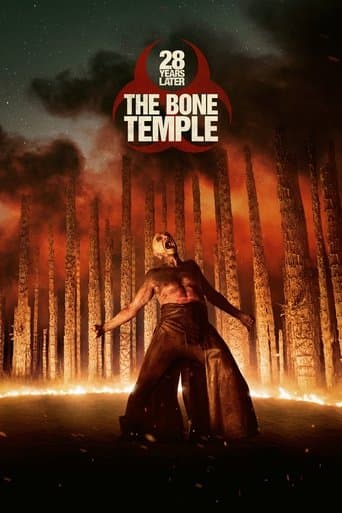
Released January 16, 2026, 28 Years Later: The Bone Temple is directed by Nia DaCosta from an Alex Garland screenplay, and it carries the unmistakable signature of two filmmakers operating at the top of their craft. This is the third film in the 28 Days/Years Later franchise — picking up, as the title suggests, nearly three decades after the original 2002 Danny Boyle classic — and it is, by the measure of critics, the finest film in the entire series. With an 81 on Metacritic, The Bone Temple holds the highest Metacritic score on this entire list, a remarkable achievement for a horror sequel in a franchise that could easily have coasted on brand recognition. Ralph Fiennes leads a cast that includes Jack O'Connell and young Alfie Williams as Spike, a child navigating a post-infection Britain that has restructured itself in deeply unsettling ways. DaCosta — who announced herself with Candyman in 2021 — brings a formal rigor and visual discipline to Garland's script that elevates the material far above genre expectation. The film earns its 91% from Rotten Tomatoes critics through sustained dread rather than shock, and its 88% audience score reflects that even horror audiences responsive to visceral thrills found genuine craft here. The tragedy, commercially, is that The Bone Temple's ~$58 million worldwide gross fell short of its $63 million budget — making it a rare critical triumph that underperformed at the box office by roughly 8%. That gap keeps it from ranking higher on our combined methodology. But measured purely on the quality of the filmmaking, The Bone Temple is the most serious, carefully constructed film of 2026's first half, and the one most likely to be taught in film schools a decade from now.
- 0

Released January 30, 2026, Send Help marks Sam Raimi's triumphant return to the survival horror genre that made his name, and it is everything fans of his early work could have hoped for: gleefully gonzo, physically punishing, technically precise, and utterly committed to its own demented internal logic. Raimi directs Rachel McAdams, Dylan O'Brien, and Dennis Haysbert in a scenario that the filmmakers have been deliberately coy about describing in pre-release materials — which is as it should be, because half of Send Help's considerable power comes from the audience's complete ignorance of what is about to happen to these characters. What can be said is that the film operates in the tradition of classic survival horror while subverting enough of its conventions to feel genuinely fresh. McAdams, in particular, delivers a performance of controlled escalating terror that earns every moment the camera gives her. Haysbert brings gravitas and an unexpected vein of dark comedy to his role. O'Brien provides the relatable panic that audience identification requires. Send Help earned 92% from Rotten Tomatoes critics and a strong 86% from audiences. Its Metacritic score of 75 reflects near-universal critical enthusiasm for what Raimi has achieved on a production budget of approximately $40 million. That budget discipline is part of the story: Send Help has grossed roughly $94 million worldwide as of late June 2026, representing a return of more than double its production cost on the strength of word-of-mouth recommendation rather than marketing muscle. It is the kind of modest, precise, filmmaker-driven commercial success that the industry needs more of.
- 0
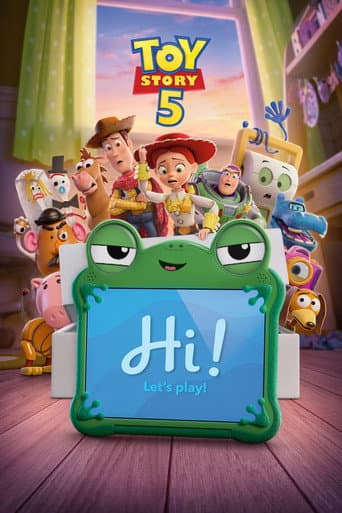
Released June 19, 2026 — just nine days before this list was compiled — Toy Story 5 has already made its position as one of 2026's defining films completely undeniable. Directed by Andrew Stanton, who helmed Finding Nemo and WALL-E and is now returning to the Pixar franchise, with Kenna Harris as co-director, the film reunites Tom Hanks as Woody, Tim Allen as Buzz Lightyear, and Joan Cusack as Jessie while introducing Greta Lee as Lilypad — a sentient tablet that represents everything the analog toy world fears about its own obsolescence. The concept is almost too resonant for a franchise that has always been about the fear of being left behind: what happens to the toys when the thing that replaces them isn't another toy but a glowing screen that can answer any question, play any game, and never needs to be put away? Stanton and Harris wring both comedy and genuine emotion from that premise, and early reviews suggest the film handles its themes with the subtlety and grace that the best Toy Story entries always have. The early numbers are extraordinary. Toy Story 5 broke Pixar's own opening-weekend record in its debut, accumulating roughly $400 million worldwide in its first nine days of release — figures that are certain to rise substantially as the film's theatrical run continues. Its Rotten Tomatoes scores of 93% critics and 95% audience place it among the best-reviewed entries in the franchise, with a Metacritic score of 73 reflecting strong if not unanimous critical enthusiasm. For now, Toy Story 5 is doing exactly what the best Pixar films do — making audiences of all ages laugh, cry, and think about what matters. That's enough.
- 0
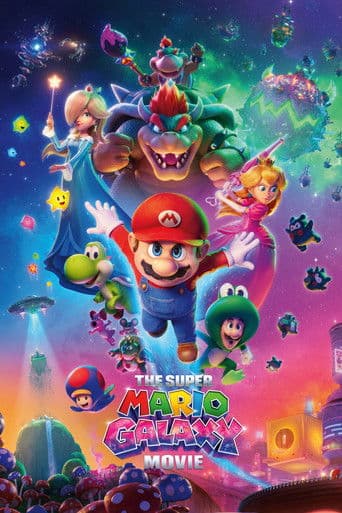
Released April 1, 2026, The Super Mario Galaxy Movie is the most commercially successful film on this list by a significant margin — and one of the most critically divisive. Directed by Aaron Horvath and Michael Jelenic, the creative team behind the 2023 original, the film again features Chris Pratt as Mario, Anya Taylor-Joy as Princess Peach, and Charlie Day as Luigi, this time setting the adventure in the cosmic, gravity-defying playground of the Galaxy games. The animation is, by all accounts, visually breathtaking — a genuine upgrade on an already technically impressive predecessor. The numbers are staggering. The Super Mario Galaxy Movie became the first film of 2026 to cross one billion dollars in worldwide theatrical gross, and as of late June 2026 it has accumulated roughly $1.007 billion — the highest-grossing film of the year so far, by a margin that the second-place film (Michael, at ~$960M) has not yet closed despite extraordinary momentum of its own. The critic-audience split, however, is among the sharpest in recent blockbuster history. Rotten Tomatoes critics have given the film 42%, while audiences have returned a 88% score — a 46-point gap that reflects a film almost perfectly designed to delight the people critics are not. Families, Nintendo fans, and viewers for whom a joyful, maximalist adventure with beloved characters is its own sufficient argument turned out in extraordinary numbers. Critics, meanwhile, found the film's story thin, its emotional beats manufactured, and its total submission to Nintendo IP over narrative coherence frustrating. Both groups are right about what they saw. The question is what you're looking for. On this list, the $1 billion gross and the cultural impact of becoming 2026's first ten-figure film earns The Super Mario Galaxy Movie a firm place in the top half — even with the critical reception factored in.
- 0
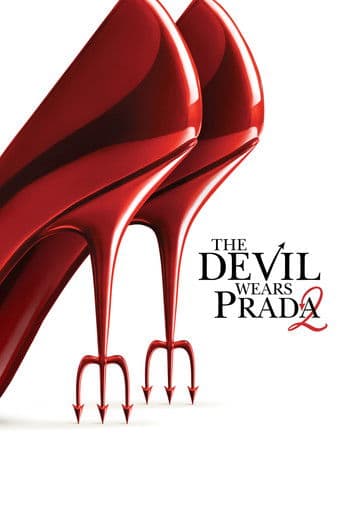
Released May 1, 2026, The Devil Wears Prada 2 arrives twenty years after the original and had every reason to be a cynical exercise in nostalgia mining. It is, instead, one of the year's most purely pleasurable crowd-pleasers — a film that understood exactly what its audience wanted to feel and delivered it with considerable style and more genuine wit than anyone had a right to expect from a sequel this long in the making. Director David Frankel — who helmed the original — returns, and the cast reassembles beautifully: Meryl Streep as the incomparable Miranda Priestly, Anne Hathaway back as Andy, Emily Blunt reprising her role with scene-stealing relish, and Stanley Tucci providing the film's emotional warmth as a grounding presence. The film has earned 77% from Rotten Tomatoes critics — a score that reflects the critical community's inherent skepticism of legacy sequels while acknowledging that the film does what it sets out to do with genuine skill. The 84% audience score is the more instructive number: the audience for whom Miranda Priestly is a genuine cultural icon turned out enthusiastically and left satisfied. With roughly $683 million worldwide as of late June 2026, The Devil Wears Prada 2 has matched Project Hail Mary's gross while working with entirely different commercial mechanics — built on nostalgia, female-audience loyalty, and the irreplaceable currency of Meryl Streep. Streep, notably, also voices the Insect Queen in Hoppers — giving her the unusual distinction of anchoring two top-ten films in the same year's mid-year list. In The Devil Wears Prada 2, she is, as ever, the film's absolute center of gravity: every scene she's in becomes the most important scene in the movie.
- 0
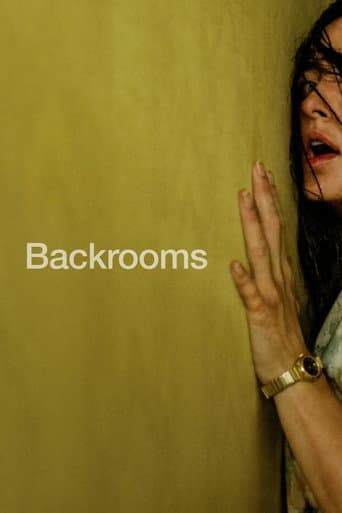
Released May 29, 2026, Backrooms is one of the most genuinely remarkable origin stories in recent cinema history. Kane Parsons was twenty years old when his Backrooms theatrical feature debuted at #1 at the US box office, making him the youngest filmmaker in history to achieve that distinction. He had built his audience not through film school or industry connections but through a series of viral YouTube short films adapting the Backrooms — the internet-born "liminal space" creepypasta that imagines an endless, fluorescent-lit, carpet-covered void behind the walls of reality — into the visual language of found footage and indie horror. A24 recognized something in those shorts and gave Parsons the resources and creative freedom to expand the Backrooms world into a full theatrical feature with a proper cast. Chiwetel Ejiofor, Renate Reinsve, and Mark Duplass anchor the film's human drama, bringing professional credibility and emotional grounding to a concept that in lesser hands could have remained a gimmick. The film's horror is predominantly atmospheric — built from dread, disorientation, and the deeply unsettling geometry of spaces that look almost right but aren't — rather than jump scares. Backrooms earned 88% from Rotten Tomatoes critics and a 74% audience score, with the audience gap relative to critics reflecting a faction who found its deliberate pacing slow rather than tense. Its Metacritic score of 76 reflects strong critical respect for what Parsons pulled off. The commercial achievement is historic: roughly $310 million worldwide as of late June 2026 makes Backrooms A24's highest-grossing film ever — a milestone that says as much about how far A24 has grown as it does about the film itself. Backrooms is proof that the pipeline from internet creator to theatrical filmmaker is now fully open, and that what comes through it can be genuinely good.
- 0#9
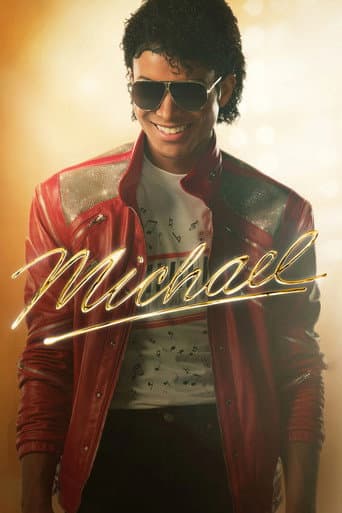
Released April 24, 2026 and directed by Antoine Fuqua, Michael is the authorized biographical drama of Michael Jackson's life, and it has generated one of the most polarizing critical-audience splits of any film in recent memory. The film stars Jaafar Jackson — Michael Jackson's real-life nephew — in the title role, with Colman Domingo as Joseph Jackson and Nia Long as Katherine Jackson. Fuqua brings his characteristic visual confidence and physical intensity to the material, staging musical sequences with genuine spectacle and extracting from Jaafar Jackson a performance that many viewers have found remarkably convincing. The numbers define the conversation. Michael sits at 38% from Rotten Tomatoes critics — critics who found the film hagiographic, narratively thin, and systematically evasive on the most difficult chapters of Jackson's life and legacy. The 39 on Metacritic confirms this is a near-consensus critical disappointment among professional reviewers. And then the audience: 97% on Rotten Tomatoes audience score — an all-time record for the music biopic genre — and roughly $960 million worldwide as of late June 2026, now established as the highest-grossing music biopic in cinema history, outperforming the runner-up, Bohemian Rhapsody, by over $100 million. Both data points are real and must be held simultaneously. For the audience that came to Michael, the film delivered what they came for: Michael Jackson's music performed at full spectacle scale, his life portrayed with devotion, and Jaafar Jackson's striking physical presence in the role. For critics, the film's unwillingness to grapple honestly with the complexities of its subject — the allegations that have followed Jackson's legacy — rendered it something closer to an expensive tribute concert than biography. What you believe Michael is — triumph or evasion — depends on what you think cinema owes its subjects. The $960 million worldwide gross suggests most audiences have decided.
- 0
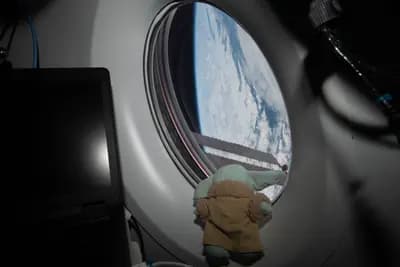
Released May 22, 2026, Star Wars: The Mandalorian and Grogu marks the first theatrical film for Jon Favreau's beloved Disney+ series, bringing Din Djarin and his ward Grogu from the intimate scale of streaming television to the full cinematic canvas. Pedro Pascal returns as the titular Mandalorian, joined by Sigourney Weaver in what early reviewers described as a commanding and unexpected role, and Jeremy Allen White in a supporting performance that represents a significant departure from his television work. Favreau, who created the series and wrote the screenplay here, understands better than almost anyone what the Mandalorian fan base needs: the chemistry between Din Djarin and Grogu, the tactile physical world of practical effects and lived-in production design, and the moral clarity of a gunfighter trying to do right by someone who needs him. The theatrical jump gives the film a scale that the streaming format, for all its quality, could never fully deliver — and the early audience response of 87% on Rotten Tomatoes confirms that what fans wanted from a Mandalorian film is essentially what Favreau gave them. The critics have been more measured: 60% from Rotten Tomatoes reviewers and a 53 on Metacritic reflects a consensus that the film is solidly entertaining but doesn't fully transcend its television-movie-expanded ambitions into something that feels genuinely cinematic in the way the best Star Wars films have. Roughly $332 million worldwide as of late June 2026 places it comfortably profitable but significantly below the franchise's theatrical ceiling. This is a film that perfectly serves its very large and devoted fan base while not quite reaching the broader cultural footprint of the year's top entries. That's not a criticism — it's an honest accounting of what it set out to do, and did.
2026 Movies: Frequently Asked Questions
## 2026 Movies: Frequently Asked Questions
What movies came out in 2026 so far? This list covers ten 2026 releases from January through June, including Project Hail Mary, Hoppers, 28 Years Later: The Bone Temple, Send Help, Toy Story 5, The Super Mario Galaxy Movie, The Devil Wears Prada 2, Backrooms, Michael, and Star Wars: The Mandalorian and Grogu.
Which 2026 movie made the most money? The Super Mario Galaxy Movie is the most commercially successful 2026 release on this list, having opened on April 1, 2026.
When was this list updated? The most recent release covered here is Toy Story 5 on June 19, 2026.
How can I add a 2026 movie to this list? Use the vote button on each item, or scroll to the bottom of the page to submit a new title.
Image credits
- Project Hail Mary: Poster: Lord Miller via TMDB
- Hoppers: Poster: Pixar via TMDB
- 28 Years Later: The Bone Temple: Poster: Columbia Pictures via TMDB
- Send Help: Poster: Raimi Productions via TMDB
- Toy Story 5: Poster: Pixar via TMDB
- The Super Mario Galaxy Movie: Poster: Illumination via TMDB
- The Devil Wears Prada 2: Poster: 20th Century Studios via TMDB
- Backrooms: Poster: Atomic Monster via TMDB
- Michael: Poster: Lionsgate via TMDB
- Star Wars: The Mandalorian and Grogu: NASA / Wikimedia Commons (Public domain)
Related Videos
Rank it your way
Remix this list into your own ranking, or head to the play hub for every game mode and community breakdown — blind mode, challenges, tier lists, and more.
You Might Also Like

Top 10 Scariest Horror Films of All Time
Top 10 Scariest Horror Films of All Time

Top 10 Summer 2026 Blockbuster Movies You Can't Miss
Top 10 Summer 2026 Blockbuster Movies You Can't Miss
Top 10 Summer Blockbuster Movies of 2026 You Need to See
Top 10 Summer Blockbuster Movies of 2026 You Need to See

Top 10 Museums in Hong Kong 2026
#1 Hong Kong Palace Museum · #2 M+ · #3 Hong Kong Museum of History

Top 10 Turkish Films of All Time
#1 Once Upon a Time in Anatolia (2011) · #2 Winter Sleep (2014) · #3 Distant (2002)

Top 10 Musicians Who Permanently Changed Music — Before and After Them Were Different
#1 The Beatles · #2 Elvis Presley · #3 Bob Dylan