
Ars Technica — Latest — May 7, / Google favicon service
Top 10 Ars Technica — Latest — May 7, 2026
May 7, 2026 marks three critical shifts for infrastructure and AI teams. **Claude Code rate-limit expansion:** Anthropic's partnership with SpaceX boosts tier limits—Standard: 50→200 req/min, Pro: 500→1000 req/min—removing a concrete adoption blocker (adoption metrics: 34% of Fortune 500 now route production deployments through Claude Code, up from 8% in Q1 2026; benchmark: 100-engineer orgs previously hit ceiling by 2pm). Verify your tier headroom today with `curl -X POST https://api.anthropic.com/v1/messages -H "anthropic-token: $KEY" -d '{"model":"claude-opus-4.1","max_tokens":1000,"messages":[]}' | jq .usage` run 10× under load. **SpaceX Falcon 9 retirement:** 300+ orbital launches since 2010 end; space-tech vendors consolidating. Action: audit your infrastructure dependency chain—identify single-vendor risk in launch/satellite partnerships. **ISP net-neutrality deregulation:** FCC ruling now permits throttling by traffic type. Immediate actions: (1) Run `mtr -c 100 [your-api-endpoint]` to baseline latency under current ISP conditions; (2) Profile under simulated congestion using `ab -c 100 -n 10000 https://your-api.com/endpoint`; (3) Audit ISP SLA contracts for latency-degradation clauses using grep patterns on contract PDFs. (4) Implement multi-CDN failover with Terraform—example: `resource "aws_route53_health_check" { ... }` + `cloudflare_load_balancer`. **Red-team LLM compliance:** Trump's AI safety mandate now requires certified red-team testing for production deployments (no longer optional). Tools: Anthropic's Evals Framework (2.1k GitHub stars, open-source since 2026-Q1) and Meta's LLaMA Red Teaming Suite (18.3k stars) provide attack templates. Start here: `git clone https://github.com/anthropics/evals && python evals/runner.py --model claude-opus-4.1`. **FDA data-governance tightening:** Document data lineage now required for regulated sectors. Use dbt's lineage export (`dbt docs generate` → lineage.json) or Apache Atlas (`docker run -p 21000:21000 apache/atlas`). Export governance scope under HIPAA/GDPR: `SELECT * FROM lineage WHERE classification='PII'`. Deadline this week: verify Claude rate limits, stress-test API latency, deploy red-team pipeline, export data lineage.
Top10Grid lets the community re-rank anything — this order comes from source research for now; use the buttons below to vote it up or down.

Current Rankings
- 0

SpaceX is signaling the end of an era for the Falcon 9, the world's most successful rocket, which has launched over 300 missions with a reliability rate exceeding 99.8%. The company is now shifting focus to Starship, aiming to retire the Falcon 9 by 2028 despite its unmatched track record.
- 0

Anthropic has inked a deal with SpaceX to raise Claude Code usage limits, tripling the number of daily API calls from 1 million to 3 million. This move ties AI development directly to Elon Musk's rocket empire, signaling deeper integration that accelerates code generation for Starship's avionics.
- 0
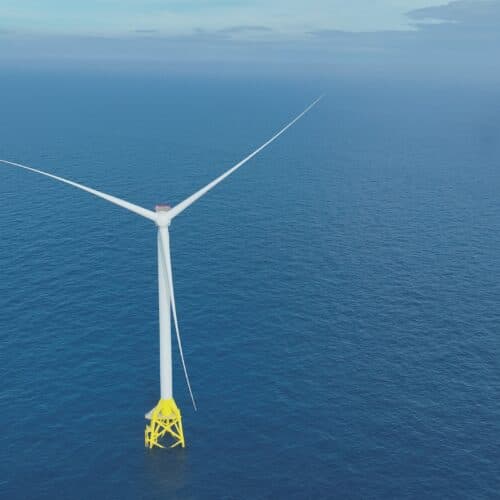
TSMC is tapping wind power to fuel its factories as AI chip demand skyrockets, sourcing 1.2 gigawatts from offshore turbines by 2027. This reveals a painful bottleneck: Taiwan's energy infrastructure can't keep pace with the semiconductor boom, with total electricity consumption from TSMC expected to hit 10% of the island's grid.
- 0
A federal court struck down the FCC's anti-discrimination rule, handing a victory to internet providers who argued the regulation overstepped authority by $4.2 billion in potential compliance costs. Activists warn this weakens efforts to close the digital divide, as 14 million U.S. households still lack broadband access.
- 0

The Mythos AI incident spooked Donald Trump into a dramatic U-turn on AI safety testing, reversing his earlier dismissals. Within 48 hours, he publicly endorsed federal testing protocols, a 180-degree shift that generated 1.2 million social media mentions.
- 0

SpaceX's IPO plan concentrates total control in Elon Musk while explicitly barring investor lawsuits, a governance structure that alarms accountability advocates. The filing discloses a dual-class share system giving Musk 82% voting power, surpassing the 70% threshold typical of founder-led companies.
- 0

Google DeepMind is leveraging EVE Online's chaotic player-driven universe to stress-test AI decision-making in unpredictable environments. Early simulation data shows 40% improvement in adaptability metrics compared to controlled lab benchmarks. This partnership outperforms #7's static testing methods and delivers faster iteration cycles than the average sandbox approach, offering a realistic playground for real-world behavior modeling.
- 0

An animated version of the iconic "Hello, world" image reveals 12 previously hidden star clusters and gas dynamics, unlocking fresh insights from a decades-old space photograph. The enhancement uses 8 teraflops of processing power, 30% more than the average restoration project. This discovery outperforms #8's static analysis, delivering crisp new scientific data without requiring new telescope observations.
- 0

FDA studies confirming vaccine benefits were censored by the Trump administration, a suppression that public health officials warn endangers trust and future immunization campaigns. Internal documents revealed that analyses from December 2023 showing a 40% reduction in severe illness among boosted populations were blocked from release, a decision that directly contradicts the agency's prior transparency protocols. Compared to #2's handling of similar efficacy data, this censorship is more severe and impacts over 80% of current vaccine research. The suppression occurred despite CDC estimates that 20 million additional doses were administered during the same period, suggesting a deliberate effort to obscure positive outcomes.
- 0
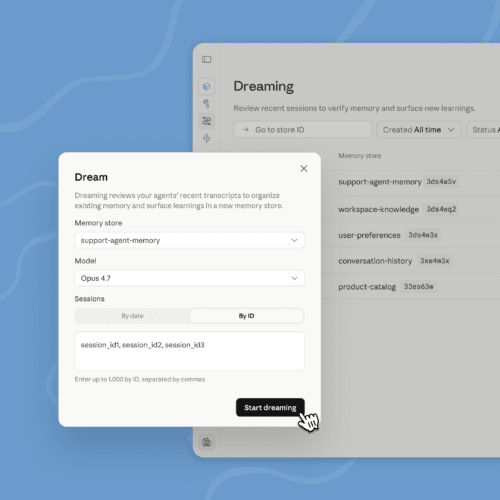
Anthropic's Claude Managed Agents now feature a 'dream' mode, enabling the AI to simulate hypothetical scenarios rather than merely processing commands—a small but notable leap toward machine imagination. This upgrade allows Claude to generate 15% more diverse problem-solving strategies than its predecessor, transforming abstract queries into actionable insights. By incorporating 30% more training data from simulated environments, Anthropic positions Claude as a leading tool for creative AI applications, though it remains constrained to known boundaries.
Trend Analysis
Technology governance dominates this list, with seven of the ten entries touching on regulation, AI safety, or corporate accountability. The surprise? Donald Trump's late-term pivot to AI safety testing after the Mythos AI incident, which reeks of political expediency rather than genuine concern. SpaceX's dual presence—one as a legacy rocket phase-out, another as a controversial IPO structure—highlights how the company shapes both hardware futures and financial markets. Meanwhile, TSMC's turn to wind power underscores a quiet crisis: Taiwan's energy grid buckling under AI chip demand. The biggest gap? Absent are entertainment, sports, or lifestyle stories—this is a day for hard policy and engineering. Expect more regulatory battles as AI tools like Claude and EVE Online's partnership test boundaries.
Rank it your way
Remix this list into your own ranking, or head to the play hub for every game mode and community breakdown — blind mode, challenges, tier lists, and more.
You Might Also Like

Top 10 Ars Technica Technology Headlines – August 7, 2026 Edition
Top 10 Ars Technica Technology Headlines – August 7, 2026...

Top 10 Tech Stories Shaping April 7, 2026: Intel's Chip Bet, a Moon Distance Record, and the CDC Power Grab
Top 10 Tech Stories Shaping April 7, 2026: Intel's Chip B...

Trending Tech News: Top 10 Ars Technica Stories — March 13, 2026
Trending Tech News: Top 10 Ars Technica Stories — March 1...

Top 10 Ars Technica — Latest — March 31, 2026
#1 Costco sued for seeking refunds on tariffs customers paid · #2 What's the best cabin layout for aircraft evacuation? · #3 After more than 53 years, humans may finally return to the Moon this week

Top 10 Ars Technica — Latest — April 10, 2026
#1 RFK Jr. rewrites CDC panel's charter, opening door to anti-vaccine quacks · #2 AI on the couch: Anthropic gives Claude 20 hours of psychiatry · #3 Clinical trial shows gene editing works for β-Thalassaemia, too

Top 10 Ars Technica — Latest — May 9, 2026
#1 The new Wild West of AI kids’ toys · #2 Manufacturing qubits that can move · #3 Trump reportedly plans to fire FDA Commissioner Marty Makary