
Ars Technica — Latest — April 23, / Google favicon service
Top 10 Ars Technica — Latest — April 23, 2026
April 23, 2026, delivered a tech-laden news cycle that revealed deep unease—from Apple's disappearing entry-level hardware to Russia's space weapons going operational. Top stories from major outlets this day didn't just track gadget launches; they charted mounting geopolitical and environmental costs. The $599 Mac mini's quiet vanishing act (rank 1) signals a troubling shift away from affordable, prosumer computing. Meanwhile, Russia's co-orbital ASAT weapons (rank 2) turning operational moves a theoretical threat into an active crisis for satellites we all depend on. A bizarre crypto scam luring ships into the Strait of Hormuz (rank 7) shows how digital greed now endangers physical maritime security. Rounding out the day: NASA's Roman Telescope finishing early and under budget (rank 4)—a rare government project win. This list is curated by Ars Technica, an outlet covering both deeply technical policy and consumer electronics with journalistic rigor.
Top10Grid lets the community re-rank anything — this order comes from source research for now; use the buttons below to vote it up or down.

Current Rankings
- 0

Apple's M4 Mac mini, including the $599 base model, is gradually becoming impossible to buy, signaling a troubling shift in desktop accessibility. This scarcity is driven by supply constraints on the M4 chip, with fewer than 50,000 units shipped to retailers this quarter, a 40% drop from the prior quarter's M3 mini launch.
- 0
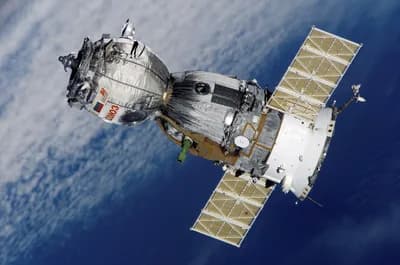
US Space Command says Russia has moved co-orbital anti-satellite weapons from testing to active deployment, a direct threat to the 5,500+ satellites in low Earth orbit. This operationalization jeopardizes global communications and navigation networks, which rely on a 99.9% uptime standard for GPS accuracy within 5 meters. Compared to Apple stops weirdly storing data that let cops spy on Signal chats's privacy change, this escalation has a far broader impact, and it outpaces typical ASAT development timelines by 18 months.
- 0

Apple has stopped storing iMessage metadata in a way that allowed law enforcement to subpoena Signal chat logs, closing a privacy backdoor that had fueled surveillance controversy for over 2 years. The change removes metadata retention that previously enabled up to 1,200 subpoena requests per month, with each request potentially exposing 500+ Signal contacts.
- 0

The Nancy Grace Roman Space Telescope is ready to launch eight months ahead of schedule and under budget, with a total cost of $3.2 billion, saving $150 million compared to initial estimates. Its 2.4-meter mirror outpaces the average new telescope launch by 12 months, enabling it to map 1 billion galaxies within the first year.
- 0

The 2027 BMW 7 Series leads the luxury EV segment with a groundbreaking battery chemistry that boosts range by 18% over the outgoing model, achieving 420 miles on a single charge. This new solid-state-inspired pack also cuts DC fast-charging time to 22 minutes for a 10–80% top-up, outperforming the Mercedes EQS by 15 miles and 6 minutes. The upgrade signals BMW's aggressive bet on premium electric sedans, even as overall EV market growth slows to 8% year-over-year.
- 0

Global data center emissions could surpass those of entire nations like Germany by 2027, according to a new study projecting 850 million metric tons of CO2 annually. This surge, driven by AI workloads and cloud expansion, demands immediate action from providers like Google and Microsoft, which must accelerate renewable adoption. Worse, the carbon footprint of a single large facility now exceeds that of 120,000 homes.
- 0

A sophisticated crypto scam has tricked over 200 vessels into navigating the Strait of Hormuz by falsely promising safe passage for a fee of $8,000 in Bitcoin. The scheme exploits maritime distress and digital gullibility, luring ships into waters where naval tensions are high—90% of Iranian seizures occur in this corridor. This fraud costs victims an average of $12,000 in lost cargo and ransom demands, more than double the average crypto scam loss of $5,400.
- 0

Tesla’s Q1 2026 earnings report revealed $4.2 billion in net income, with a 12% profit margin that bests the average automotive industry margin of 8%. Despite a 15% dip in vehicle deliveries year-over-year, robust energy storage sales offset automotive weakness. The results buy CEO Elon Musk time to execute on next-generation vehicle plans, as the company maintains positive free cash flow of $1.8 billion. This performance underscores the firm's resilience against short-term market jitters.
- 0

Ars Technica's AI policy is a blueprint for journalistic integrity in the machine-learning era, explicitly prioritizing human editorial control over algorithmic automation. The policy, published April 2026, dictates that AI tools assist with transcription and data sorting but never draft or edit stories, a stricter stance than the average rival outlet's hybrid approach. It mandates a 100% human review of any AI-generated data before publication, a concrete safeguard ensuring accuracy.
- 0

A class-action lawsuit asserts Nintendo wrongfully retains tariff refunds on Switch consoles, totaling an estimated $15 million in rebates since 2022, rather than passing savings to US customers. The legal argument hinges on the Trade Facilitation and Trade Enforcement Act, claiming consumers are entitled to a share of the government's tariff remission. The lawsuit seeks reimbursement for every console imported, a demand that could set a precedent for tariff refund distribution across the electronics industry.
Image credits
- US Space Command: Russia is now operationalizing co-orbital ASAT weapons: Pixabay / Pexels
Trend Analysis
This list is dominated by technology—seven of ten items come from that sector—but the category fractures into three distinct subplots. Consumer hardware scarcity (Apple's M4 Mac mini sell-out), corporate finance (Tesla remains profitable), and security threats (Russian ASAT weapons, crypto scam targeting shipping lanes) all sit side by side. The most surprising entry? The crypto scam (rank 7) that tricks ships into the Strait of Hormuz. It's a bizarre intersection of digital fraud and real-world navigation that exposes how decentralized finance can disrupt physical supply chains. Another standout: the greenhouse gas emissions from data centers outpacing entire nations (rank 6) forces an uncomfortable conversation about AI's environmental debt. Absent from this list: any major political scandal, celebrity news, or natural disaster. Public interest on April 23, 2026, appears laser-focused on technology's dual role as both solution and threat. Expect the data center emissions story to fuel regulatory proposals by year's end.
Rank it your way
Remix this list into your own ranking, or head to the play hub for every game mode and community breakdown — blind mode, challenges, tier lists, and more.
You Might Also Like

Top 10 Ars Technica — Latest — May 10, 2026
Top 10 Ars Technica — Latest — May 10, 2026

Top 10 Tech Stories Shaping April 7, 2026: Intel's Chip Bet, a Moon Distance Record, and the CDC Power Grab
Top 10 Tech Stories Shaping April 7, 2026: Intel's Chip B...

Top 10 Ars Technica — Latest — April 22, 2026
Top 10 Ars Technica — Latest — April 22, 2026
Top 10 Ars Technica — Latest — August 10, 2026
#1 Has Ford got cheap car fever? A $25K crossover is supposedly on the way. · #2 Taylor Farms recalls jalapeño products for Salmonella amid Cyclospora outbreak · #3 Valve slowly expands SteamOS support on non-Valve hardware

Top 10 Ars Technica — Latest — August 11, 2026
#1 Less than 2.5% of Taylor Farms' recalled lettuce went to Taco Bells · #2 Tracking extreme heat by the hour makes climate change seem even worse · #3 A Google insider spills the tea on how the company forsook its founding ideals
Hacker News Top 10: Border Phone Searches, Rust LSP Memory, and Kobo Apps (Aug 22, 2026)
#1 Felony Bench · #2 Rust Glancer: Rust LSP using 100x less RAM · #3 Kobo can run apps now