
WiNG (CC BY-SA 4.0)
Cast the first vote in 1 tap — pick #1 Power International Holding or #2 Alshaya Group to reveal the live split:
Should a Gulf family business get more credit for employing tens of thousands of people, or for owning the brands and assets those people work on? This list compares ten private, family-owned or family-led business groups with a Gulf…
headquarters or a distinct Gulf-based operating group. The ranking favors disclosed group workforce (90%), with operating tenure (5%) and the quality of the workforce disclosure (5%) as secondary factors. For a “plus” figure we use its stated floor. Some counts come from a dated report and others from a current company profile. Joint ventures, contractors and affiliate workforces may be treated differently. This is a comparison of selected companies with usable evidence. Neither market-wide completeness nor family wealth is implied.
WiNG (CC BY-SA 4.0)
Starting order. Vote up or down to reorder this list.
| Item | Operating tenure | Disclosure quality | Reported workforce |
|---|---|---|---|
| #1Power International Holding | 2011 | 6.0/10 | 65,000+ |
| #2Alshaya Group | 1890 | 6.0/10 | 50,000 |
| #3Majid Al Futtaim Holding |
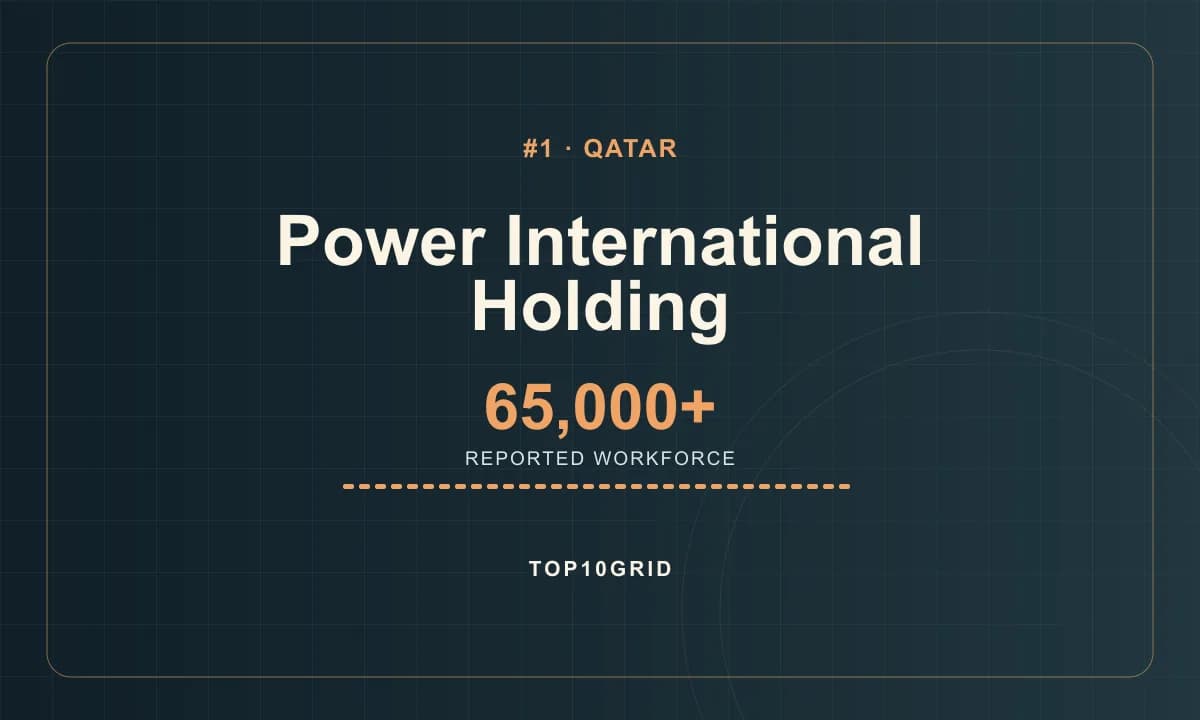
An infrastructure builder with a portfolio that also reaches into hospitals, food and telecoms.
The Lusail-based private group, led by the Al Khayyat family, was established in Qatar in 2011. Its company profile reports more than 65,000 people in an ecosystem of more than 400 companies across 26 countries. The range matters: construction and energy account for only part of the picture, with healthcare, agriculture, real estate, hospitality and technology also in the portfolio. Its workforce floor takes the top spot over Alshaya's 50,000, even after Alshaya receives the highest possible tenure score.
Advantages: Highest workforce floor in this comparison; a footprint spanning multiple markets; exposure to both construction and operating businesses. Trade-offs: The headcount covers a broadly defined ecosystem; the group has the shortest history here; its public profile does not allocate employment across sectors.
Best for: Readers comparing how construction-led groups build or acquire a wider portfolio of operating businesses.
Watch for: An ecosystem company count does not tell you which entities are wholly owned or how many people are employed by the holding company itself.
Vote: Should PIH's workforce lead outweigh Alshaya's century-long record of building a retail network?
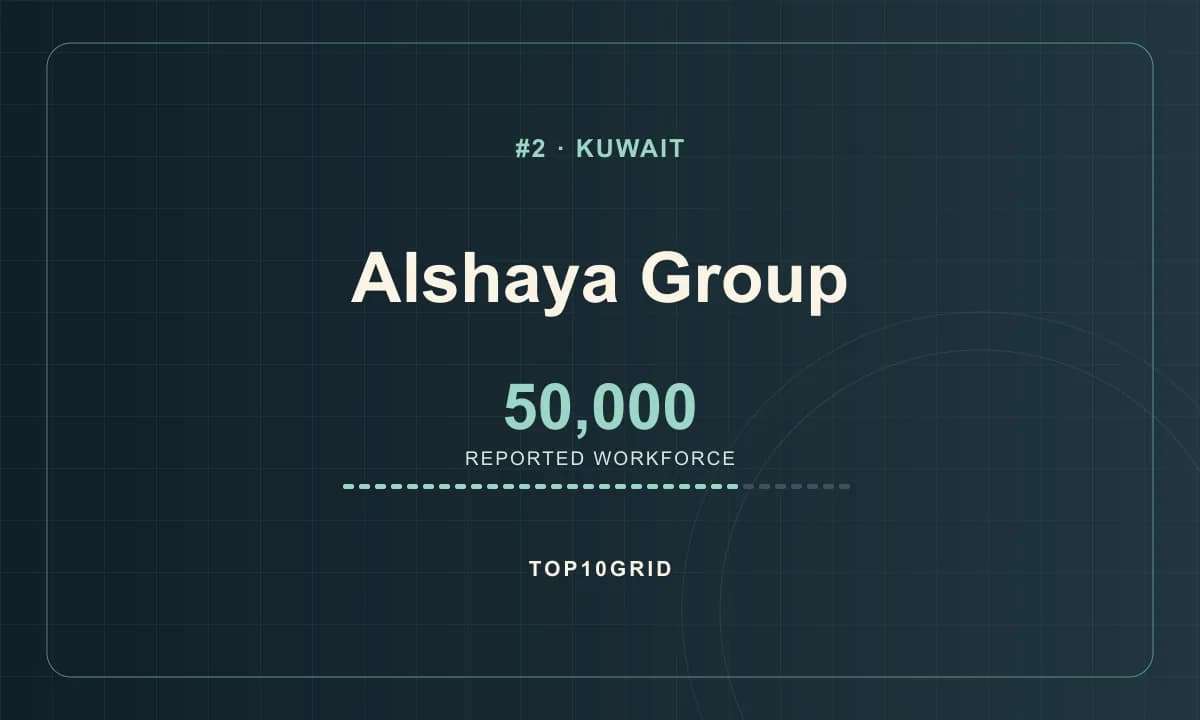
The Kuwait-based operator bringing familiar brands to storefronts, restaurants and drive-throughs.
Alshaya traces its Kuwait roots to 1890. Its group site reports 50,000 employees, 19 markets and 3,500 stores. It operates a mix of franchises, including Starbucks, H&M and Primark, across several consumer categories. A global brand may supply the name and product, while Alshaya builds the local retail operation. The network sits below PIH's reported 65,000-plus workforce and above Majid Al Futtaim Holding's 41,367. Its age also gives it the strongest tenure score in this selection.
Advantages: Second-largest disclosed workforce here; the longest operating history among the ten; multiple retail and food categories limit reliance on a single category. Trade-offs: Franchise rights depend on agreements with brand owners; outlet counts combine different formats; the workforce snapshot has no year-end date on the overview.
Best for: Readers interested in how local operators expand international brands across markets.
Watch for: A storefront in the network is evidence of an operating relationship. It cannot establish ownership of the underlying global brand.
Vote: Would you rank a franchise operator higher if its stores reach more people than the brands a rival owns outright?
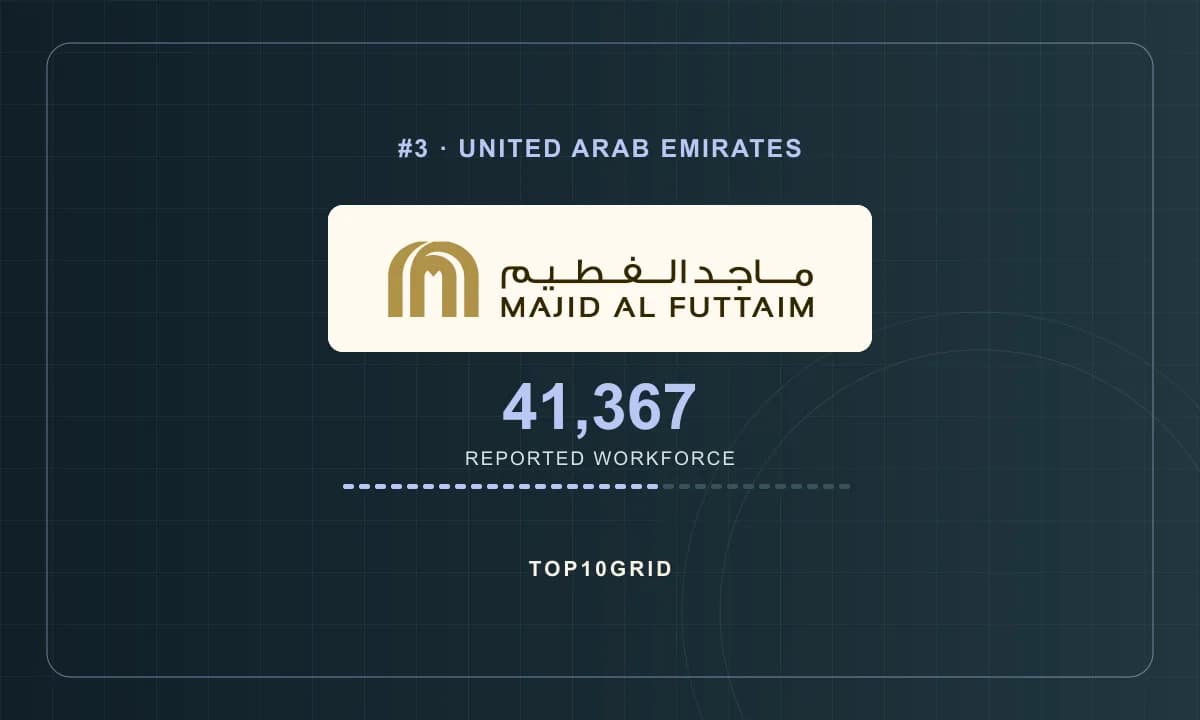
Dubai's shopping-centre and leisure group with an audited headcount.
Majid Al Futtaim Holding brings malls, property development, stores and entertainment under a single operating group. The FY2025 consolidated accounts report 41,367 employees and AED 35.859 billion in revenue. S&P identifies the shareholders as members of the founder's family, while the bond prospectus describes an independent operating board and professional management. The group trails Alshaya's disclosed headcount. It narrowly ranks above the separate Al-Futtaim group on the reported workforce floor and the strength of its financial disclosure.
Advantages: Dated, audited workforce evidence; distinct property, retail and entertainment businesses; published country-level revenue. Trade-offs: The UAE accounts for most FY2025 revenue; property and retail contribute through different economic models; a workforce lead of 1,367 against Al-Futtaim's reported floor may disappear if the latter discloses a higher exact count.
Best for: Readers who prioritize comparable accounts and visible exposure to both property and retail.
Watch for: Keep Majid Al Futtaim Holding separate from Al-Futtaim. And keep family shareholding separate from the role of the operating board.
Vote: Should an audited headcount break a close ranking when a rival gives only a rounded lower bound?
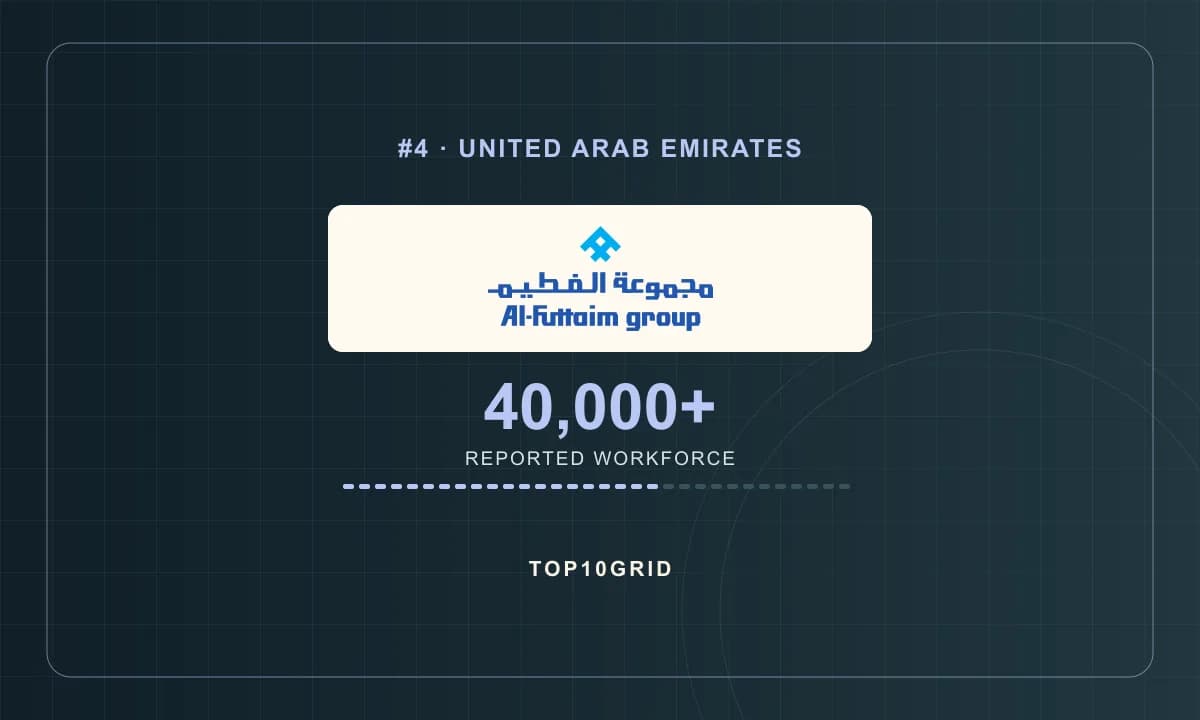
A Dubai family group spanning cars, stores, property, finance and healthcare.
Al-Futtaim traces its origins to 1930s Dubai and reports more than 40,000 colleagues across more than 20 countries. It groups its activities into five industries, so the consumer-facing brands tell only part of the story. The portfolio also includes property, healthcare and financial services. It sits just below Majid Al Futtaim Holding in the score because the audited headcount gives its similarly named peer stronger workforce evidence. Al-Futtaim's reported floor is 2.5 times Chalhoub's, securing the next spot.
Advantages: A large reported workforce; exposure to five industry groups; a wide geographic and brand footprint. Trade-offs: The stated headcount is a floor; brand count includes relationships that may have different commercial terms; the public headline does not show headcount per division.
Best for: Readers comparing how a family group branches out from automotive distribution into other services.
Watch for: A portfolio brand may be owned, licensed, or distributed under an agreement. Check the relationship company by company.
Vote: Should breadth across five industries give Al-Futtaim the edge over a rival with a slightly higher documented headcount?
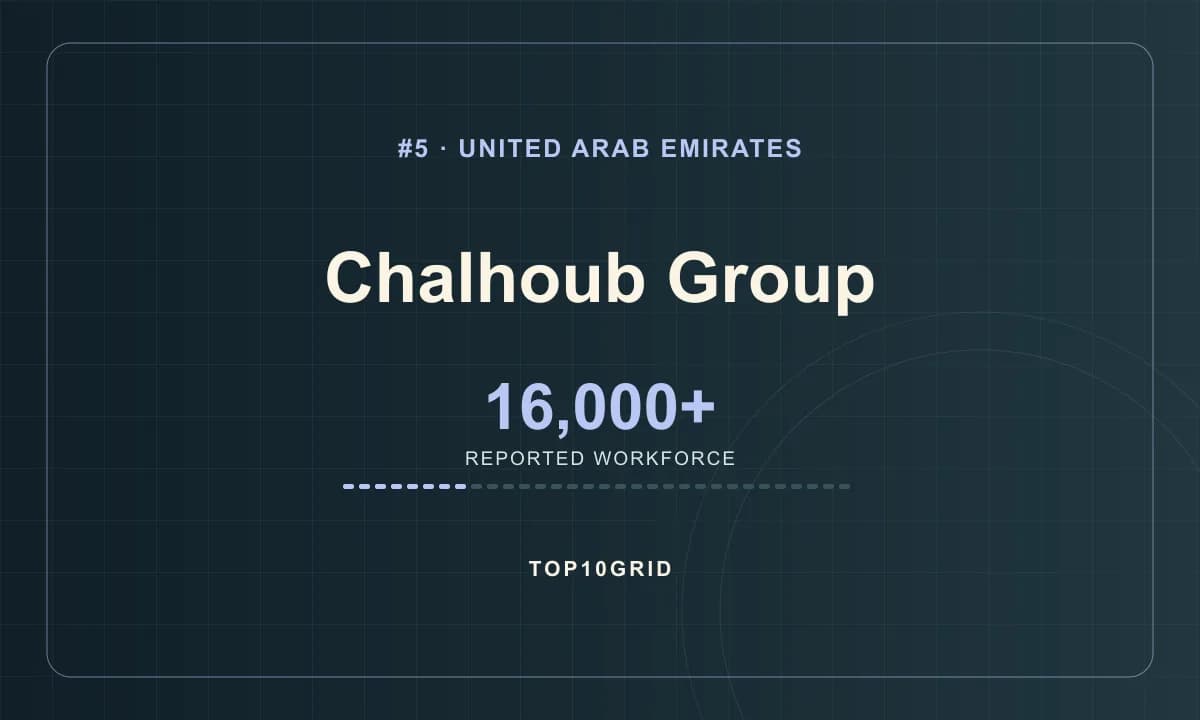
The luxury specialist behind boutiques, distribution and its own retail concepts.
Chalhoub's first boutique opened in Damascus in 1955, and its current Gulf base is Dubai, where the group says it inaugurated its first headquarters in 2003. Its 2024 sustainability report describes more than 16,000 professionals and more than 950 retail stores. The family business combines distribution for international labels with brands it owns. Its reported workforce is well below Al-Futtaim's 40,000-plus, but it edges Alghanim Industries on the stated workforce floor and the availability of dated workforce evidence.
Advantages: Focus on a recognizable luxury market; sizable physical retail network; explicit distinction between owned brands and international portfolio brands. Trade-offs: Luxury concentration limits cross-sector diversification; reported store totals depend on the date and scope used; the workforce headline cannot tell you which business lines generated most revenue.
Best for: Readers looking at how luxury brands reach Middle Eastern shoppers through distribution, boutiques and locally developed retail concepts.
Watch for: Count owned labels separately from the much larger portfolio of labels the group represents.
Vote: Should Chalhoub's specialist depth count for more than the broader industry mix of a group like Alghanim?
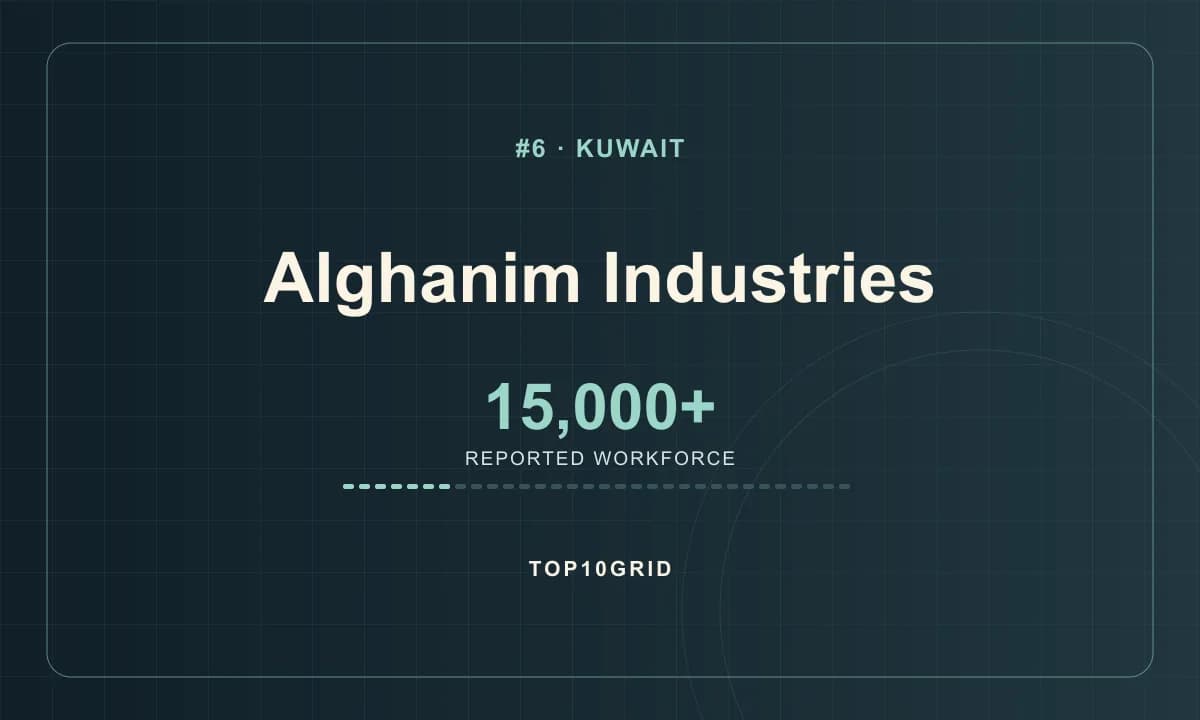
A private Kuwait group combining distribution with brands of its own.
Alghanim Industries operates from Kuwait City and traces its current business to 1932. Its group profile reports more than 15,000 employees, more than 30 businesses and more than 500 global brands. The company says it both represents international partners and develops its own product brands, including Wansa electronics. Its workforce floor falls just short of Chalhoub's 16,000 and just ahead of Olayan Financing Company's 14,500. Its older founding year widens its lead over the Saudi regional holding company.
Advantages: Mix of owned and partner brands; documented reach beyond Kuwait; longer operating history than its two immediate neighbors. Trade-offs: Brand relationships may have different ownership and distribution terms; country figures vary by company page; the group overview does not provide a dated payroll count.
Best for: Readers comparing regional distributors that have also built some of their own products.
Watch for: Use the same reporting perimeter when comparing geographic reach, since commercial presence and active operations can be reported differently.
Vote: Would you choose Alghanim's industry diversity over Chalhoub's larger disclosed workforce and deeper luxury focus?
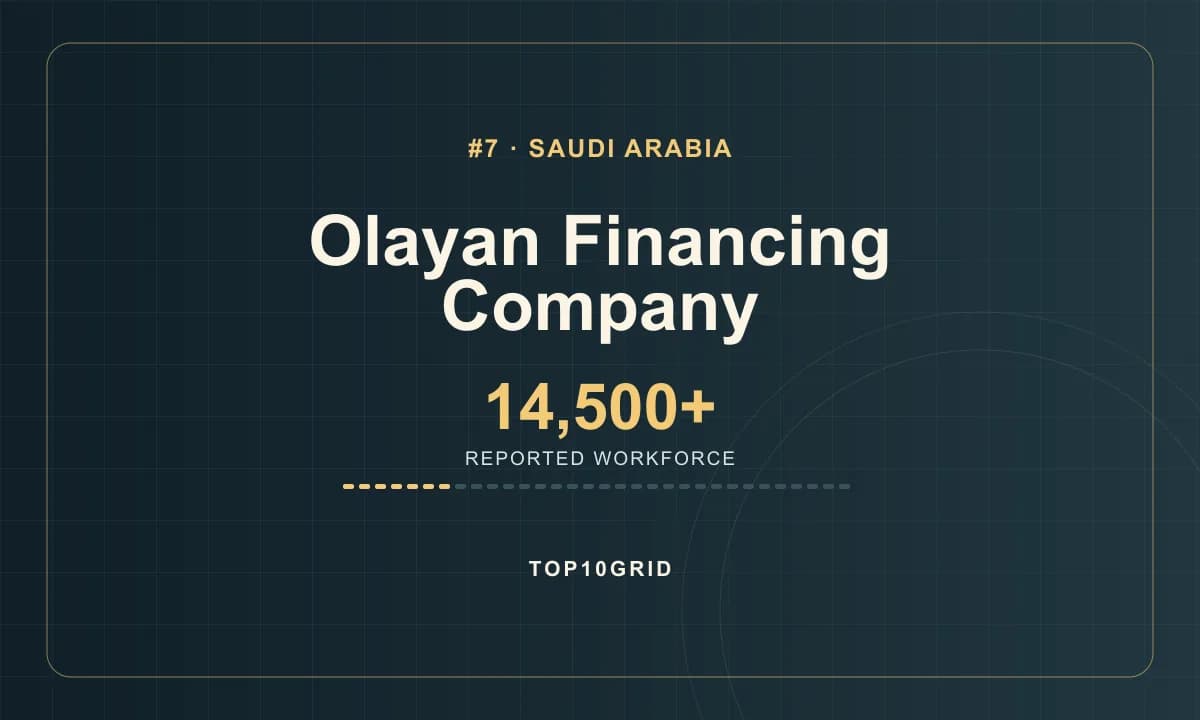
The Riyadh company behind Olayan's operating businesses and investments in the broader Middle East.
Olayan Financing Company is the Gulf-based entity in this ranking. The wider Olayan Group says its international parent is in Vaduz, while OFC is based in Riyadh and dates its incorporation to 1969. OFC reports more than 14,500 people and a portfolio of more than 30 companies. Its published headcount trails Alghanim by only 500 at the stated floors, but is 3,500 higher than Abdul Latif Jameel's reported network floor. Its portfolio includes operating companies and investment positions.
Advantages: Clear Riyadh operating boundary; a broad regional portfolio; publicly documented majority shareholding in OSHCO. Trade-offs: Workforce scope may differ from that of an operating company; the full shareholder percentages for OFC are not established in the sources here; group history and legal-entity tenure use different dates.
Best for: Readers learning how one family business separates regional operating activity from an international investment structure.
Watch for: Do not attribute every asset in the global Olayan portfolio to OFC. The Riyadh entity and the wider group's international arm have different scopes.
Vote: Should the regional Olayan company get more credit for its published scale, or should readers rank the broader portfolio separately?
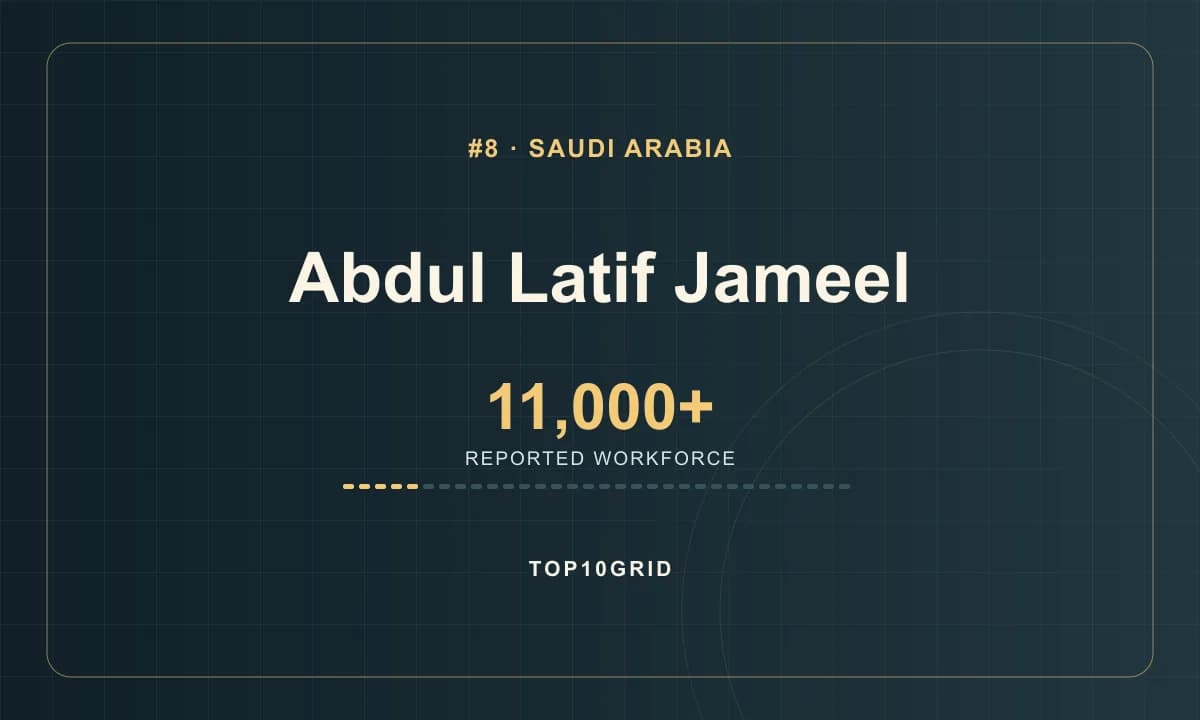
The Jeddah-founded family network that grew from vehicle distribution into finance, energy and health.
Abdul Latif Jameel began in Jeddah in 1945 and describes itself as a network of distinct family-owned businesses rather than a single consolidated operating company. The family investment company reports more than 11,000 employees across more than 35 markets on six continents. Its Toyota relationship is a useful way to understand the business: vehicle distribution supports associated services, while the network has branched into energy, environmental services, finance and health. Its workforce floor is below Olayan Financing Company's and above Zahid Group's.
Advantages: Geographic reach beyond the Gulf; an established automotive distribution relationship; additional businesses in finance, energy and health. Trade-offs: The workforce is measured across distinct businesses; markets and countries are used differently across company pages; distribution rights and ownership of the original brands are separate.
Best for: Readers interested in the path from automotive distribution to financing and other related services.
Watch for: Use the family network as the unit of comparison here. An individual subsidiary's financial statements cover a narrower business.
Vote: Should global reach across 35-plus markets count more than the larger regional workforce of a peer like Olayan?
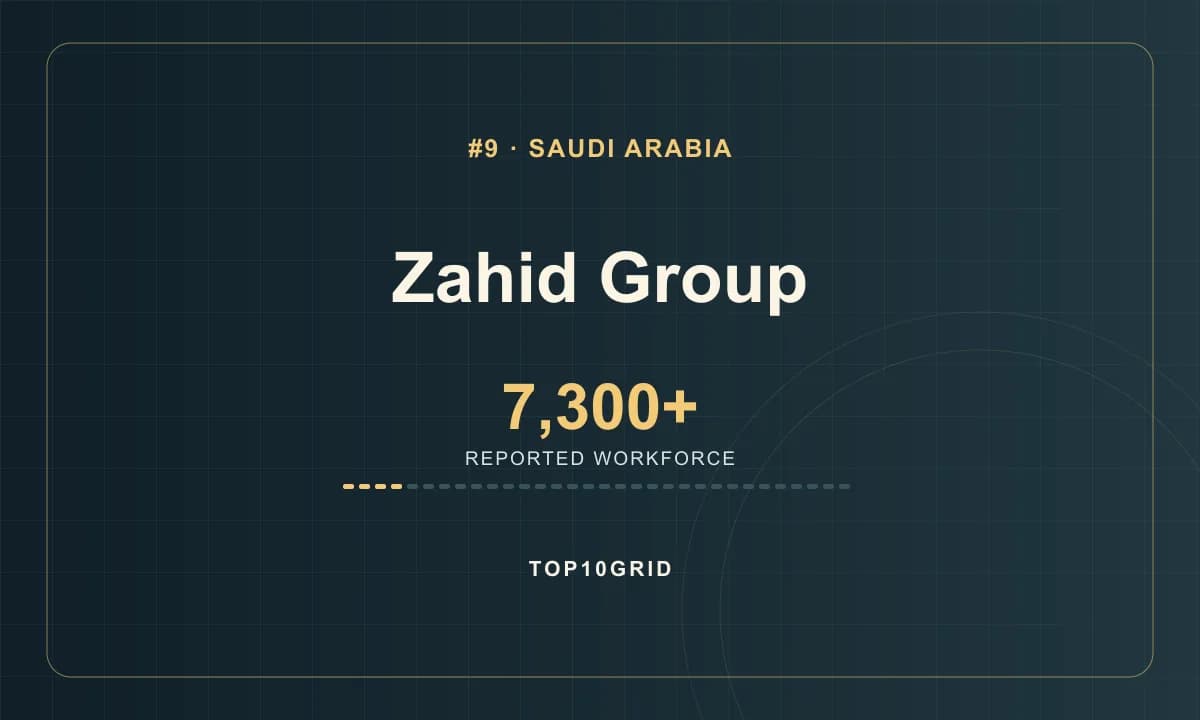
A Jeddah family group whose equipment partnerships extend into manufacturing and services.
Zahid Group traces its business to 1943 and is headquartered in Jeddah. Its own site describes 15 sectors, while a June 2026 Forbes Middle East profile reports more than 7,300 employees in 33 countries. The group's history shows how equipment distribution led to related operations such as manufacturing and services. A Zahid-led consortium also took Barloworld private. Its reported workforce floor is smaller than Abdul Latif Jameel's but larger than the 2024 group workforce published by Oman's Zubair Corporation.
Advantages: Industry coverage beyond the original trading business; a base in industrial equipment; documented participation in a cross-border acquisition. Trade-offs: The selected workforce figure comes from a secondary profile; older group brochures use different counts; consortium transactions cannot be read as sole ownership.
Best for: Readers looking for a family group with a stronger industrial emphasis than the retail-heavy entries above it.
Watch for: Treat deal value as the transaction's stated value. It cannot be used to infer the family group's balance sheet or wealth.
Vote: Should cross-border industrial acquisitions count more than workforce in a ranking of family businesses?
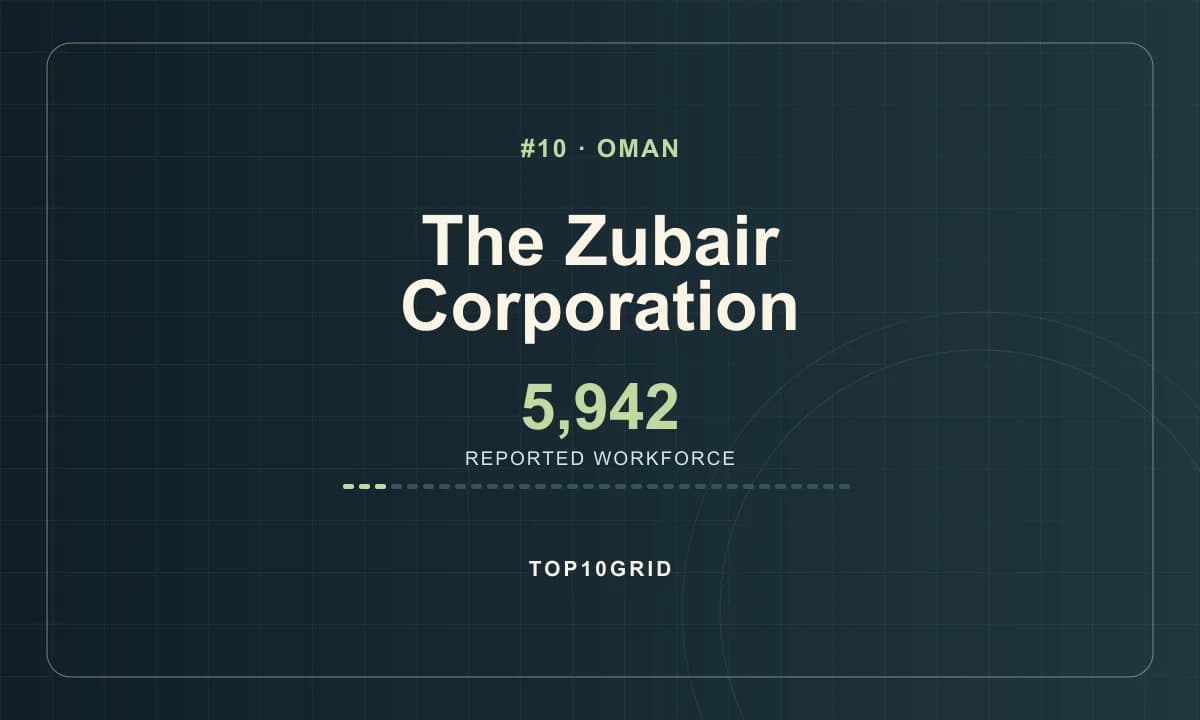
The Muscat family group publishes a workforce breakdown that makes its scope easier to read.
The Zubair Corporation started as Muscat Trading Company in 1967. Its founder's children are the shareholders according to the company, and its portfolio covers energy, engineering, real estate, finance, and automotive businesses. The 2024 sustainability report shows 5,942 employees across the group and 106 at the corporation itself. That is unusually helpful for seeing how a holding office differs from its operating network. The group ranks below Zahid's reported 7,300-plus, even with a stronger workforce disclosure score.
Advantages: Dated group workforce figure; a separate figure for corporate staff; broad exposure across operating industries. Trade-offs: The disclosed 2024 count predates several peers' profiles; subsidiary totals do not express economic ownership percentages; the staff figure does not reveal profit by sector.
Best for: Readers looking for an Oman-based example with a transparent split between head office and operating workforce.
Watch for: Compare group with group. Using 106 for Zubair against another company's consolidated workforce would answer a different question.
Vote: Would you give greater weight to Zubair's transparent group figures than to a larger peer's rounded headcount?
Have a list idea?
Start your own list and get help drafting entries with AI. A free account is required.
Create a list with AI →Debating whether #1 Power International Holding holds the top spot against #2 Alshaya Group.
The published order is the starting point; item votes can help reshape it.
Rank Scramble: Can You Order Today's Top 10?
Drag ten shuffled picks into their live community order in under 60 seconds.
| 1992 |
| 10.0/10 |
| 41,367 (FY2025) |
| #4Al-Futtaim | 1930s | 6.0/10 | 40,000+ |
|---|
| #5Chalhoub Group | 1955 | 8.0/10 | 16,000+ (2024 report) |
|---|
| #6Alghanim Industries | 1932 | 6.0/10 | 15,000+ |
|---|
| #7Olayan Financing Company | 1969 | 6.0/10 | 14,500+ |
|---|
| #8Abdul Latif Jameel | 1945 | 6.0/10 | 11,000+ |
|---|
| #9Zahid Group | 1943 | 4.0/10 | 7,300+ (2026 profile) |
|---|
| #10The Zubair Corporation | 1967 | 8.0/10 | 5,942 (2024 report) |
|---|
Think something was robbed of a spot?
Nominate a missing contender — once approved, the community votes it up or down into the rankings.
Scoring: Workforce = 10 × √(reported workforce ÷ 65,000), capped at 10. Tenure = 10 × (2026 − start year) ÷ 136, capped at 10. For Al-Futtaim's stated 1930s foundation, use 1939 as the conservative bound. Workforce evidence = 10 for a dated audited financial statement, 8 for a dated company sustainability report, 6 for an undated company overview, and 4 for a dated secondary profile. Round input scores to one decimal before weighting. The score is an editorial ordering, and small gaps should be read as close calls.
Just missed: Mansour Group belongs in a wider Middle East edition. Forbes Middle East identifies it as Egypt-based, outside this list's GCC headquarters filter. Forbes Middle East 2026 coverage
Rank it your way
Remix this list into your own ranking, or head to the play hub for every game mode and community breakdown — blind mode, challenges, tier lists, and more.

Top 10 Most Valuable Startup Unicorns in 2026 (Ranked by ...
Explore this ranking →
#1 Sara Blakely — Spanx ($1.2 Billion) · #2 Oprah Winfrey — Media Empire ($2.8 Billion) · #3 Rihanna — Fenty Beauty ($1.4 Billion)
Explore this ranking →
#1 World Vision International · #2 Catholic Relief Services · #3 Samaritan's Purse
Explore this ranking →