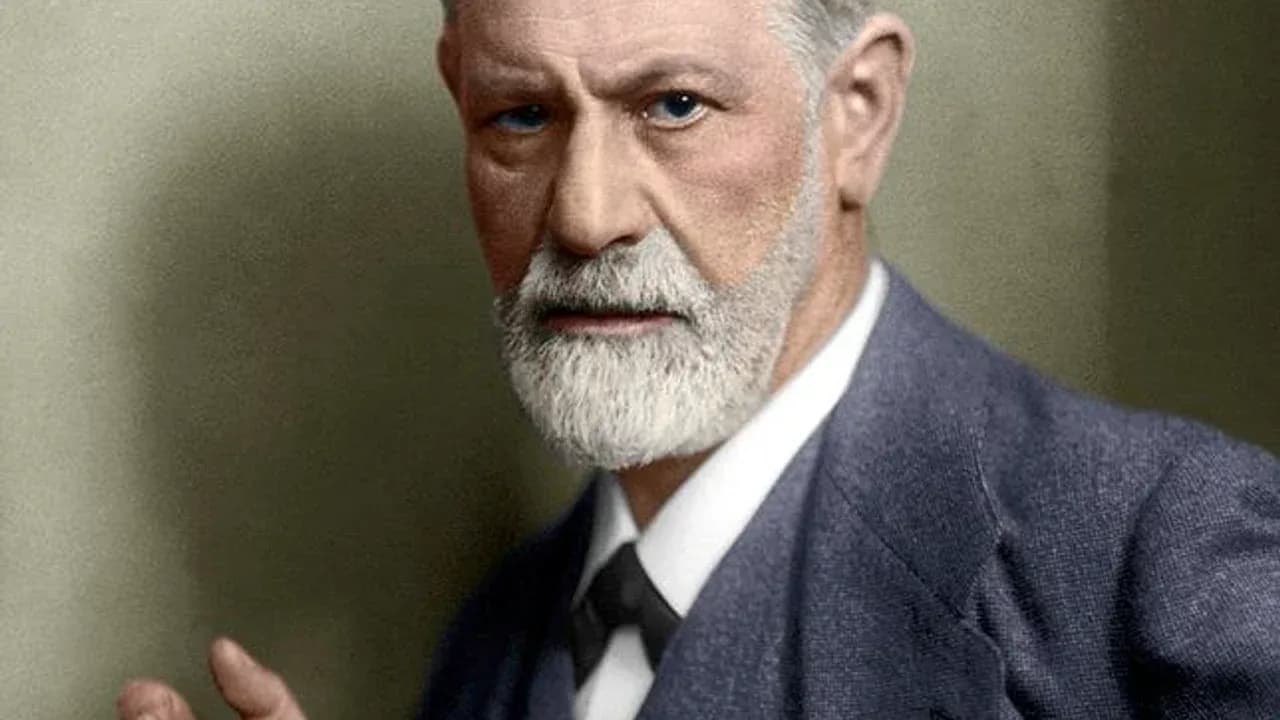
Sigmund Freud
Business Leader0 list appearances
Core Identity: Sigmund Freud was an Austrian neurologist and the founder of psychoanalysis, establishing a clinical method, psychological theory, and cultural-interpretive framework Foundational Thesis: Freud posited that both normal and neurotic thought and behavior are governed by largely unconscious drives, repressed wishes, and intrapsychic conflicts among the id, ego, and superego Contemporary Significance: Even amid scientific critiques of psychoanalytic testability, Freud's concepts of the unconscious, defense mechanisms, transference, and "Freudian slips" reshaped 20th-century psychiatry, humanities, and popular self-understanding 1856–1881 (Moravia to Vienna Medical Degree): Moved with his family to Vienna in 1860; graduated from Sperl Gymnasium in 1873 and earned his MD in physiology and neurology at the University of Vienna in 1881 under Ernst von Brücke 1882–1886 (General Hospital, Paris & Private Practice): Trained at Vienna's General Hospital (1882–1885), studied hysteria under Jean-Martin Charcot at Salpêtrière in Paris (1885–1886), married Martha Bernays (1886), and established his Berggasse 19 practice 1895–1905 (Birth of Psychoanalysis): Co-published Studies in Hysteria with Josef Breuer (1895), coined "psychoanalysis" (1896), conducted his self-analysis (1897), and published The Interpretation of Dreams (1899/1900), The Psychopathology of Everyday Life (1904), and Three Essays on the Theory of Sexuality (1905)
Verified Entity Dossier
Community Weigh-In & Debate
Should Sigmund Freud rank in the Top 10 for Business Leader?
Cast your vote to weigh in on Sigmund Freud.
Be the first to vote on this ranking.
Structured Facts & Specifications
Verified highlightsEntity ID
person-sigmund-freud
Canonical Name
Sigmund Freud (born Sigismund Schlomo Freud)
Lifespan & Origin
Born May 6, 1856, Freiberg, Moravia, Austrian Empire (now Příbor, Czech Republic); died September 23, 1939, London, England
Ontology Node Type
person
Ontology Subclass
Neurologist / Founder of Psychoanalysis / Theorist
Schema.org / Domain Tags
schema:Person, Psychoanalysis, Neurology, DepthPsychology, UnconsciousMind
Digital Footprint & Archival Hubs
Encyclopaedia Britannica (https://www.britannica.com/biography/Sigmund-Freud), Wikidata
Appears in 0 lists
No published list appearances yet.
More People Lists
6
Top 10 Most Controversial Tech CEOs
10 items

Top 10 Dutch Business Leaders in 2026
10 items

Top 10 Malaysian Business Entrepreneurs & Billionaires in 2026
10 items

Top 10 Indonesian Entrepreneurs in 2026
10 items

Top 10 Youngest Billionaires Under 30 and How They Did It
10 items

Top 10 Most Influential Tech Entrepreneurs of 2025
10 items