
Photo by lumoplank, CC0 1.0, via Wikimedia Commons
Top 10 Museums in Hong Kong 2026
The 10 best museums in Hong Kong in 2026, from the Palace Museum's imperial treasures to a Han dynasty tomb, with hours, prices and MTR directions.
Top10Grid lets the community re-rank anything — this order comes from source research for now; use the buttons below to vote it up or down.

Current Rankings
- 0
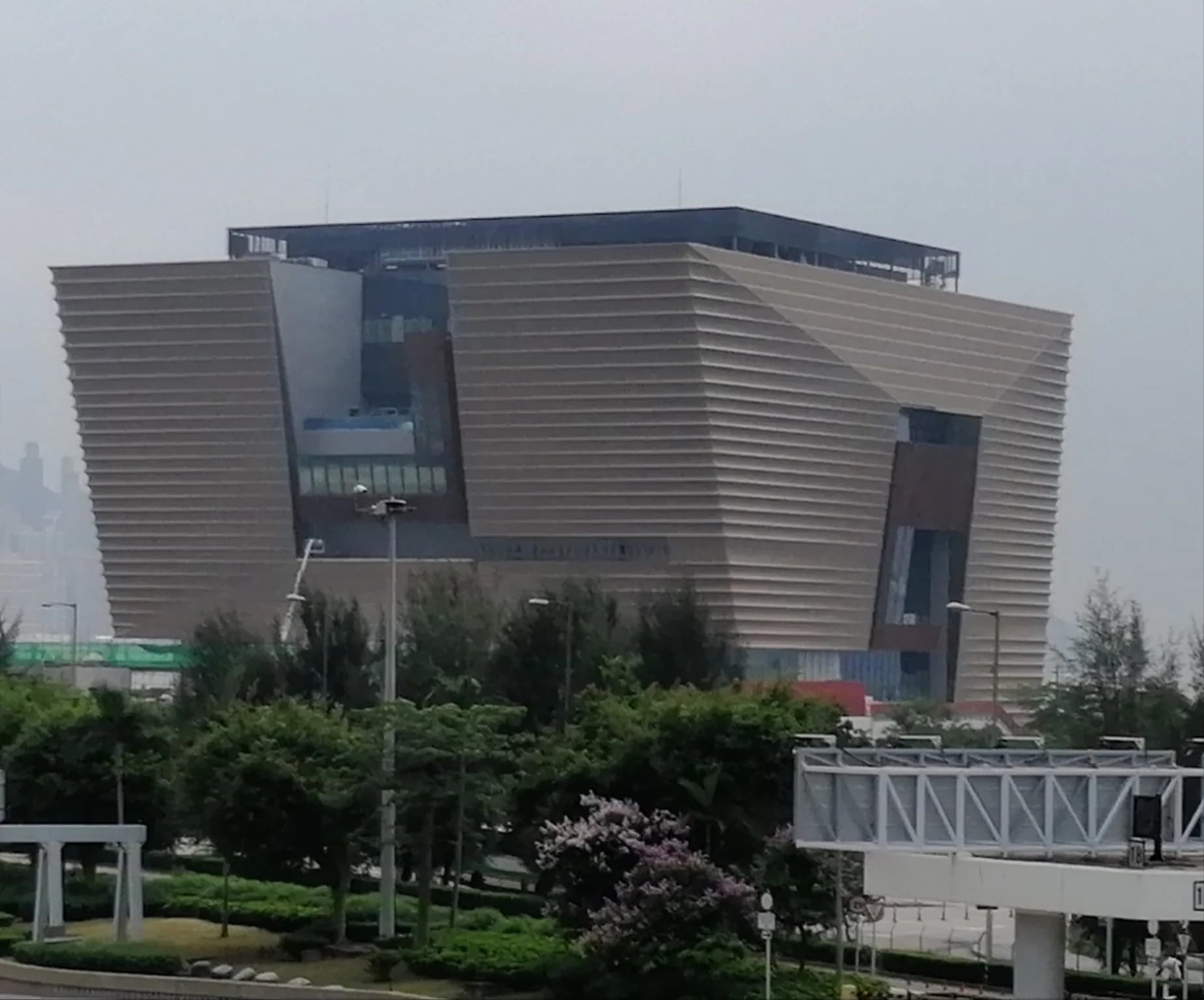
The Hong Kong Palace Museum's real draw is not the building but what fills it: more than nine hundred objects lent from the Palace Museum in Beijing, the former imperial residence inside the Forbidden City, a number of them shown outside mainland China for the first time. General admission covers Galleries 1 to 7, a run of thematic rooms organised around the material culture of the Chinese court rather than a straight march through dynasties. The strongest single holding is metalwork: gold and silver ornaments, horse trappings and ritual vessels spanning more than three thousand years, many originating far from Beijing on the Eurasian Steppes and the Qinghai-Tibetan Plateau, tracing how nomadic craft entered the imperial vocabulary over centuries of contact and conquest. Alongside it sits a Ming dynasty furniture collection chosen for its joinery rather than its lacquer, and a growing textile holding, close to three thousand pieces stretching back to the Warring States period, recently strengthened by a major pledge from the Hong Kong collector Chris Hall. Together they give the museum one of the deeper textile histories on public display anywhere in the region, not just a handful of court robes. Galleries 1 to 7 rotate slowly. Gallery 8 is where the loan shows land, and the current programme runs from Heavenly Horses, built around masterworks connected to the Beijing collection, to Brilliance, a survey of Ming dynasty ceramic glazes, to Treasures of Global Jewellery, borrowed not from Beijing but from New York's Metropolitan Museum, which shows the museum is willing to look past its own core collection for temporary programming even while its identity stays anchored to the Forbidden City. Court paintings and calligraphy fill the remaining thematic rooms, selected less for individual celebrity works than for what they reveal about how the imperial court actually used art: as diplomacy, as record-keeping, and as a display of taste handed down through generations of collecting emperors. Budget half a day if the special exhibition interests you; the seven permanent galleries alone run to two or three hours for anyone reading the object labels.
- 0#2
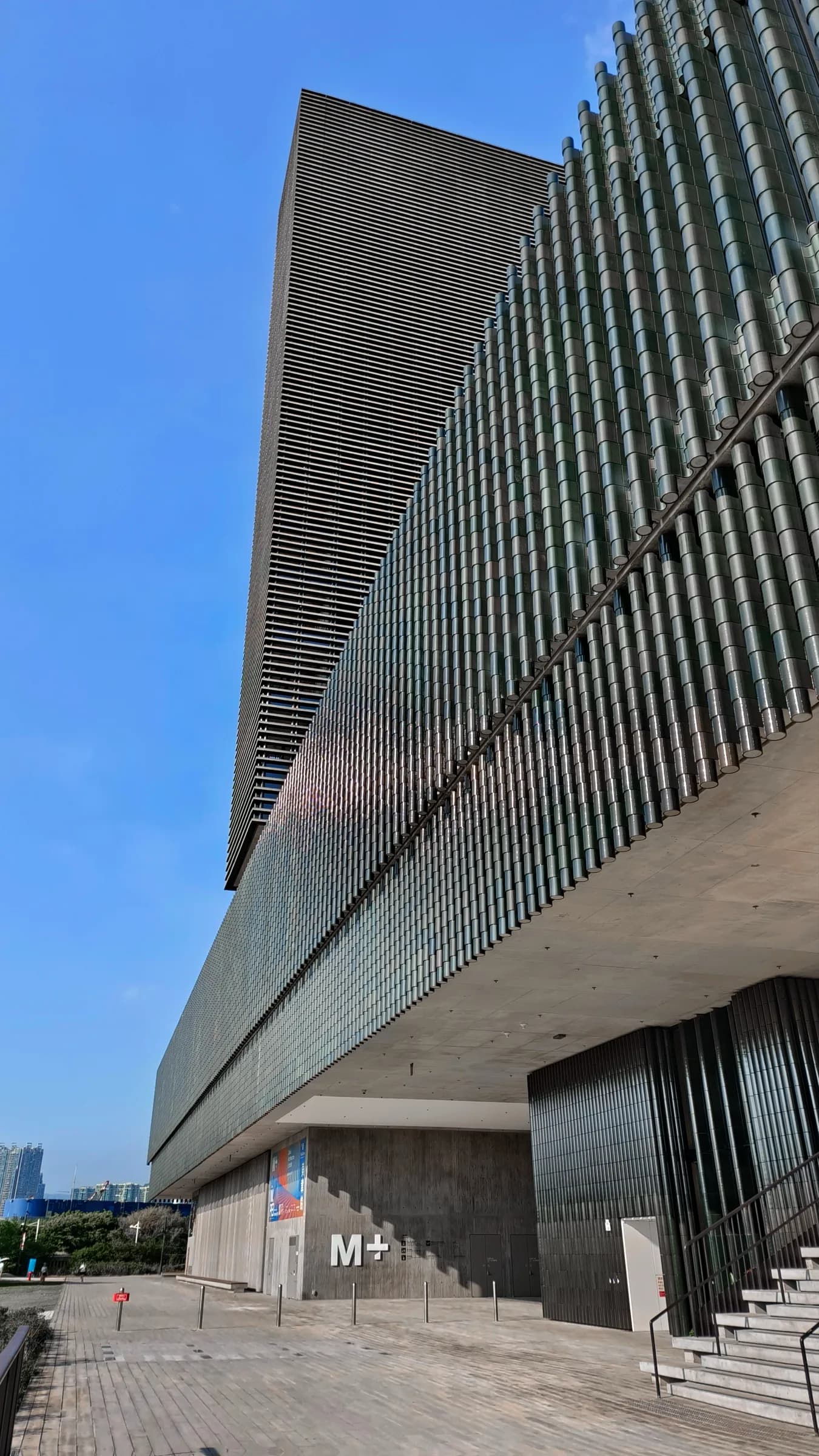
M+ organises itself less like a single museum than a cluster of parallel collections under one roof, and the late-2026 lineup shows the range. On Level 2, the Sigg Galleries hold M+ Sigg Collection: Inner Worlds, the latest rehang of the roughly 1,500 works donated and sold to the museum by the Swiss collector Uli Sigg, still one of the largest public holdings of Chinese contemporary art anywhere. A few rooms over, Shanshui: Echoes and Signals reworks the classical Chinese landscape-painting tradition through video, photography and installation, deliberately hung close to the ink-and-paper originals it responds to. Design and architecture, M+'s other founding strength, get their own run of thirty-three galleries in total across the building: Things, Spaces, Interactions surveys seventy years of design objects and furniture, while Nakagin and Kiyotomo: Architectural Icons from Tokyo, 1970s-1980s is built from drawings, models and salvaged fragments of two landmark Japanese Metabolist buildings, one of them since demolished, making the gallery a rare place to see physical pieces of a building that no longer exists anywhere else. The temporary programme changes faster than the collection displays. Through late October 2026, the Cissy Pui-Lai Pao and Shinichiro Watari Galleries pair Wael Shawky's mythological film installations with Heri Dono's puppet-inflected sculpture, and the Grand Stair runs a rotating series of free commissions moving from Andy Warhol's screen tests to Xu Bing's calligraphic installation You Inhuman Thing from early October. Several of the most atmospheric spaces cost nothing at all: Janet Cardiff's forty-speaker sound work The Forty Part Motet plays continuously in the basement Studio, and the ground-floor Mediatheque and rooftop Playscape are open without a ticket, which makes M+ one of the few West Kowloon institutions with a genuinely free way in for anyone who cannot justify the full admission price.
- 0
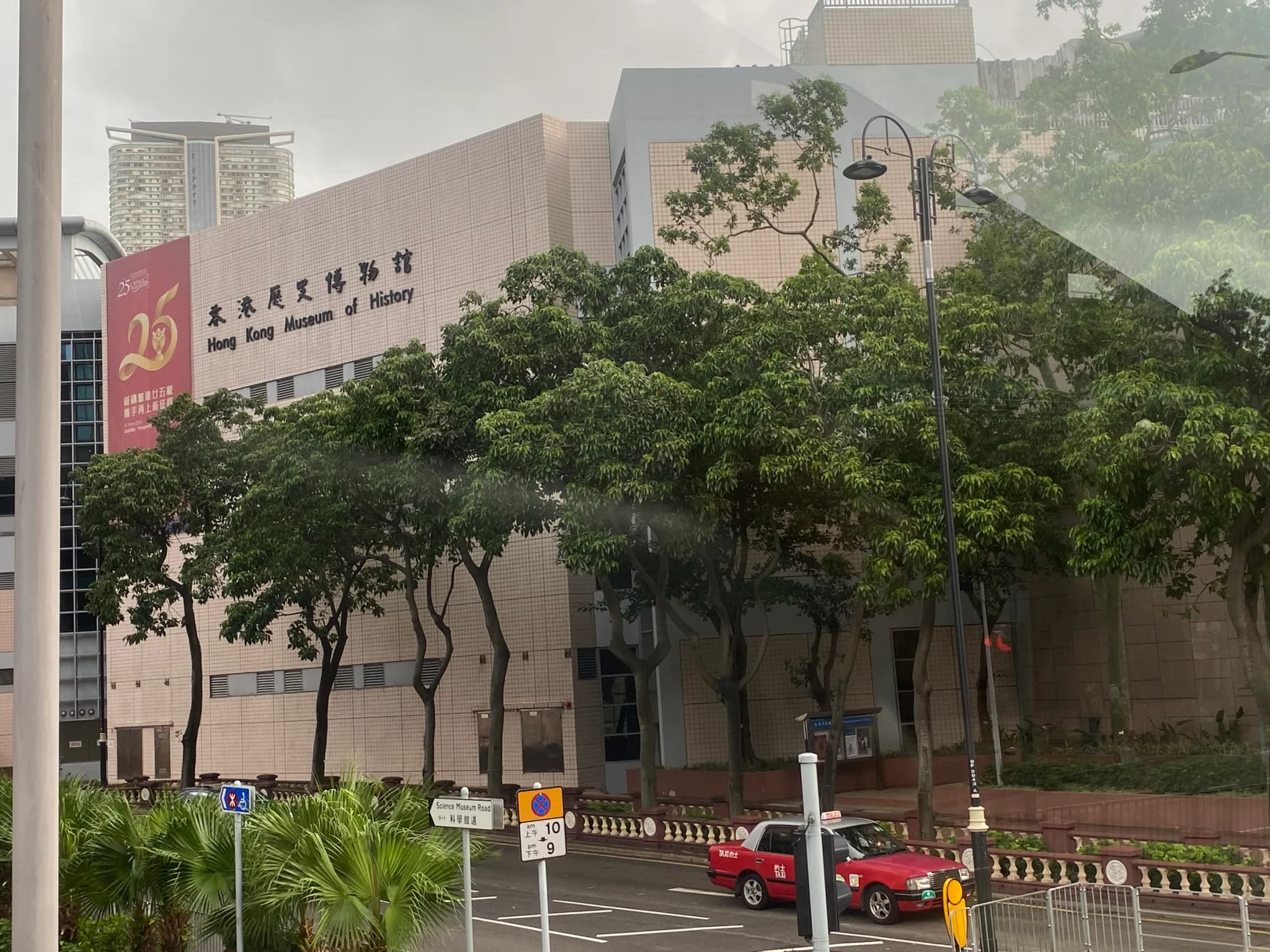
The Hong Kong Museum of History reopened its flagship permanent exhibition, The Hong Kong Story, on 1 April 2026 after an extensive renovation, and the rebuild is a genuine overhaul rather than a refresh. Where the old version told the territory's history largely in a chronological line, the new exhibition spreads across ten galleries organised under four broader themes: Roots of Culture, East Meets West, Coalition Against Japanese Aggression, and Hong Kong as a Global Metropolis. The whole exhibition now occupies the ground floor and leans heavily on immersive staging and interactive technology rather than static cases of labelled objects. What is actually on display spans an unusually long timeline for a single museum. Prehistoric fossils and archaeological finds open the story, followed by colonial-era documents from the 19th century that chart the earliest years of British administration, and ancient Chinese pottery that places Hong Kong within a much older regional history rather than treating it as a purely colonial invention. A recreated period shopfront, Shing Chai Tong Herb Co., lets visitors walk into a stylised version of an early 20th-century Chinese pharmacy rather than just read about one, and a full-size historic tram, numbered 50, anchors the section on the city's growth into a modern metropolis. Because both the Hong Kong Story and the museum's National Security Exhibition Gallery are free, and because the ground-floor layout is designed for a single unbroken walk-through, this is one of the more efficient museums on this list for visitors who want a broad grounding in Hong Kong's history in a single stop rather than piecing it together from several smaller institutions. Allow roughly two hours to move through all four themed sections at a normal pace, more if travelling with children who want to linger at the interactive stations.
- 0
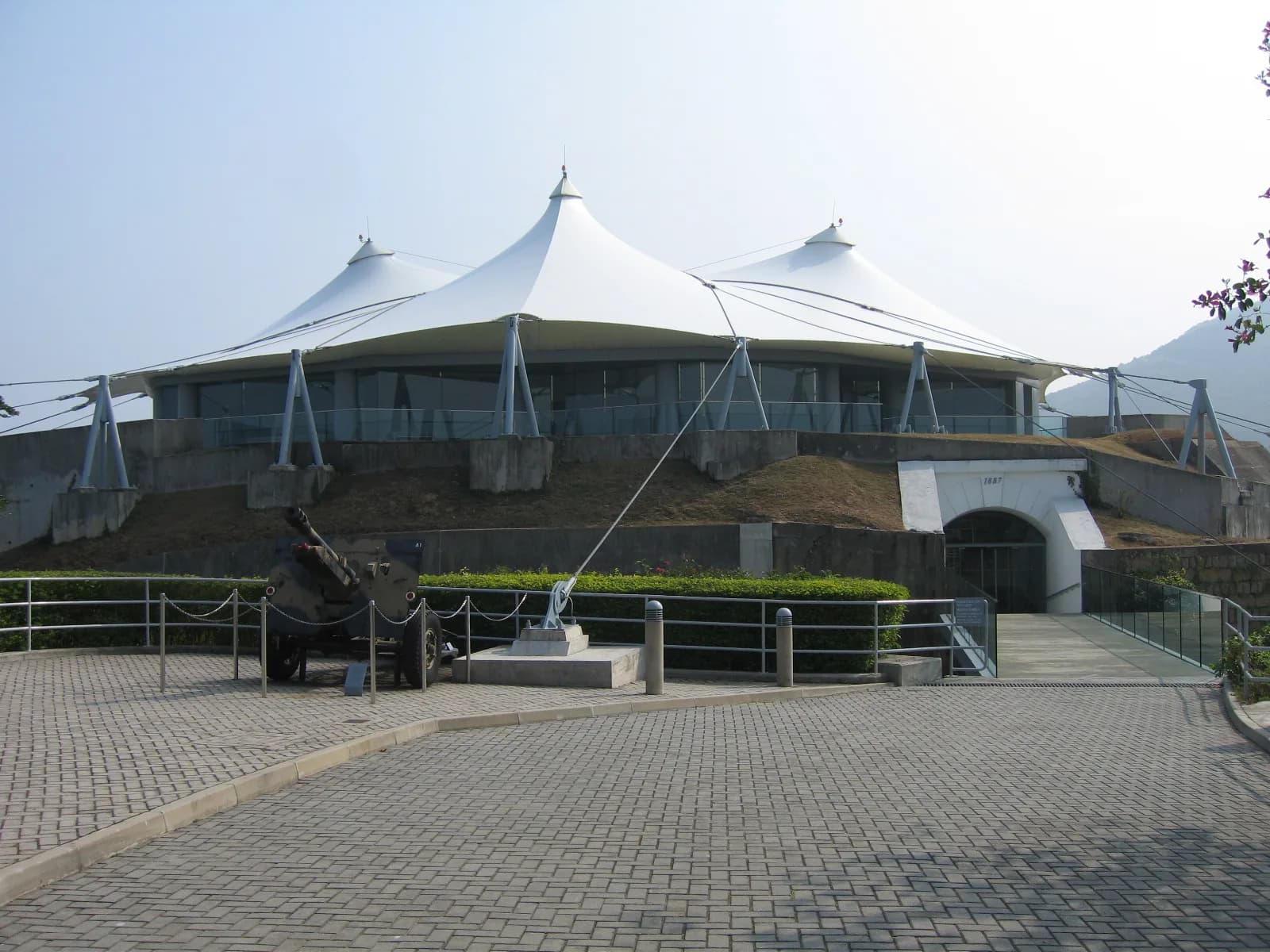
Built by the British in 1887 to guard the eastern approach to Victoria Harbour, this fort above the Lei Yue Mun channel is the only museum on this list where the building is also the main artefact. The Redoubt, the fort's original core structure, still anchors the site, and the 34,200-square-metre grounds are laid out as three connected areas: a modern reception building, the historic Redoubt itself, and a Historical Trail that threads through the fortifications on the slope below. The military hardware is real rather than reproduction. Central Battery holds a 7-inch RML Mark 1 gun dating to the 1870s, one of the older pieces of coastal artillery preserved in Hong Kong. The Western Battery displays a twelve-tonne gun barrel recovered in 1990, decades after the original weapons were removed. A Brennan Torpedo station, built between 1892 and 1894, once housed one of the earliest guided-missile systems in the world, using wire-guided torpedoes to defend the harbour mouth before conventional coastal guns took over the role, and the separate Lei Yue Mun Pass Battery, completed in 1892, sits further along the Historical Trail. The permanent exhibition, The Story of Hong Kong Coastal Defence, traces six centuries of military history at the site, from Ming dynasty coastal patrols through the Opium Wars to the Battle of Hong Kong in December 1941. Following the museum's September 2024 renaming, a new gallery was added covering the War of Resistance against Japan, developed in partnership with mainland Chinese cultural institutions, which broadens the collection beyond purely colonial-era defence into the wider regional conflict. Free guided tours run on Wednesdays, Saturdays, Sundays and public holidays for visitors who want the history explained on site rather than from the exhibition panels alone, and the walk between batteries doubles as one of the better harbour viewpoints on Hong Kong Island.
- 0
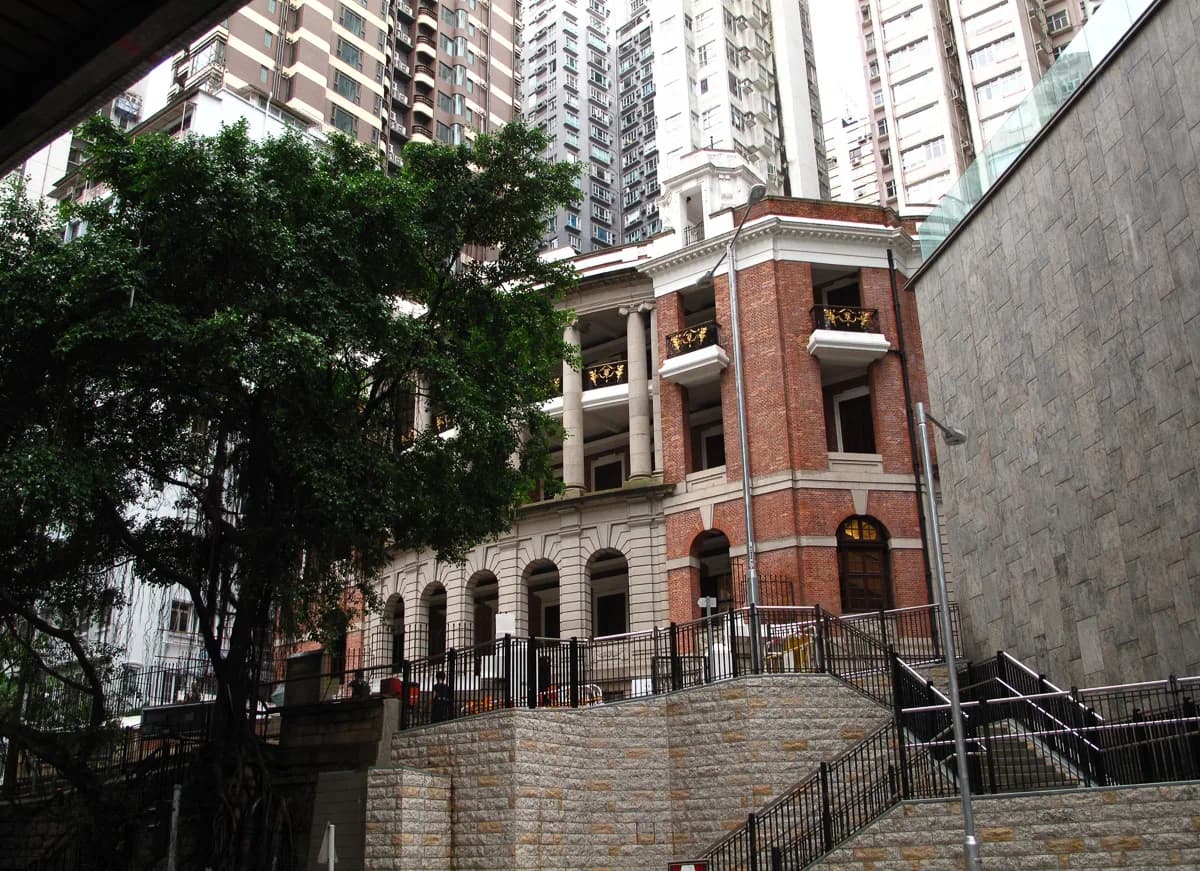
Kom Tong Hall, the Edwardian mansion that houses this museum, is worth the visit on its own terms before you even reach the exhibits. Built in 1914 for the Eurasian businessman Ho Kom-tong in a Composite Classical style typical of the period, it later served as the Hong Kong headquarters of The Church of Jesus Christ of Latter-day Saints from 1960 until 2004, when the Hong Kong government bought it for HK$53 million specifically to convert it into a museum about the revolutionary who spent his student years in the city. It was declared a monument in 2010. Two permanent exhibitions fill the restored interior. Hong Kong in Dr Sun Yat-sen's Time reconstructs the colonial city he knew as a young medical student, using it as a way into the social and political conditions that shaped his revolutionary thinking rather than treating Hong Kong as mere backdrop. Dr Sun Yat-sen and Modern China follows his role in the 1911 Revolution and the overthrow of the Qing dynasty through personal documents: his examination papers from student days, private correspondence, and artefacts connected to his organising work, giving a more intimate view of the man than the monumental statues and street names found elsewhere in the city. A third display, History and Renovation of Kom Tong Hall, covers the building's own restoration and is worth a few minutes for anyone curious how a private mansion becomes a government museum. Because all three exhibitions are free and the museum sits on the Mid-Levels Escalator route, it combines easily with a walk down into Central or up towards SoHo, and the building alone photographs better than most single-object museums on this list.
- 0
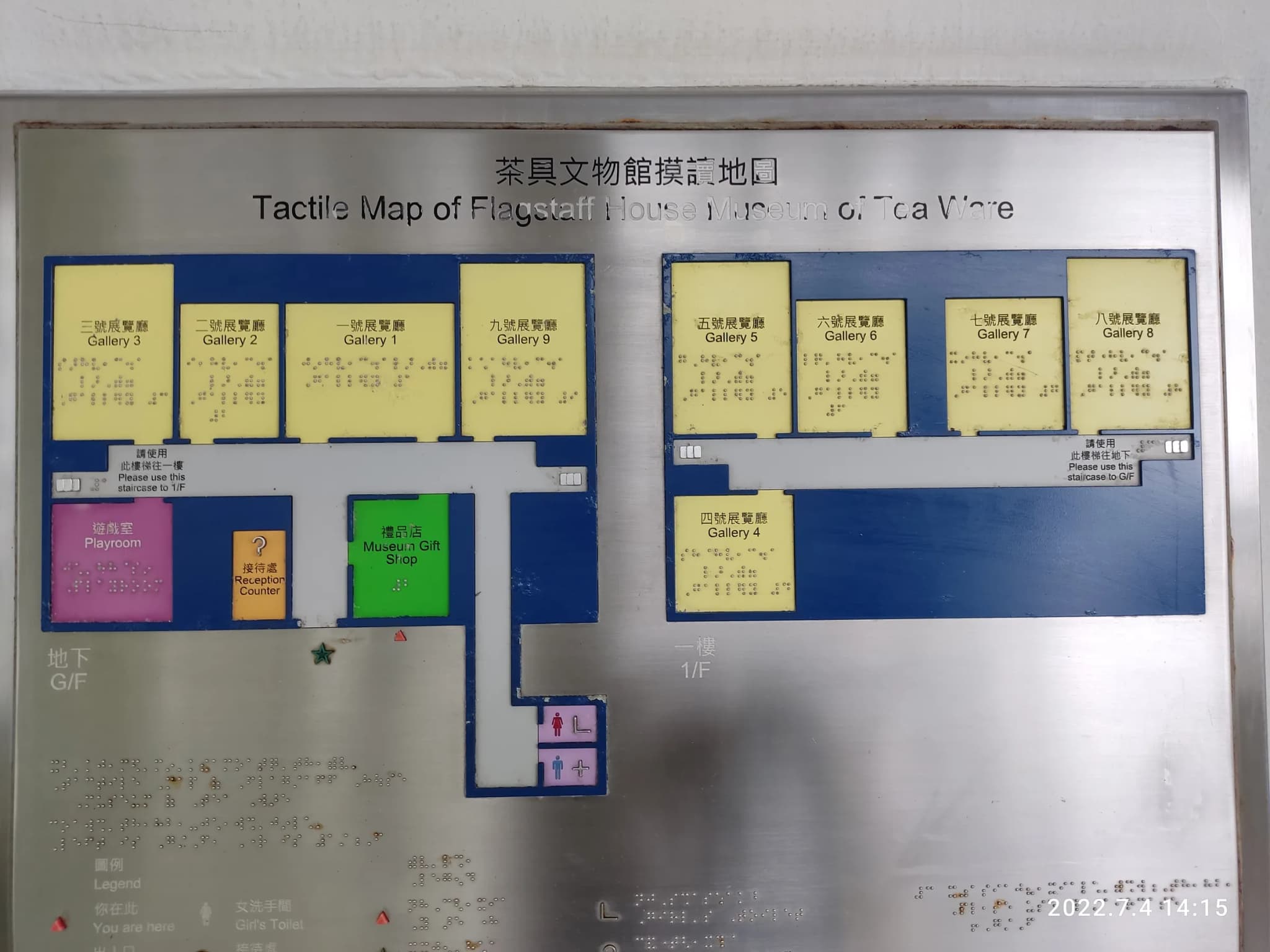
Flagstaff House is the oldest surviving example of colonial architecture in Hong Kong, built in 1846 in Greek revival style, likely designed by either Murdoch Bruce or Lieutenant Bernard Collinson of the Royal Engineers, and first occupied by Major-General George Charles D'Aguilar, commander of British forces from 1844 to 1846. It survived shelling and bombing during the Second World War and repairs under Japanese occupation, remained a military commander's residence until 1978, and was declared a monument in 1989. Since 1984 it has operated as a specialist museum, one of the very few in the world dedicated entirely to tea ware. The collection centres on Yixing teapots from Jiangsu Province, prized for the unglazed purple clay that is said to improve the flavour of tea brewed in it over years of use, and includes what is described as the world's oldest known extant teapot, a genuine rarity given how few ceramic teapots from the earliest period of their invention have survived intact. The K.S. Lo Gallery, added in 1995 as a wing built onto the original building, expanded the display space considerably and now shows Chinese ceramics and seals alongside the teapots, drawn from a substantial donation by the collector Dr Kwee Seong Lo, broadening the museum's scope from tea ware specifically into a wider survey of Chinese decorative arts. Because the building sits inside Hong Kong Park rather than on a street, a visit here pairs naturally with a walk through the park's aviary and conservatory, and because admission is free and the museum is small, it is one of the easiest stops on this list to fit into a half-day in Central without dedicating an entire afternoon to it.
- 0
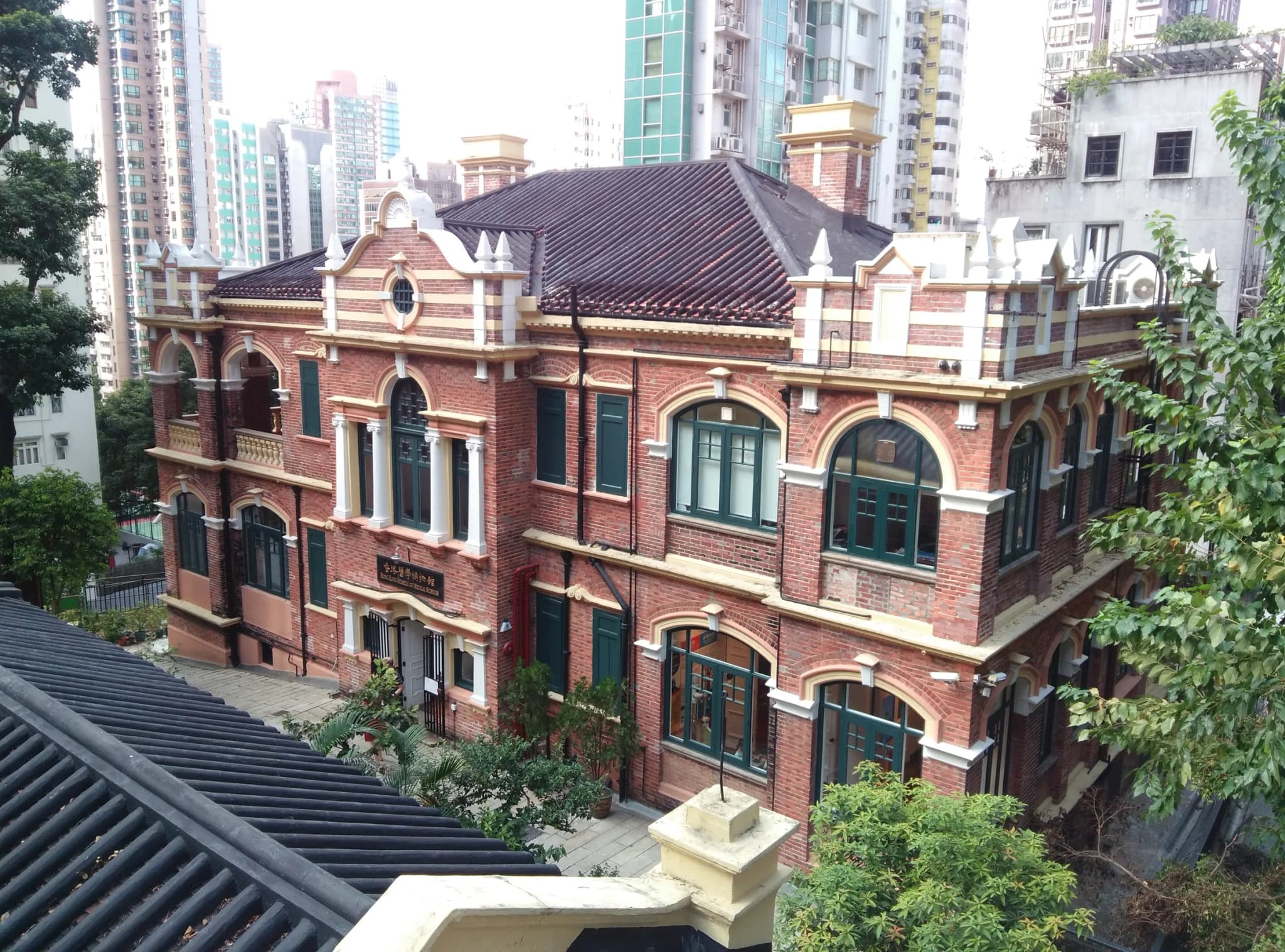
This museum occupies the Old Pathological Institute, a red-brick building constructed in 1906 by the architectural firm Leigh & Orange as Hong Kong's first Bacteriological Institute, built in direct response to the bubonic plague outbreaks that devastated the city from the 1890s onward. Three connected blocks originally housed laboratory space, a dormitory and animal-care facilities; after the Second World War it was renamed the Pathological Institute, and in 1972 its operations moved to Victoria Road, leaving the building in use as Health Department storage until the government designated it a monument in 1990 and transferred it to the newly formed Hong Kong Museum of Medical Sciences Society in 1995. It opened to the public on 16 March 1996 as the only museum in Hong Kong dedicated specifically to medical history. The roughly 10,000-square-foot building holds 11 exhibition galleries across three levels, an unusually dense arrangement for a museum this size. Named galleries include the Lui Hac Minh Gallery, the Hong Kong Tuberculosis, Chest and Heart Diseases Association Gallery, and the Hong Kong College of Radiologists Gallery, each sponsored by and focused on a different medical specialism, plus a gallery devoted to the Tai Ping Shan View, connecting the museum's plague-era origins to the neighbourhood outside its windows. The museum deliberately covers both Western scientific medicine and Traditional Chinese Medicine, tracing Hong Kong's long fight against infectious disease from cholera and plague through to more recent public health history, rather than presenting Western medicine as the only story worth telling. A game room, a small library and the Gordon King Lecture Theatre round out the facility. Because it sits up a quiet lane in the Mid-Levels rather than on a main tourist route, it draws far fewer visitors than its West Kowloon counterparts, which makes it one of the more contemplative stops on this list.
- 0
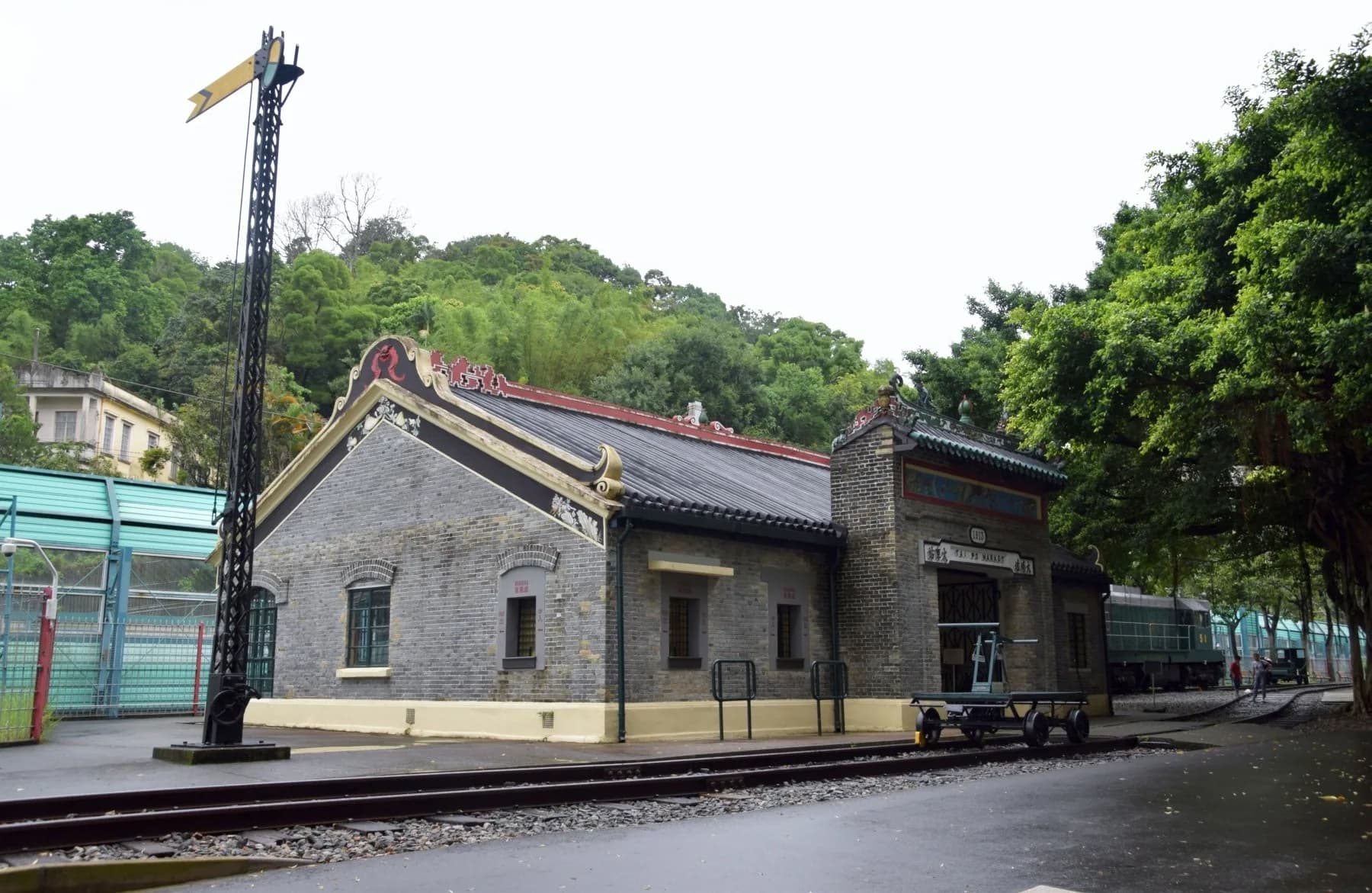
The building itself is the first exhibit: constructed in 1913 as Tai Po Market railway station, it served the Kowloon-Canton Railway from 1910 until the line was electrified and the station closed in 1983. Its architecture is deliberately unusual for a railway building, using an indigenous Chinese style with a pitched roof, decorative ridges, and carved ornamentation of peonies, red bats and magpies more commonly found on southern Chinese temples than on transport infrastructure. The station was declared a monument, and the museum opened here on 20 December 1986, making it one of the longer-running branch museums in Hong Kong's LCSD network. Outside on the former platforms and tracks sit three preserved locomotives: EMD G12 diesel locomotive No. 51, nicknamed Sir Alexander, built in 1955; EMD G26 diesel locomotive No. 60, Peter Quick, from 1973; and a W.G. Bagnall steam locomotive, No. 17BG, representing an earlier generation of motive power than either diesel unit. Seven historic passenger coaches ranging in date from 1911 to 1976 are also on display, alongside a hand-operated pump trolley and a diesel inspection railcar used by engineers to check the line. Inside the old station building, a smaller exhibition room holds period train tickets, official railway documents and historical photographs charting how the line shaped development along its route from Kowloon to the border. The outdoor layout and hands-on scale of the exhibits, several of which visitors can climb aboard, made it one of the more visited branch museums in the LCSD network in 2025, with around 227,000 visitors passing through. Because admission is free and the site is compact, it works well as a short stop on the way to or from Tai Po's other heritage sites.
- 0
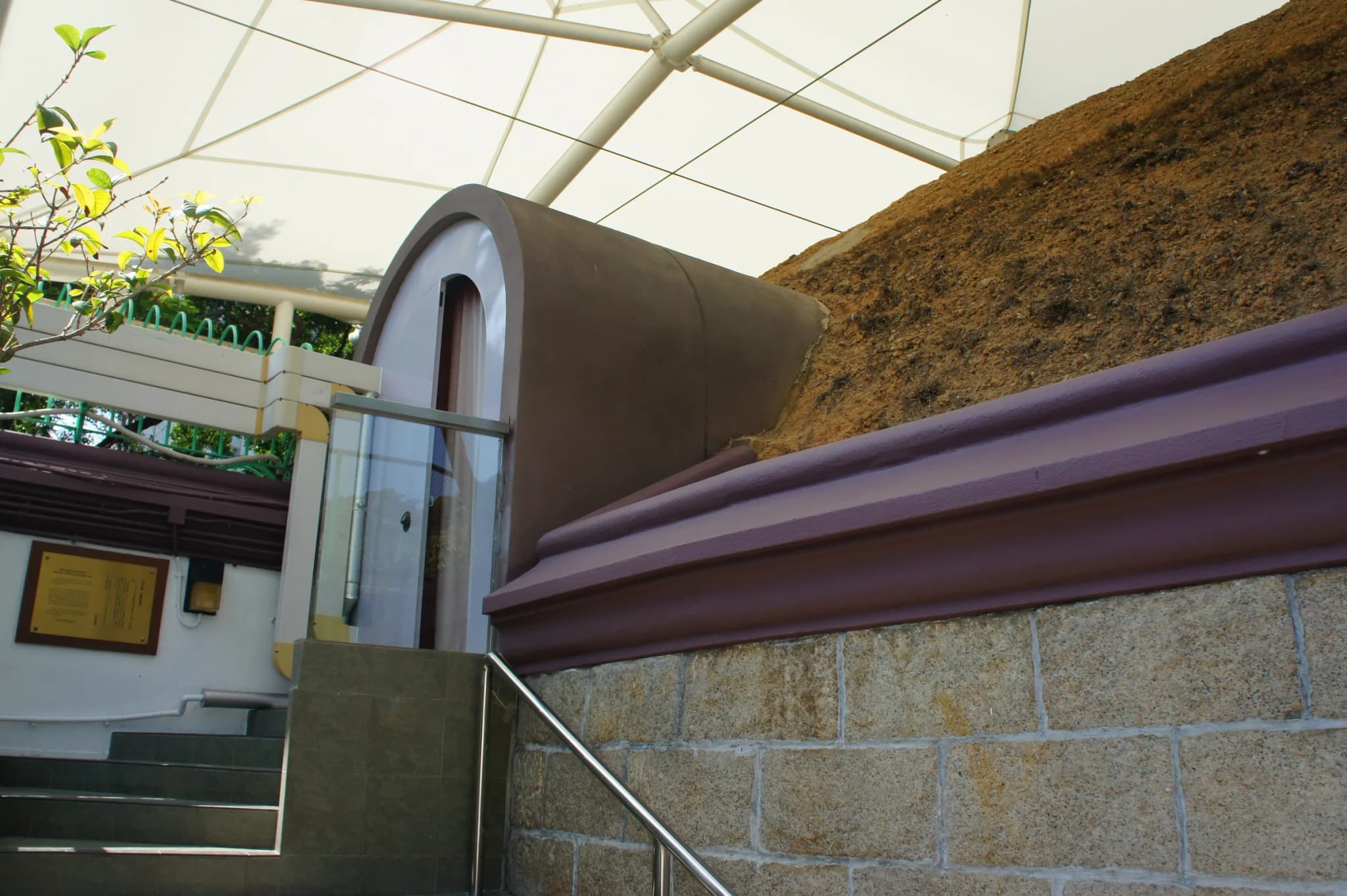
In August 1955, government workers levelling a hillside in Sham Shui Po to build resettlement housing accidentally uncovered a cross-shaped brick burial chamber with a domed roof, a design popular in Guangdong during the Eastern Han period, roughly AD 25 to 220. Archaeologists from the University of Hong Kong, led by Professor Frederick S. Drake, excavated the site alongside Public Works Department labourers. Initial plans called for the tomb to be demolished to make way for the housing project, but strong public interest changed that decision, and the tomb opened formally to visitors in 1957, with the exhibition hall beside it renovated most recently in 2005. It remains, to date, the only Han dynasty brick tomb ever unearthed in Hong Kong. Inscriptions on the bricks and the construction technique date the tomb precisely enough that archaeologists have been able to place it within a known regional building tradition rather than treating it as an isolated find. Fifty-eight artefacts were recovered from inside, the great majority of them pottery: cooking vessels including ding tripods and zun wine warmers, and, more unusually, miniature clay models of a house, a granary, a well and a stove, objects placed in Han-era tombs to provide for the deceased in the afterlife. Eight bronze pieces, including bowls, basins, mirrors and bells, round out the find. No human remains were recovered, but the selection and quality of the grave goods point to an officer attached to the local garrison rather than an ordinary commoner. Visitors cannot enter the tomb chamber itself; it is viewed through a glass panel, with a 3D animation in the adjoining exhibition hall reconstructing what the interior would have looked like at the time of burial, and a full-size replica is displayed separately at the Hong Kong Museum of History for anyone who wants a closer look at the structure.
- 0
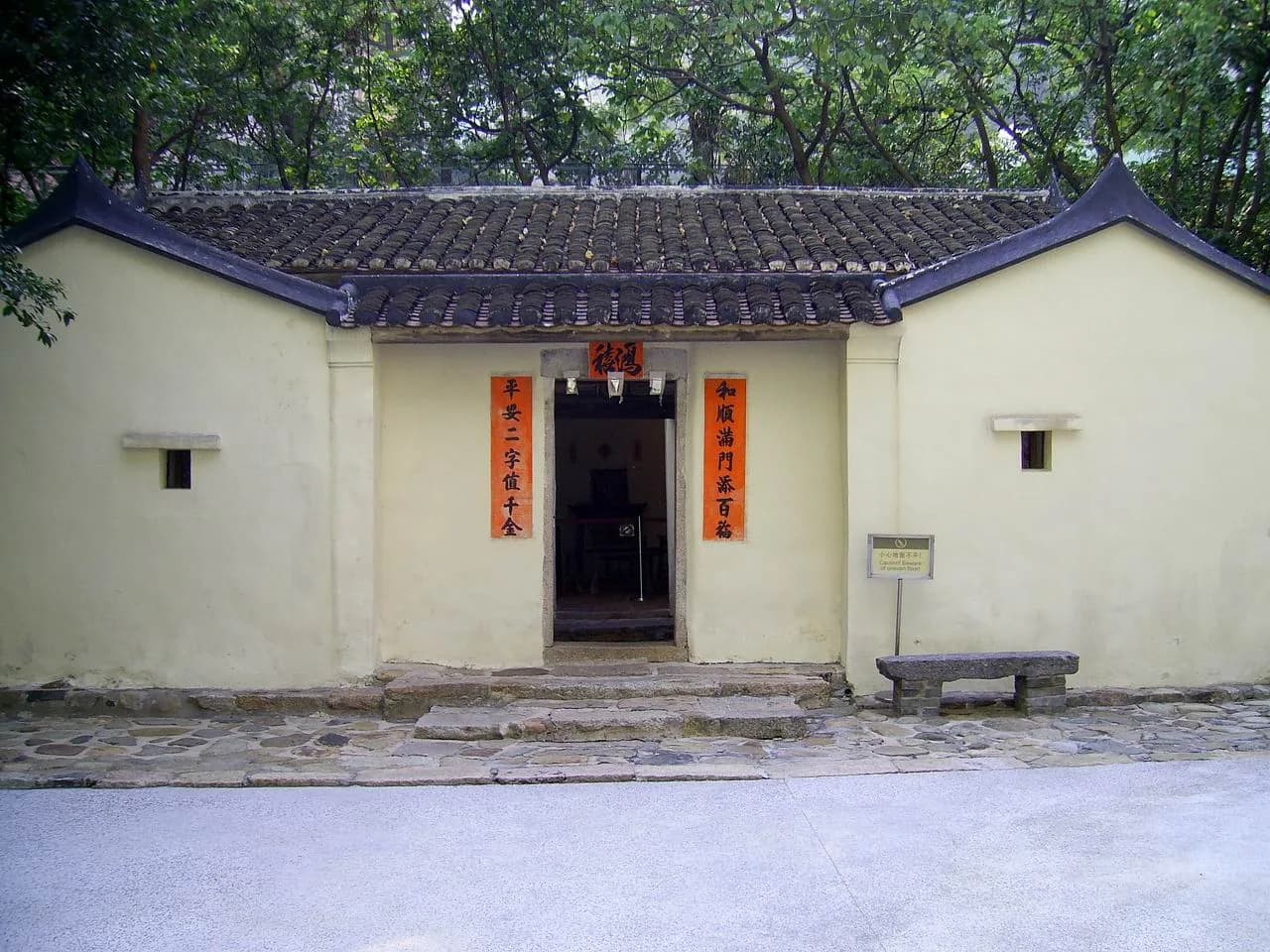
Law Uk was built around the 1750s, during the Qing dynasty, as the home of an impoverished Hakka farming family who had migrated from Bao'an County in Guangdong to settle among roughly three hundred other Hakka people in what is now Chai Wan. One wing of the house was damaged during the Battle of Hong Kong in December 1941, and by 1960, as Chai Wan industrialised and public housing estates replaced the surrounding village, the Law family moved out to a resettlement estate, leaving the house to fall into disrepair. The government's Resettlement Department rediscovered the deteriorating building in the early 1970s, and the Hong Kong Museum of History, established in 1975, acquired and restored it. Law Uk Folk Museum opened in 1989 and was declared a monument the same year. The house itself is the primary exhibit, laid out as a textbook example of a mid-18th-century Hakka rural dwelling: five rooms arranged symmetrically around a central hall, with deliberately minimal external windows, a defensive feature against the pirates and bandits who threatened isolated farming settlements along this stretch of coast, and a central lightwell used instead of windows to bring daylight into the interior rooms. An annex added during restoration houses supplementary displays while keeping the original structure architecturally intact and unaltered, and the preserved main hall and utility room are furnished with period tools and domestic objects to give a sense of everyday Hakka farming life rather than presenting an empty period shell. It is the smallest and least visited museum on this list, drawing around 14,000 visitors in 2025, but that makes it one of the few places in built-up Chai Wan where a single Hakka farmhouse survives complete enough to walk through, a rarity worth the short detour for anyone interested in Hong Kong's pre-colonial rural communities.
Image credits
- Hong Kong Palace Museum: Photo by Fong Man Hong, CC BY-SA 4.0, via Wikimedia Commons
- M+: Photo by Malcolm Koo, CC BY 4.0, via Wikimedia Commons
- Hong Kong Museum of History: Photo by LN9267, CC BY-SA 4.0, via Wikimedia Commons
- Hong Kong Museum of the War of Resistance and Coastal Defence: Photo by Gp03dhk, public domain, via Wikimedia Commons
- Dr Sun Yat-sen Museum: Photo by Rutger van der Maar, CC BY 2.0, via Wikimedia Commons
- Flagstaff House Museum of Tea Ware: Photo by NAU JAG 202 HWOAM, CC BY-SA 4.0, via Wikimedia Commons
- Hong Kong Museum of Medical Sciences: Photo by ystsoi, CC BY 2.0, via Wikimedia Commons
- Hong Kong Railway Museum: Photo by nzsteam, CC BY 2.0, via Wikimedia Commons
- Lei Cheng Uk Han Tomb Museum: Photo by Mk2010, CC BY-SA 3.0, via Wikimedia Commons
- Law Uk Folk Museum: Photo by Chong Fat, CC BY-SA 3.0, via Wikimedia Commons
Related Videos
Rank it your way
Remix this list into your own ranking, or head to the play hub for every game mode and community breakdown — blind mode, challenges, tier lists, and more.
You Might Also Like

Top 15 Best Family Attractions & Theme Parks in Hong Kong 2026
Top 15 Best Family Attractions & Theme Parks in Hong Kong...

Top 10 K-Pop Comebacks That Dominated 2026
Top 10 Museums in Hong Kong 2026
Top 10 Family Activities in Hong Kong 2026
Explore Hong Kong's premier museums

Top 10 Board Games You Must Play in 2026
Top 10 Museums in Hong Kong 2026

Top 15 Best Things to Do in Osaka With Families 2026
Top 10 Museums in Hong Kong 2026

Top 10 Comedy Clubs in London 2026
top cultural attractions in Hong Kong