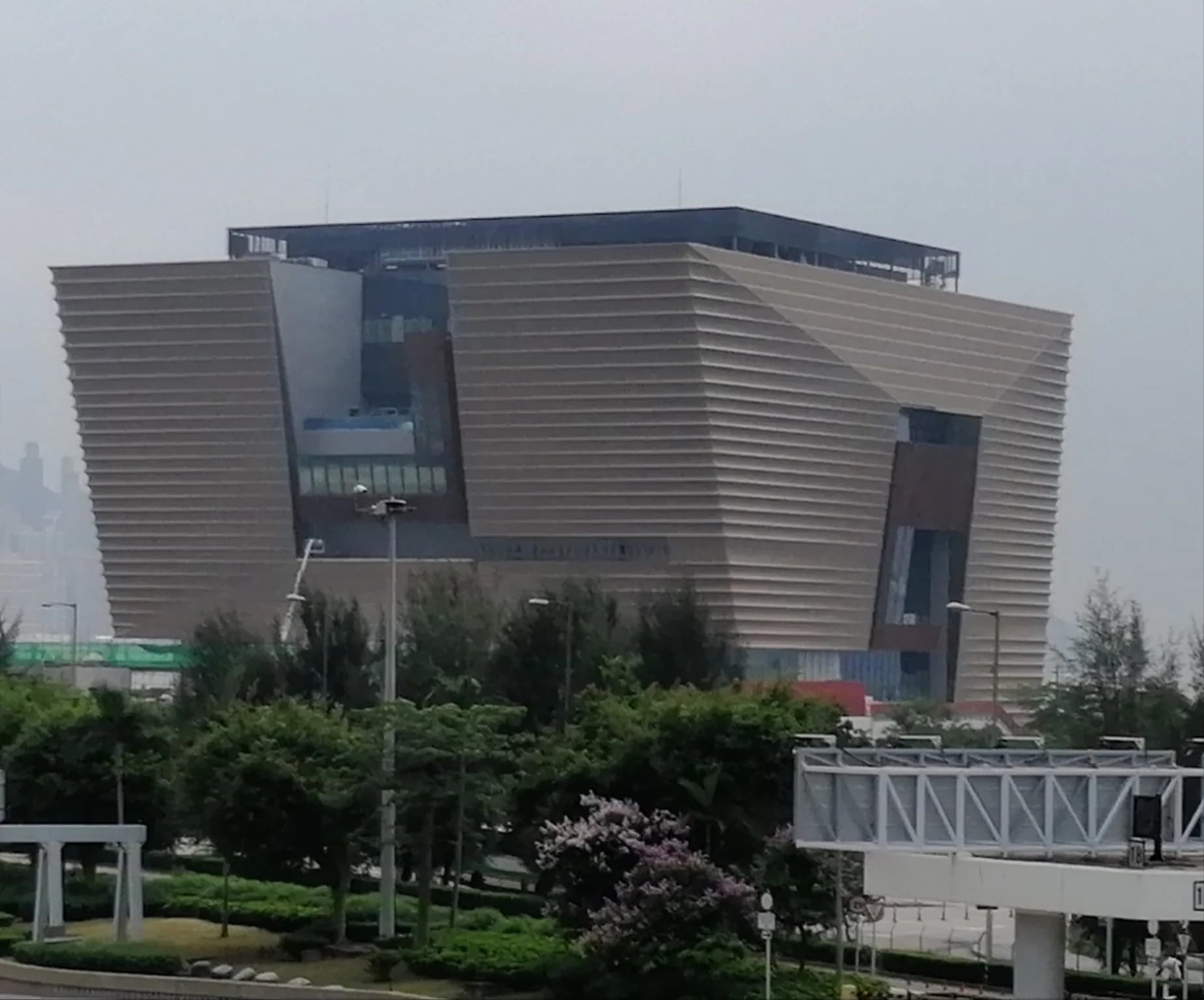
Hong Kong Palace Museum
The Hong Kong Palace Museum's real draw is not the building but what fills it: more than nine hundred objects lent from the Palace Museum in Beijing, the former imperial residence inside the Forbidden City, a number of them shown outside mainland China for the first time. General admission covers Galleries 1 to 7, a run of thematic rooms organised around the material culture of the Chinese court rather than a straight march through dynasties. The strongest single holding is metalwork: gold and silver ornaments, horse trappings and ritual vessels spanning more than three thousand years, many originating far from Beijing on the Eurasian Steppes and the Qinghai-Tibetan Plateau, tracing how nomadic craft entered the imperial vocabulary over centuries of contact and conquest. Alongside it sits a Ming dynasty furniture collection chosen for its joinery rather than its lacquer, and a growing textile holding, close to three thousand pieces stretching back to the Warring States period, recently strengthened by a major pledge from the Hong Kong collector Chris Hall. Together they give the museum one of the deeper textile histories on public display anywhere in the region, not just a handful of court robes. Galleries 1 to 7 rotate slowly. Gallery 8 is where the loan shows land, and the current programme runs from Heavenly Horses, built around masterworks connected to the Beijing collection, to Brilliance, a survey of Ming dynasty ceramic glazes, to Treasures of Global Jewellery, borrowed not from Beijing but from New York's Metropolitan Museum, which shows the museum is willing to look past its own core collection for temporary programming even while its identity stays anchored to the Forbidden City. Court paintings and calligraphy fill the remaining thematic rooms, selected less for individual celebrity works than for what they reveal about how the imperial court actually used art: as diplomacy, as record-keeping, and as a display of taste handed down through generations of collecting emperors. Budget half a day if the special exhibition interests you; the seven permanent galleries alone run to two or three hours for anyone reading the object labels.
Photos (1)
Comments on "Hong Kong Palace Museum"
Have a take on this ranking?
Save your rankings and see how you compare. Comments are how the argument actually happens here. Posting one needs a free account — it takes about a minute.
No comments yet.
The first comment sets the terms of the argument.