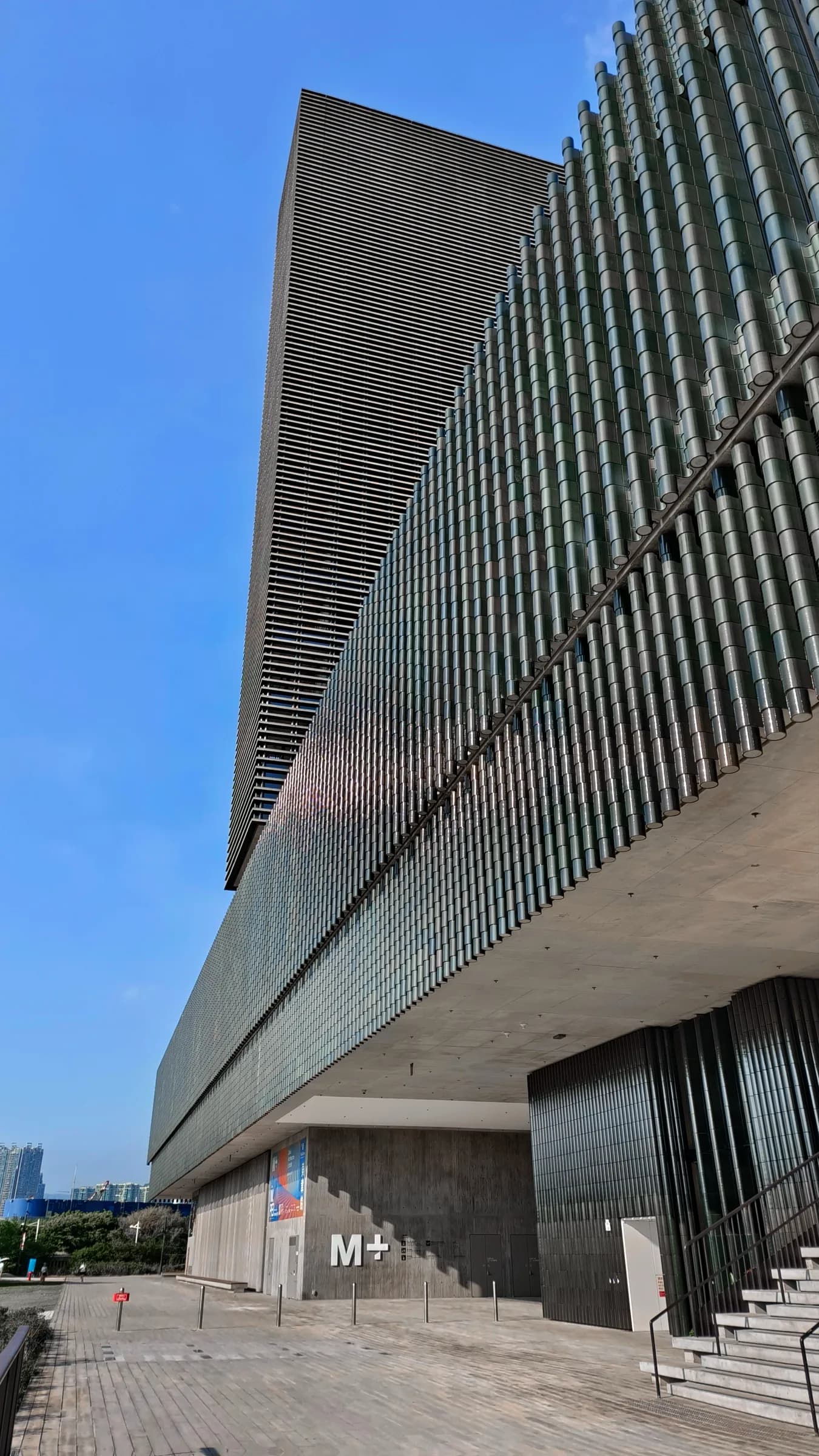
M+
M+ organises itself less like a single museum than a cluster of parallel collections under one roof, and the late-2026 lineup shows the range. On Level 2, the Sigg Galleries hold M+ Sigg Collection: Inner Worlds, the latest rehang of the roughly 1,500 works donated and sold to the museum by the Swiss collector Uli Sigg, still one of the largest public holdings of Chinese contemporary art anywhere. A few rooms over, Shanshui: Echoes and Signals reworks the classical Chinese landscape-painting tradition through video, photography and installation, deliberately hung close to the ink-and-paper originals it responds to. Design and architecture, M+'s other founding strength, get their own run of thirty-three galleries in total across the building: Things, Spaces, Interactions surveys seventy years of design objects and furniture, while Nakagin and Kiyotomo: Architectural Icons from Tokyo, 1970s-1980s is built from drawings, models and salvaged fragments of two landmark Japanese Metabolist buildings, one of them since demolished, making the gallery a rare place to see physical pieces of a building that no longer exists anywhere else. The temporary programme changes faster than the collection displays. Through late October 2026, the Cissy Pui-Lai Pao and Shinichiro Watari Galleries pair Wael Shawky's mythological film installations with Heri Dono's puppet-inflected sculpture, and the Grand Stair runs a rotating series of free commissions moving from Andy Warhol's screen tests to Xu Bing's calligraphic installation You Inhuman Thing from early October. Several of the most atmospheric spaces cost nothing at all: Janet Cardiff's forty-speaker sound work The Forty Part Motet plays continuously in the basement Studio, and the ground-floor Mediatheque and rooftop Playscape are open without a ticket, which makes M+ one of the few West Kowloon institutions with a genuinely free way in for anyone who cannot justify the full admission price.
Photos (1)
Comments on "M+"
Have a take on this ranking?
Save your rankings and see how you compare. Comments are how the argument actually happens here. Posting one needs a free account — it takes about a minute.
No comments yet.
The first comment sets the terms of the argument.