Get ready for a historic North American summer as the FIFA World Cup 2026 kicks off across 16 stunning host cities in the United States, Canada, and Mexicoโthe first time three nations co-host the tournament. From the iconic Azteca Stadium in Mexico City, where legends have been made, to the dazzling SoFi Stadium in Los Angeles with its cutting-edge design, these top 10 host cities and stadiums offer more than just matches: they're gateways to unique cultures, culinary scenes, and unforgettable fan experiences. Whether you're cheering at the retractable-roof Mercedes-Benz Stadium in Atlanta or exploring the vibrant streets of Toronto, this list highlights the must-visit venues and their surrounding attractions for the ultimate World Cup adventure. Prepare for architectural wonders, passionate crowds, and moments that will define soccer history.
Curated by our travel editors. Lived-experience picks weighted by community vote โ updated as travelers report back.
How iconic is this venue in football history? Previous World Cups, legendary matches, legendary players who competed here.
| Rank | Item | Score | Notes |
|---|---|---|---|
| #1 | Mexico City | 10.0 | Only stadium to host 3 World Cups; Pelรฉ 1970, Maradona 1986, 2026 |
| #2 | New York / New Jersey | 8.0 | Hosts the 2026 Final โ the pinnacle of this tournament's history |
| #3 | Vancouver | 7.0 | Historic milestone: first World Cup matches in Canadian history |
| #4 | Seattle | 6.0 | Seattle Sounders gave this city football soul; Guinness Record crowd adds legend |
| #5 | Los Angeles | 5.0 | Hosts 1994 WC legacy city; USA first game 2026 |
| #6 | Kansas City | 5.0 | NFL dynasty home; Guinness World Record crowd roar adds legend |
| #7 | Dallas | 4.0 | No World Cup history but 9 matches gives it tournament weight |
| #8 | Atlanta | 4.0 | Super Bowl LIII venue; new stadium with growing legacy |
| #9 | Monterrey | 4.0 | Part of Mexico's rich football tradition; 2015 opening relatively recent |
| #10 | Miami | 3.0 | No major football history; Latin American cultural importance compensates |
<p>There is no stadium on the planet with Estadio Azteca's curriculum vitae. Built in 1966 and perched at 2,250 meters (7,382 feet) above sea level in the southern reaches of Mexico City, the Azteca has hosted three FIFA World Cups โ 1970, 1986, and now 2026 โ a feat no other venue has matched or is likely to match. On June 11, 2026, when Mexico kicks off against South Africa in the tournament's opening match, the stadium will also claim another unique distinction: it will have hosted three World Cup opening matches.</p><p>The history embedded in those 87,523 seats is staggering. In 1970, Pelรฉ lifted the Jules Rimet Trophy here after Brazil dismantled Italy 4-1 in what many still consider the greatest World Cup Final ever played. Sixteen years later, Diego Maradona turned this same turf into his personal stage โ scoring the infamous 'Hand of God' goal and the 'Goal of the Century' against England in the same 1986 quarter-final, before returning to lift the trophy after Argentina defeated West Germany 3-2 in the final. Both goals were scored here. Both World Cups were decided here.</p><p>For 2026, the Azteca has undergone significant renovation: new LED screens throughout the bowl, a restored exterior facade, and completely rebuilt changing rooms bring the 60-year-old ground up to FIFA's modern standards while preserving its brutalist grandeur. The altitude remains a permanent feature โ visitors acclimatizing from sea level will feel breathlessness during their first 48-72 hours, so arriving early is essential.</p><p>Beyond the stadium, Mexico City rewards extended stays. The Frida Kahlo Museum in Coyoacรกn, the Templo Mayor Aztec ruins, Chapultepec Park, the world-class Anthropology Museum, and the bohemian Roma and Condesa neighborhoods create one of the richest urban cultural ecosystems in the Americas. Many nationalities enter Mexico visa-free, making this the most internationally accessible stop on the entire 2026 tour.</p>
<p>Every FIFA World Cup has one defining moment: the Final. On July 19, 2026, that moment happens at MetLife Stadium in East Rutherford, New Jersey โ 15 miles west of Manhattan, in the heart of the New York metropolitan area. When the two best teams in the 48-nation tournament walk out onto that pitch, they will do so in front of 82,500 spectators in what will be the most-watched sporting event on the planet that year. The World Cup Final is not just a football match. It is a civilizational event.</p><p>MetLife Stadium itself is an architectural statement. Completed in 2010 at a construction cost of $1.6 billion โ the most expensive NFL stadium at the time โ the facility features a distinctive aluminum louver exterior and an elliptical bowl design that makes it the largest NFL stadium by capacity. It is co-home to the New York Giants and New York Jets, though for one day in July 2026, those tribal allegiances dissolve entirely in favour of something far larger.</p><p>The stadium hosts 8 total matches across the tournament, from group stage through to the Final, giving fans multiple entry points. But the Final is the crown. Ticket prices for that match reach up to $32,970 at the top tier โ the single most expensive individual ticket in the entire tournament by a very large margin. Group stage tickets at MetLife run $380-$4,105, more accessible but still at the premium end.</p><p>Getting there requires planning: MetLife has no match-day parking for World Cup events, so MTA shuttles from New York Penn Station and official bus services from Manhattan are the primary options. The New York City experience surrounding the tournament is unmatched โ Liberty State Park fan zones, Rockefeller Center Fan Village, Brooklyn Bridge Park activation, and the full cultural weight of the world's most famous city serve as the backdrop to every match day.</p>
<p>SoFi Stadium in Inglewood, California, opened its doors in 2020 as the most expensive stadium ever constructed anywhere on Earth โ a $5.5 billion engineering and aesthetic statement that redefines what a sports venue can be. For FIFA World Cup 2026, it hosts 8 matches including the USA's opening game against Paraguay on June 12, making it the site of what will almost certainly be the most-watched single match in American sports history up to that point.</p><p>The engineering achievements here are genuinely staggering. The translucent ETFE roof features 46 openable panels that allow the 70,240-seat bowl to function as either a fully enclosed indoor venue in extreme weather or an open-air stadium on perfect Southern California days โ the first true indoor-outdoor stadium ever built. The 360-degree dual-sided Infinity Screen rises 122 feet and stretches 120 yards wide, visible not just from every seat but reportedly from aircraft on approach to nearby LAX. The stadium's 3.1 million square feet of total building area makes it one of the largest in the world by floor space, encompassing retail, offices, and event spaces across multiple levels. At night, 27,000 embedded LED pucks in the building's exterior create a visual spectacle visible from miles away.</p><p>Access is genuinely multimodal: the Metro C Line and K Line both serve the stadium, connecting directly to downtown LA and LAX. For the tournament's opening weekend, an LA Fan Festival at the Memorial Coliseum runs June 11-14, with 39 days of World Cup-themed activations spread across the city's beach communities, Hollywood, and downtown core.</p><p>The broader Los Angeles cultural offer โ Getty Center, Griffith Observatory, Venice Beach, Santa Monica Pier, Hollywood studios, and the city's extraordinary culinary diversity โ ensures that non-match days are as richly scheduled as the football itself. SoFi is the newest stadium in the tournament, and by most measurable technical criteria, the most advanced.</p>
<p>AT&T Stadium in Arlington, Texas, sits between Dallas and Fort Worth in the heart of the American South, and it does nothing at small scale. Home of the Dallas Cowboys NFL franchise, this retractable-roof colossus holds 80,000 spectators in its standard configuration โ expandable to over 100,000 for special events โ and hosts 9 FIFA World Cup 2026 matches, more than any other stadium in the tournament. For a fan trying to maximise the number of matches in a single city, there is no better base in the world than Dallas.</p><p>Those 9 matches break down across the full tournament arc: 5 group stage matches, 2 Round of 32 knockout games, 1 Round of 16, and a Semifinal on July 14 โ just five days before the Final. Watching one of the four remaining teams in a tournament of 48 nations play for a place in the Final is a privilege that only two cities in North America will host, and Dallas is one of them.</p><p>The stadium itself is architecturally ambitious. The retractable roof allows the venue to be fully opened or closed within minutes, and the climate control system ensures that what is happening outside the building โ and July in north Texas is genuinely dangerous, with heat indices regularly exceeding 110ยฐF โ has no bearing on conditions inside. One of the world's largest suspended video screens, 160 feet wide and 72 feet tall, dominates the interior and has become an iconic image of American stadium excess in the best possible sense.</p><p>The Fair Park fan zone, a 30-minute drive from the stadium, operates at 35,000-person daily capacity throughout the tournament. Beyond football, the Dallas-Fort Worth region offers Deep Ellum's renowned live music scene, the Fort Worth Stockyards' rodeo culture, world-class barbecue, and DFW International Airport โ one of the best-connected hubs in the US for international arrivals.</p>
<p>Lumen Field in downtown Seattle holds two Guinness World Records for the loudest outdoor crowd ever recorded โ confirmed not once but twice. That distinction is not a marketing claim; it is a measurable acoustic phenomenon produced by decades of deliberate stadium design and genuine supporter culture. The Seattle Sounders MLS franchise has spent more than 15 years building one of the most passionate football fan bases in North America, and when World Cup 2026 arrives, that culture will be amplified across 6 matches including USA vs Australia on June 19.</p><p>The stadium's history is itself remarkable. It was built on the site of the Kingdome, whose 1999 demolition stands as the largest controlled concrete implosion ever executed โ and with environmentally conscious foresight, 50% of the resulting rubble was recycled into the new structure's foundation. The horseshoe bowl design, with its open north end deliberately framing the downtown Seattle skyline and Puget Sound, makes Lumen Field one of the most visually distinctive venues in American sport. For World Cup 2026, the stadium received a $19 million upgrade that included the installation of natural grass โ a significant investment reflecting Seattle's seriousness as a host.</p><p>FIFA and independent analysts have rated Lumen Field the number one fan experience among all 16 host cities, a remarkable validation given that it is competing against $5.5 billion SoFi Stadium and the historical weight of Estadio Azteca. The combination of authentic MLS football culture, Guinness Record acoustics, and a compact downtown location walkable to Pike Place Market, the Space Needle, and Chihuly Garden and Glass creates an on-and-off-pitch experience that no other US host city fully replicates.</p><p>Seattle's Pacific Northwest climate โ mild but variable in June, with possible rain โ requires layering up, and the open north end means weather exposure remains a factor. But for fans who prioritise atmosphere above all else, there is no better choice in the tournament.</p>
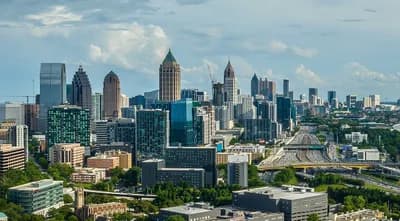
<p>Mercedes-Benz Stadium in Atlanta is, by the most rigorous certification standards available, the most environmentally responsible professional sports venue ever built. It was the first stadium anywhere in the world to achieve both LEED Platinum certification (the US Green Building Council's highest standard for energy and resource efficiency) and TRUE Platinum certification (a near-zero-waste standard requiring at least 90% of waste to be diverted from landfill). Those dual certifications are not marketing language โ they represent verifiable engineering achievements that no other stadium has matched globally.</p><p>The numbers behind the sustainability story are striking. Four thousand solar panels installed across the stadium's footprint generate enough electricity to power 10 NFL games per year. A 680,000-gallon rainwater harvesting cistern reduces the stadium's water consumption by 47%. The eight-panel retractable roof can open and close in minutes, reducing the need for artificial climate control. A 58-foot by 1,100-foot circular LED scoreboard rings the interior like a halo, delivering the largest continuous video display in North American sports.</p><p>For World Cup 2026, Atlanta hosts 8 matches including a Semifinal โ placing it among the most prestigious venues in the tournament alongside Dallas. The stadium opened in 2017, replacing the Georgia Dome, and hosted Super Bowl LIII in 2019, establishing its credentials as a global mega-event venue. Its location 27 minutes from Hartsfield-Jackson Atlanta International Airport โ the world's busiest airport by passenger volume โ makes it the easiest major stadium in the entire tournament to reach from any international origin point.</p><p>Atlanta's broader cultural offer has grown considerably in recent years: Centennial Olympic Park, the Martin Luther King Jr. National Historic Site, the Georgia Aquarium (one of the world's largest), CNN Center, and a thriving food and music scene centred on Midtown and Inman Park complement the match-day experience.</p>
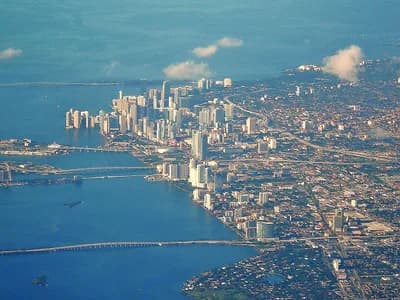
<p>No city in the United States has the cultural relationship with South American football that Miami does. Hard Rock Stadium โ renamed 'Miami Stadium' for the duration of World Cup 2026 โ sits 10 miles north of Miami proper and 10 miles south of Fort Lauderdale, close enough to the Atlantic Ocean to feel the sea breeze on clear evenings. But its cultural proximity to Brazil, Colombia, Argentina, and the broader Latin American diaspora is what defines the atmosphere this venue will generate across its 7 matches.</p><p>The stadium hosts 7 matches in total, including a Quarterfinal that will see two of the eight remaining teams compete for a Semifinal berth, and the Third-Place playoff on July 18 โ one day before the Final. Group stage matches like Brazil vs Scotland and Colombia vs Portugal are expected to produce extraordinary atmospheres, with South American supporters travelling in large numbers to a city where their languages, food, and music are at home on every corner. The Latin American and Caribbean diaspora concentrated in Greater Miami gives this city's football fanbase a depth and passion that any other US host city would struggle to match.</p><p>Hard Rock Stadium opened in 1987 as the home of the Miami Dolphins NFL franchise. It has been significantly upgraded across multiple renovations, adding shade canopies and modernised seating, though at 65,000 capacity it remains one of the more intimate venues in the US tournament. Its 10-mile proximity to the Atlantic Ocean means coastal breezes moderate the otherwise intense June-July Miami heat and humidity โ though hydration and sun protection remain essential at outdoor fan zones.</p><p>Off the pitch, Miami's cultural ecosystem is extraordinary: South Beach's Art Deco historic district, Wynwood Walls outdoor street art museum, Little Havana's Cuban cuisine and coffee culture, Brickell's financial district rooftop bars, and Bayfront Park's waterfront fan zone create a city where the World Cup celebration extends well beyond match hours.</p>
<p>GEHA Field at Arrowhead Stadium โ officially renamed 'Kansas City Stadium' for the duration of World Cup 2026 โ holds a distinction that even its more famous coastal counterparts cannot claim: the Guinness World Record for the loudest crowd roar ever recorded in an outdoor sports venue. This is the home of the Kansas City Chiefs NFL dynasty, one of the most successful and loudly supported franchises in American sports history, and the culture of passionate, deafening spectatorship it has built is embedded in the stadium's very architecture.</p><p>For the World Cup, Kansas City hosts 6 matches including a Quarterfinal on July 11, when two of the final eight nations in the tournament will compete in a stadium that guarantees extraordinary noise. The practical setup involves 3,500 seats being removed to accommodate FIFA's broadcast and media infrastructure, bringing the working capacity to between 65,000 and 68,000 for the tournament โ still a formidable and atmospheric bowl.</p><p>Kansas City opened Arrowhead in 1972, making it the oldest stadium among the top venues in the US tournament. What it lacks in architectural modernity it compensates for in tradition, tribal energy, and the kind of crowd atmosphere that newer, more corporate venues sometimes struggle to generate. The Chiefs' multiple Super Bowl championships have created a fanbase with championship expectations and the vocal intensity to match.</p><p>For international visitors, Kansas City offers a genuinely surprising cultural proposition. The city's barbecue culture โ slow-smoked, sauce-rich, and genuinely world-class โ is reason alone to visit. Boulevard Brewing Company has helped establish Kansas City as a craft beer destination. Union Station, the Negro Leagues Baseball Museum, and the Arabia Steamboat Museum provide cultural depth that exceeds most visitors' expectations. Midwest pricing means hotels, restaurants, and transport cost significantly less than coastal alternatives, making this one of the highest-value stops on the entire 2026 circuit.</p>
<p>Estadio BBVA in Monterrey, Mexico, opened in 2015 as one of the most architecturally considered new stadiums built anywhere in the decade. Designed by global sports architecture firm Populous in collaboration with Mexican firm VFO, the stadium's most striking feature is its aluminium facade โ a deliberate material and aesthetic reference to Monterrey's deep industrial heritage as Mexico's metallurgical and brewing capital. The shimmering metallic exterior evokes both the steel foundries and the great cylindrical beer vats that define the city's industrial identity, creating a venue that is visually inseparable from its geographic and cultural context.</p><p>That context reaches its most dramatic expression inside the bowl. Cerro de la Silla โ the saddle-shaped mountain that has served as Monterrey's most recognisable landmark for centuries โ is framed perfectly by the stadium's open end, rising dramatically behind the pitch. No other venue in World Cup 2026 offers a natural landscape backdrop of comparable grandeur. LEED Silver certification confirms that the aesthetic ambition is matched by environmental seriousness.</p><p>For 2026, Estadio BBVA hosts 4 group stage matches โ the smallest allocation in our top 10, which is its primary limitation for fans seeking knockout drama. But for supporters prioritising architectural beauty, cultural authenticity, and accessibility, this is one of the most rewarding destinations on the circuit. Mexico is visa-free for a wide range of nationalities, and Monterrey's cost of living sits well below any North American comparison, making it the most affordable entry point in our top 10.</p><p>The city beyond the stadium rewards exploration. Paseo Santa Lucรญa, a 2.5-kilometre pedestrian canal promenade through the city centre, provides a civilised counterpoint to the industrial heritage narrative. Parque Fundidora โ a former steel foundry converted into a vast cultural and recreational complex โ is one of the most impressive urban regeneration projects in Mexico. Macroplaza, the city's grand central square, anchors the historic core. Summer temperatures can reach 41ยฐC (106ยฐF), so morning and evening activities are advisable.</p>
<p>When the FIFA World Cup 2026 kicks off in Vancouver, it will mark the first time in history that Canada has hosted men's World Cup matches. That singular fact โ a national milestone for the most enthusiastic football-growing nation in the tournament โ gives BC Place Stadium a context no amount of architectural specification can fully capture. An entire country celebrating its first ever participation as a host gives every Vancouver match a charge of national pride and historic significance that seasoned World Cup cities simply cannot manufacture.</p><p>BC Place itself is a technically impressive venue. Opened originally in 1983 and substantially rebuilt with a new roof in 2011, it holds 54,000 spectators beneath what is certified as the world's largest cable-supported retractable domed roof โ a 60,000-tonne engineering structure that opens and closes as conditions demand and ensures that Vancouver's notoriously variable June weather has no bearing on match-day comfort. The stadium's downtown location is genuinely compact and walkable, sitting minutes from the waterfront, the Gastown historic district, and the False Creek seawall.</p><p>Vancouver hosts 7 matches across group stage and select knockout rounds, making it one of the more substantive Canadian allocations. The Pacific Northwest setting means mountains are visible from the city itself โ a backdrop unlike any other in the tournament. Capilano Suspension Bridge, Stanley Park's 10-kilometre seawall, and the North Shore mountains provide a natural attraction portfolio that many urban stadium cities cannot compete with. The city's Pacific Rim culinary scene โ exceptional Japanese, Chinese, and Korean restaurants alongside Pacific seafood โ is among the finest in North America.</p><p>The critical warning for Vancouver is financial: hotel prices have surged to above $1,200 per night during peak match weeks, with some properties exceeding $1,700 at peak demand. This makes Vancouver the most expensive accommodation market in the entire tournament. Book six months in advance or accept that alternatives will be very limited. Canada's eTA requirement (CAD $7, available online in minutes) for approximately 50 nationalities makes the visa process the simplest of any host country.</p>
The most-voted lists across every category โ curated weekly. Join the early readers.
No spam. One email per week. Unsubscribe anytime.


Create a free account or sign in to join the discussion.
Sign in to join the conversation
Top 10 Budget Summer Travel Destinations Under $75 Per Night in 2026
Travel Books That Make You Book a Plane Ticket
Top 10 Hotels in Hong Kong 2026Explore more Travel rankings on Top10Grid
Because you're viewing Travel
<p>There is no stadium on the planet with Estadio Azteca's curriculum vitae. Built in 1966 and perched at 2,250 meters (7,382 feet) above sea level in the southern reaches of Mexico City, the Azteca has hosted three FIFA World Cups โ 1970, 1986, and now 2026 โ a feat no other venue has matched or is likely to match. On June 11, 2026, when Mexico kicks off against South Africa in the tournament's opening match, the stadium will also claim another unique distinction: it will have hosted three World Cup opening matches.</p><p>The history embedded in those 87,523 seats is staggering. In 1970, Pelรฉ lifted the Jules Rimet Trophy here after Brazil dismantled Italy 4-1 in what many still consider the greatest World Cup Final ever played. Sixteen years later, Diego Maradona turned this same turf into his personal stage โ scoring the infamous 'Hand of God' goal and the 'Goal of the Century' against England in the same 1986 quarter-final, before returning to lift the trophy after Argentina defeated West Germany 3-2 in the final. Both goals were scored here. Both World Cups were decided here.</p><p>For 2026, the Azteca has undergone significant renovation: new LED screens throughout the bowl, a restored exterior facade, and completely rebuilt changing rooms bring the 60-year-old ground up to FIFA's modern standards while preserving its brutalist grandeur. The altitude remains a permanent feature โ visitors acclimatizing from sea level will feel breathlessness during their first 48-72 hours, so arriving early is essential.</p><p>Beyond the stadium, Mexico City rewards extended stays. The Frida Kahlo Museum in Coyoacรกn, the Templo Mayor Aztec ruins, Chapultepec Park, the world-class Anthropology Museum, and the bohemian Roma and Condesa neighborhoods create one of the richest urban cultural ecosystems in the Americas. Many nationalities enter Mexico visa-free, making this the most internationally accessible stop on the entire 2026 tour.</p>
<p>Every FIFA World Cup has one defining moment: the Final. On July 19, 2026, that moment happens at MetLife Stadium in East Rutherford, New Jersey โ 15 miles west of Manhattan, in the heart of the New York metropolitan area. When the two best teams in the 48-nation tournament walk out onto that pitch, they will do so in front of 82,500 spectators in what will be the most-watched sporting event on the planet that year. The World Cup Final is not just a football match. It is a civilizational event.</p><p>MetLife Stadium itself is an architectural statement. Completed in 2010 at a construction cost of $1.6 billion โ the most expensive NFL stadium at the time โ the facility features a distinctive aluminum louver exterior and an elliptical bowl design that makes it the largest NFL stadium by capacity. It is co-home to the New York Giants and New York Jets, though for one day in July 2026, those tribal allegiances dissolve entirely in favour of something far larger.</p><p>The stadium hosts 8 total matches across the tournament, from group stage through to the Final, giving fans multiple entry points. But the Final is the crown. Ticket prices for that match reach up to $32,970 at the top tier โ the single most expensive individual ticket in the entire tournament by a very large margin. Group stage tickets at MetLife run $380-$4,105, more accessible but still at the premium end.</p><p>Getting there requires planning: MetLife has no match-day parking for World Cup events, so MTA shuttles from New York Penn Station and official bus services from Manhattan are the primary options. The New York City experience surrounding the tournament is unmatched โ Liberty State Park fan zones, Rockefeller Center Fan Village, Brooklyn Bridge Park activation, and the full cultural weight of the world's most famous city serve as the backdrop to every match day.</p>
<p>SoFi Stadium in Inglewood, California, opened its doors in 2020 as the most expensive stadium ever constructed anywhere on Earth โ a $5.5 billion engineering and aesthetic statement that redefines what a sports venue can be. For FIFA World Cup 2026, it hosts 8 matches including the USA's opening game against Paraguay on June 12, making it the site of what will almost certainly be the most-watched single match in American sports history up to that point.</p><p>The engineering achievements here are genuinely staggering. The translucent ETFE roof features 46 openable panels that allow the 70,240-seat bowl to function as either a fully enclosed indoor venue in extreme weather or an open-air stadium on perfect Southern California days โ the first true indoor-outdoor stadium ever built. The 360-degree dual-sided Infinity Screen rises 122 feet and stretches 120 yards wide, visible not just from every seat but reportedly from aircraft on approach to nearby LAX. The stadium's 3.1 million square feet of total building area makes it one of the largest in the world by floor space, encompassing retail, offices, and event spaces across multiple levels. At night, 27,000 embedded LED pucks in the building's exterior create a visual spectacle visible from miles away.</p><p>Access is genuinely multimodal: the Metro C Line and K Line both serve the stadium, connecting directly to downtown LA and LAX. For the tournament's opening weekend, an LA Fan Festival at the Memorial Coliseum runs June 11-14, with 39 days of World Cup-themed activations spread across the city's beach communities, Hollywood, and downtown core.</p><p>The broader Los Angeles cultural offer โ Getty Center, Griffith Observatory, Venice Beach, Santa Monica Pier, Hollywood studios, and the city's extraordinary culinary diversity โ ensures that non-match days are as richly scheduled as the football itself. SoFi is the newest stadium in the tournament, and by most measurable technical criteria, the most advanced.</p>
<p>AT&T Stadium in Arlington, Texas, sits between Dallas and Fort Worth in the heart of the American South, and it does nothing at small scale. Home of the Dallas Cowboys NFL franchise, this retractable-roof colossus holds 80,000 spectators in its standard configuration โ expandable to over 100,000 for special events โ and hosts 9 FIFA World Cup 2026 matches, more than any other stadium in the tournament. For a fan trying to maximise the number of matches in a single city, there is no better base in the world than Dallas.</p><p>Those 9 matches break down across the full tournament arc: 5 group stage matches, 2 Round of 32 knockout games, 1 Round of 16, and a Semifinal on July 14 โ just five days before the Final. Watching one of the four remaining teams in a tournament of 48 nations play for a place in the Final is a privilege that only two cities in North America will host, and Dallas is one of them.</p><p>The stadium itself is architecturally ambitious. The retractable roof allows the venue to be fully opened or closed within minutes, and the climate control system ensures that what is happening outside the building โ and July in north Texas is genuinely dangerous, with heat indices regularly exceeding 110ยฐF โ has no bearing on conditions inside. One of the world's largest suspended video screens, 160 feet wide and 72 feet tall, dominates the interior and has become an iconic image of American stadium excess in the best possible sense.</p><p>The Fair Park fan zone, a 30-minute drive from the stadium, operates at 35,000-person daily capacity throughout the tournament. Beyond football, the Dallas-Fort Worth region offers Deep Ellum's renowned live music scene, the Fort Worth Stockyards' rodeo culture, world-class barbecue, and DFW International Airport โ one of the best-connected hubs in the US for international arrivals.</p>
<p>Lumen Field in downtown Seattle holds two Guinness World Records for the loudest outdoor crowd ever recorded โ confirmed not once but twice. That distinction is not a marketing claim; it is a measurable acoustic phenomenon produced by decades of deliberate stadium design and genuine supporter culture. The Seattle Sounders MLS franchise has spent more than 15 years building one of the most passionate football fan bases in North America, and when World Cup 2026 arrives, that culture will be amplified across 6 matches including USA vs Australia on June 19.</p><p>The stadium's history is itself remarkable. It was built on the site of the Kingdome, whose 1999 demolition stands as the largest controlled concrete implosion ever executed โ and with environmentally conscious foresight, 50% of the resulting rubble was recycled into the new structure's foundation. The horseshoe bowl design, with its open north end deliberately framing the downtown Seattle skyline and Puget Sound, makes Lumen Field one of the most visually distinctive venues in American sport. For World Cup 2026, the stadium received a $19 million upgrade that included the installation of natural grass โ a significant investment reflecting Seattle's seriousness as a host.</p><p>FIFA and independent analysts have rated Lumen Field the number one fan experience among all 16 host cities, a remarkable validation given that it is competing against $5.5 billion SoFi Stadium and the historical weight of Estadio Azteca. The combination of authentic MLS football culture, Guinness Record acoustics, and a compact downtown location walkable to Pike Place Market, the Space Needle, and Chihuly Garden and Glass creates an on-and-off-pitch experience that no other US host city fully replicates.</p><p>Seattle's Pacific Northwest climate โ mild but variable in June, with possible rain โ requires layering up, and the open north end means weather exposure remains a factor. But for fans who prioritise atmosphere above all else, there is no better choice in the tournament.</p>
<p>Mercedes-Benz Stadium in Atlanta is, by the most rigorous certification standards available, the most environmentally responsible professional sports venue ever built. It was the first stadium anywhere in the world to achieve both LEED Platinum certification (the US Green Building Council's highest standard for energy and resource efficiency) and TRUE Platinum certification (a near-zero-waste standard requiring at least 90% of waste to be diverted from landfill). Those dual certifications are not marketing language โ they represent verifiable engineering achievements that no other stadium has matched globally.</p><p>The numbers behind the sustainability story are striking. Four thousand solar panels installed across the stadium's footprint generate enough electricity to power 10 NFL games per year. A 680,000-gallon rainwater harvesting cistern reduces the stadium's water consumption by 47%. The eight-panel retractable roof can open and close in minutes, reducing the need for artificial climate control. A 58-foot by 1,100-foot circular LED scoreboard rings the interior like a halo, delivering the largest continuous video display in North American sports.</p><p>For World Cup 2026, Atlanta hosts 8 matches including a Semifinal โ placing it among the most prestigious venues in the tournament alongside Dallas. The stadium opened in 2017, replacing the Georgia Dome, and hosted Super Bowl LIII in 2019, establishing its credentials as a global mega-event venue. Its location 27 minutes from Hartsfield-Jackson Atlanta International Airport โ the world's busiest airport by passenger volume โ makes it the easiest major stadium in the entire tournament to reach from any international origin point.</p><p>Atlanta's broader cultural offer has grown considerably in recent years: Centennial Olympic Park, the Martin Luther King Jr. National Historic Site, the Georgia Aquarium (one of the world's largest), CNN Center, and a thriving food and music scene centred on Midtown and Inman Park complement the match-day experience.</p>
<p>No city in the United States has the cultural relationship with South American football that Miami does. Hard Rock Stadium โ renamed 'Miami Stadium' for the duration of World Cup 2026 โ sits 10 miles north of Miami proper and 10 miles south of Fort Lauderdale, close enough to the Atlantic Ocean to feel the sea breeze on clear evenings. But its cultural proximity to Brazil, Colombia, Argentina, and the broader Latin American diaspora is what defines the atmosphere this venue will generate across its 7 matches.</p><p>The stadium hosts 7 matches in total, including a Quarterfinal that will see two of the eight remaining teams compete for a Semifinal berth, and the Third-Place playoff on July 18 โ one day before the Final. Group stage matches like Brazil vs Scotland and Colombia vs Portugal are expected to produce extraordinary atmospheres, with South American supporters travelling in large numbers to a city where their languages, food, and music are at home on every corner. The Latin American and Caribbean diaspora concentrated in Greater Miami gives this city's football fanbase a depth and passion that any other US host city would struggle to match.</p><p>Hard Rock Stadium opened in 1987 as the home of the Miami Dolphins NFL franchise. It has been significantly upgraded across multiple renovations, adding shade canopies and modernised seating, though at 65,000 capacity it remains one of the more intimate venues in the US tournament. Its 10-mile proximity to the Atlantic Ocean means coastal breezes moderate the otherwise intense June-July Miami heat and humidity โ though hydration and sun protection remain essential at outdoor fan zones.</p><p>Off the pitch, Miami's cultural ecosystem is extraordinary: South Beach's Art Deco historic district, Wynwood Walls outdoor street art museum, Little Havana's Cuban cuisine and coffee culture, Brickell's financial district rooftop bars, and Bayfront Park's waterfront fan zone create a city where the World Cup celebration extends well beyond match hours.</p>
<p>GEHA Field at Arrowhead Stadium โ officially renamed 'Kansas City Stadium' for the duration of World Cup 2026 โ holds a distinction that even its more famous coastal counterparts cannot claim: the Guinness World Record for the loudest crowd roar ever recorded in an outdoor sports venue. This is the home of the Kansas City Chiefs NFL dynasty, one of the most successful and loudly supported franchises in American sports history, and the culture of passionate, deafening spectatorship it has built is embedded in the stadium's very architecture.</p><p>For the World Cup, Kansas City hosts 6 matches including a Quarterfinal on July 11, when two of the final eight nations in the tournament will compete in a stadium that guarantees extraordinary noise. The practical setup involves 3,500 seats being removed to accommodate FIFA's broadcast and media infrastructure, bringing the working capacity to between 65,000 and 68,000 for the tournament โ still a formidable and atmospheric bowl.</p><p>Kansas City opened Arrowhead in 1972, making it the oldest stadium among the top venues in the US tournament. What it lacks in architectural modernity it compensates for in tradition, tribal energy, and the kind of crowd atmosphere that newer, more corporate venues sometimes struggle to generate. The Chiefs' multiple Super Bowl championships have created a fanbase with championship expectations and the vocal intensity to match.</p><p>For international visitors, Kansas City offers a genuinely surprising cultural proposition. The city's barbecue culture โ slow-smoked, sauce-rich, and genuinely world-class โ is reason alone to visit. Boulevard Brewing Company has helped establish Kansas City as a craft beer destination. Union Station, the Negro Leagues Baseball Museum, and the Arabia Steamboat Museum provide cultural depth that exceeds most visitors' expectations. Midwest pricing means hotels, restaurants, and transport cost significantly less than coastal alternatives, making this one of the highest-value stops on the entire 2026 circuit.</p>
<p>Estadio BBVA in Monterrey, Mexico, opened in 2015 as one of the most architecturally considered new stadiums built anywhere in the decade. Designed by global sports architecture firm Populous in collaboration with Mexican firm VFO, the stadium's most striking feature is its aluminium facade โ a deliberate material and aesthetic reference to Monterrey's deep industrial heritage as Mexico's metallurgical and brewing capital. The shimmering metallic exterior evokes both the steel foundries and the great cylindrical beer vats that define the city's industrial identity, creating a venue that is visually inseparable from its geographic and cultural context.</p><p>That context reaches its most dramatic expression inside the bowl. Cerro de la Silla โ the saddle-shaped mountain that has served as Monterrey's most recognisable landmark for centuries โ is framed perfectly by the stadium's open end, rising dramatically behind the pitch. No other venue in World Cup 2026 offers a natural landscape backdrop of comparable grandeur. LEED Silver certification confirms that the aesthetic ambition is matched by environmental seriousness.</p><p>For 2026, Estadio BBVA hosts 4 group stage matches โ the smallest allocation in our top 10, which is its primary limitation for fans seeking knockout drama. But for supporters prioritising architectural beauty, cultural authenticity, and accessibility, this is one of the most rewarding destinations on the circuit. Mexico is visa-free for a wide range of nationalities, and Monterrey's cost of living sits well below any North American comparison, making it the most affordable entry point in our top 10.</p><p>The city beyond the stadium rewards exploration. Paseo Santa Lucรญa, a 2.5-kilometre pedestrian canal promenade through the city centre, provides a civilised counterpoint to the industrial heritage narrative. Parque Fundidora โ a former steel foundry converted into a vast cultural and recreational complex โ is one of the most impressive urban regeneration projects in Mexico. Macroplaza, the city's grand central square, anchors the historic core. Summer temperatures can reach 41ยฐC (106ยฐF), so morning and evening activities are advisable.</p>
<p>When the FIFA World Cup 2026 kicks off in Vancouver, it will mark the first time in history that Canada has hosted men's World Cup matches. That singular fact โ a national milestone for the most enthusiastic football-growing nation in the tournament โ gives BC Place Stadium a context no amount of architectural specification can fully capture. An entire country celebrating its first ever participation as a host gives every Vancouver match a charge of national pride and historic significance that seasoned World Cup cities simply cannot manufacture.</p><p>BC Place itself is a technically impressive venue. Opened originally in 1983 and substantially rebuilt with a new roof in 2011, it holds 54,000 spectators beneath what is certified as the world's largest cable-supported retractable domed roof โ a 60,000-tonne engineering structure that opens and closes as conditions demand and ensures that Vancouver's notoriously variable June weather has no bearing on match-day comfort. The stadium's downtown location is genuinely compact and walkable, sitting minutes from the waterfront, the Gastown historic district, and the False Creek seawall.</p><p>Vancouver hosts 7 matches across group stage and select knockout rounds, making it one of the more substantive Canadian allocations. The Pacific Northwest setting means mountains are visible from the city itself โ a backdrop unlike any other in the tournament. Capilano Suspension Bridge, Stanley Park's 10-kilometre seawall, and the North Shore mountains provide a natural attraction portfolio that many urban stadium cities cannot compete with. The city's Pacific Rim culinary scene โ exceptional Japanese, Chinese, and Korean restaurants alongside Pacific seafood โ is among the finest in North America.</p><p>The critical warning for Vancouver is financial: hotel prices have surged to above $1,200 per night during peak match weeks, with some properties exceeding $1,700 at peak demand. This makes Vancouver the most expensive accommodation market in the entire tournament. Book six months in advance or accept that alternatives will be very limited. Canada's eTA requirement (CAD $7, available online in minutes) for approximately 50 nationalities makes the visa process the simplest of any host country.</p>

Top 10 Hotels in Hong Kong 2026
122 views ยท 0 votes
If you liked this, you might love these

Top 10 Beaches in the World 2026
10 items

Top 10 European Cities to Visit in 2026
10 items
Top 10 Most Beautiful Beaches in the World
10 items
Top 10 Celebrity-Owned Hotels & Restaurants You Can Actually Visit
10 items

Top 10 Things to Do in Bangkok in 2026
10 items

Top 10 American Road Trips That Should Be on Every Bucket List
10 items