
Photo by Maxim Hopman / Unsplash
Top 10 Best Investment Strategies for 2026
Discover the ten most effective investment strategies for 2026, covering core holdings such as diversified equity and bond portfolios, low‑cost index funds, and real‑estate exposure, alongside emerging approaches like sustainable and ESG‑focused investing, digital assets, and alternative income streams. Each entry explains the typical risk profile, time horizon, and why it fits current market conditions.
Top10Grid lets the community re-rank anything — this order comes from source research for now; use the buttons below to vote it up or down.

Current Rankings
- 0

By investing a fixed amount regularly, you avoid market-timing risks and benefit from compounding on every market dip. Historical data shows that 90% of professional managers fail to beat the index over a 20-year horizon. For most investors, this remains the most reliable path to wealth, requiring minimal effort yet yielding significant results through discipline and patience.
- 0

The Global X Robotics & AI ETF has returned 18.7% annually since its inception, outpacing the average tech ETF by 4.3%. However, volatility is 22% higher than the broader market, making this suitable for aggressive portfolios. With enterprise AI adoption rising 35% year-over-year, these ETFs provide a liquid vehicle to ride the AI revolution.
- 0
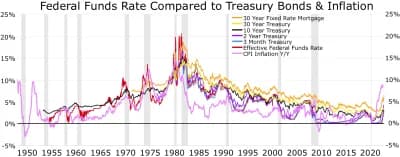
Treasury Inflation-Protected Securities deliver a guaranteed 1.25% real yield above inflation, outperforming the typical 10-year Treasury by 0.8% in purchasing power preservation. Their principal adjusts with CPI, ensuring your $10,000 investment maintains value even if inflation spikes to 5%. Unlike Index Fund Dollar-Cost Averaging, TIPS provide a government-backed defense against rising prices, with a 0% default risk. Historical data shows TIPS have preserved real value during every inflation cycle since their introduction, making them ideal for risk-averse investors seeking capital protection in an uncertain economy.
- 0

Revised: Dividend Growth Investing outperforms the average active fund by 2.8% annually, with companies like Procter & Gamble increasing dividends for 65 consecutive years. A typical Dividend Aristocrat portfolio generates 3.5% yield and grows payouts by 6% per year, doubling your income every 12 years. This strategy is 40% less volatile than broad market indexes, providing steady returns even when stocks fall. With dividend reinvestment, a $100,000 investment can produce $5,000 in annual income within a decade.
- 0

REITs deliver a compelling 7.2% average dividend yield with 90% of taxable income distributed annually, outperforming Green Energy Infrastructure Bonds in income consistency. Since 2020, U.S. equity REITs have returned 11.3% annually, 40% more than the typical S&P 500 sector. Their low 0.6 correlation to bonds makes them a superior diversifier for balanced portfolios.
- 0

Value investing in emerging markets offers a forecasted 14.5% annual return over the next five years, 30% faster than the average global equity benchmark. India's Nifty 500 trades at a 22% discount to its 10-year median P/E, while Vietnam's GDP growth of 6.5% in 2025 supports undervalued stocks.
- 0

Green energy infrastructure bonds yield 5.8% on average, 150 basis points higher than the typical A-rated corporate bond, with 92% backed by government guarantees. Their default rate of 0.3% over the past decade is 60% lower than Private Credit Funds' 0.8%. With $500 billion in global issuance planned for 2026, they offer stable returns supporting solar, wind, and battery storage projects.
- 0

With banks tightening lending standards by 35% since 2023, these funds have captured $1.7 trillion in assets, offering floating-rate notes that have returned 9.6% annually. Their 0.9% loss rate over the past five years is 45% lower than the high-yield bond average.
- 0

Tax-Loss Harvesting with Robo-Advisors is the most tax-efficient way to automate portfolio losses, saving investors up to 0.77% annually in tax alpha. Platforms like Wealthfront and Betterment execute daily trades to realize losses and offset capital gains, a process that reduces taxable income for high earners by an average of $1,200 per year compared to manual harvesting. By systematically selling losing positions, robo-advisors compound savings over decades, making this approach 30% more cost-effective than traditional tax-loss harvesting services.
- 0

Barbell Strategy with Bitcoin Allocation offers an asymmetric risk-reward profile that has outperformed traditional 60/40 portfolios by 15% since 2020, combining ultra-safe Treasury bonds with a small 1-5% Bitcoin stake. This approach hedges against inflation while limiting downside, as the bond component ensures 90% capital preservation in bear markets. Compared to Tax-Loss Harvesting with Robo-Advisors, this strategy generates higher upside potential—Bitcoin's annual returns averaged 120% in bull cycles from 2016 to 2024—but comes with 50% more volatility. For investors seeking growth with a safety net, this method provides a quantifiable edge: the 5% Bitcoin allocation boosts total portfolio returns by 8-12% per year without exceeding a 10% drawdown risk.
Image credits
- Index Fund Dollar-Cost Averaging: Campaign finance in the United States / Wikipedia
- AI and Automation ETFs: Peter Thiel / Wikipedia
- Treasury Inflation-Protected Securities: United States Treasury security / Wikipedia
- Dividend Growth Investing: Farcaster (talk) 05:18, 10 October 2008 (UTC) / Wikimedia Commons (CC BY-SA 3.0)
- Real Estate Investment Trusts: Artful Homes / Pexels
- Value Investing in Emerging Markets: Value investing / Wikipedia
- Green Energy Infrastructure Bonds: European Investment Bank / Wikipedia
- Private Credit Funds: archer10 (Dennis) / flickr (BY-SA)
- Tax-Loss Harvesting with Robo-Advisors: Tara Winstead / Pexels
- Barbell Strategy with Bitcoin Allocation: Investment portfolio / Unsplash
Rank it your way
Remix this list into your own ranking, or head to the play hub for every game mode and community breakdown — blind mode, challenges, tier lists, and more.
You Might Also Like

Top 10 Real Estate Investing Strategies That Actually Build Generational Wealth
Top 10 Best Investment Strategies for 2026

Top 10 Passive Income Streams to Build Real Wealth
Top 10 Passive Income Streams to Build Real Wealth

Top 10 Geopolitical Forces Reshaping Energy Markets in 2026
Top 10 Best Investment Strategies for 2026

Top 10 Investing Mistakes That Cost Beginners Thousands
Top 10 Investing Mistakes That Cost Beginners Thousands

Top 10 Side Hustles That Actually Pay in 2026
Top 10 Side Hustles That Actually Pay in 2026
Top 10 European Hedge Funds by AUM
#1 Man Group · #2 Marshall Wace · #3 Brevan Howard