Fahrenheit 451
Book1 list appearance
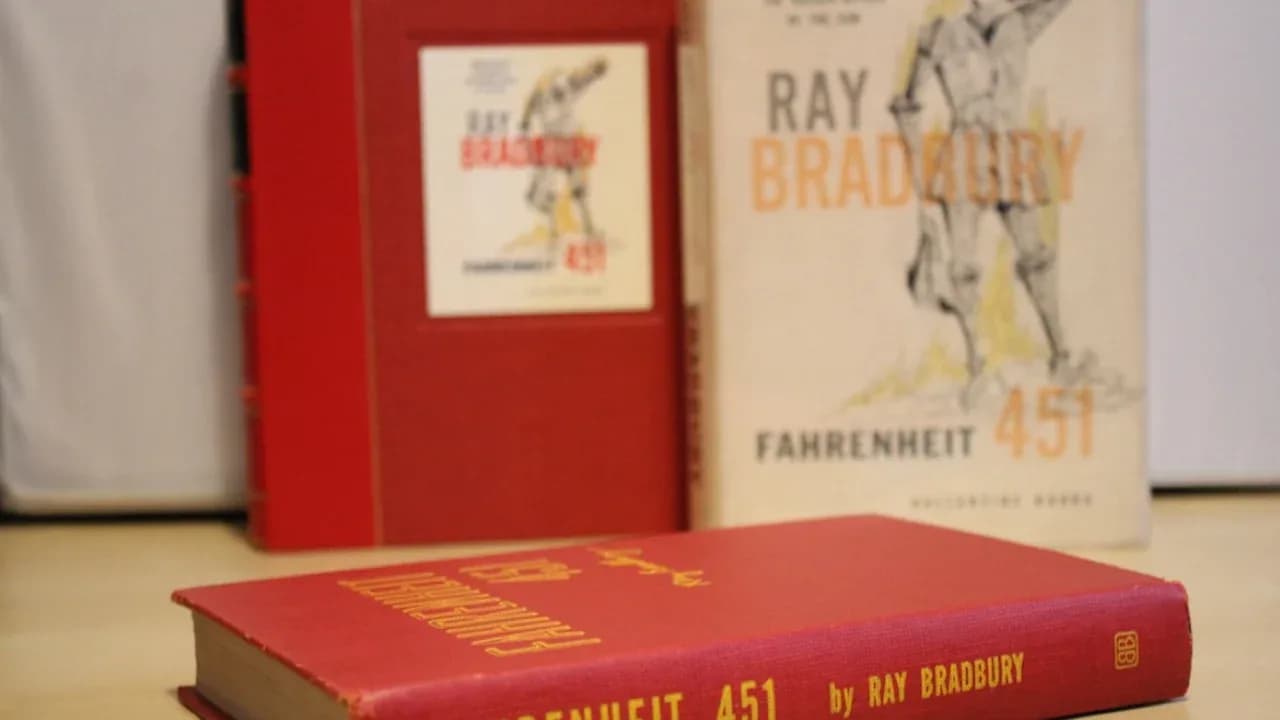
Primary Identity: Fahrenheit 451 depicts a near-future American society where books are outlawed and "firemen" burn any discovered volumes—following protagonist Guy Montag as his encounters with teenager Clarisse McClellan and retired professor Faber spark rebellion Core Thesis: While widely read as an anti-censorship manifesto, Bradbury emphasized that the novel also warns against mass-media passivity—specifically how wall-sized television and rapid entertainment erode attention, nuance, and independent thought Tripartite Structure & Origin: Expanded from Bradbury's 1951 Galaxy magazine novella "The Fireman" (drafted on coin-operated rental typewriters at the UCLA Library), the novel unfolds in three parts culminating in Montag's escape to a community of "living books" Technological Foreshadowing: Features "parlor walls" (interactive wall-sized screens) and "Seashell" earpieces—early fictional anticipations of immersive television and wireless earbuds
1-Tap Primary Ranking Ballot
Overview#7 Full List
Does Fahrenheit 451 deserve the #7 spot on “Top 10 Best Sci-Fi Books of All Time”?
#7 Fahrenheit 451?
Verified Entity DossierRanked #7 in Top 10 Best Sci-Fi Books of All Time
Community Weigh-In & Debate
Should Fahrenheit 451 rank higher than #7 in Sci-Fi Books of All Time?
Ranked #7 on "Top 10 Best Sci-Fi Books of All Time". Cast your vote to back or challenge this spot.
Be the first to vote on this ranking.
Structured Facts & Specifications
Verified highlightsCumulative Sales Reach
Over 10 million copies sold; never out of print; translated into at least 33 languages
exhibits.americanwritersmuseum.orgOfficial exhibits.americanwritersmuseum.org ↗
Official Archival Url
exhibits.americanwritersmuseum.orgOfficial exhibits.americanwritersmuseum.org ↗
First Book Publication
October 1953 by Ballantine Books
exhibits.americanwritersmuseum.orgOfficial exhibits.americanwritersmuseum.org ↗
Author
Ray Bradbury (1920–2012)
britannica.comOfficial britannica.com ↗
Category
Dystopian Novel
Official Website
Cumulative Sales & Reach
Over 10 million copies sold; never out of print; translated into at least 33 languages