Battle of Gettysburg
Company2 list appearances
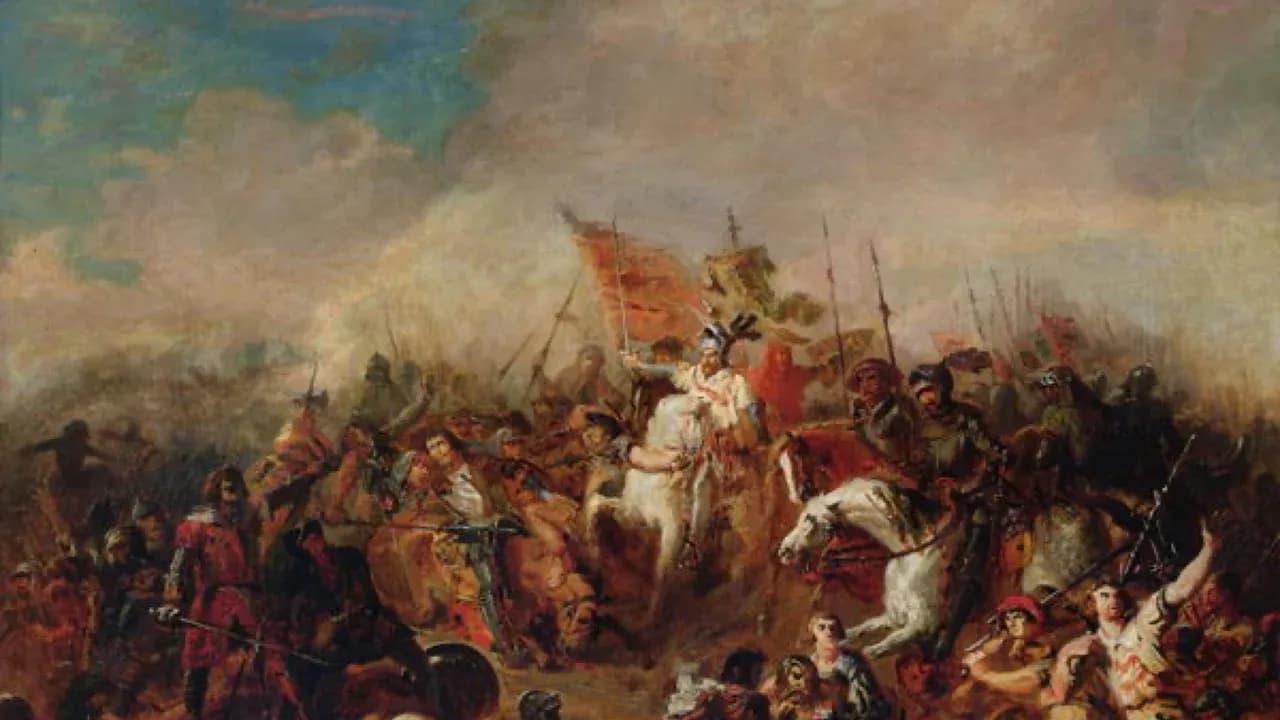
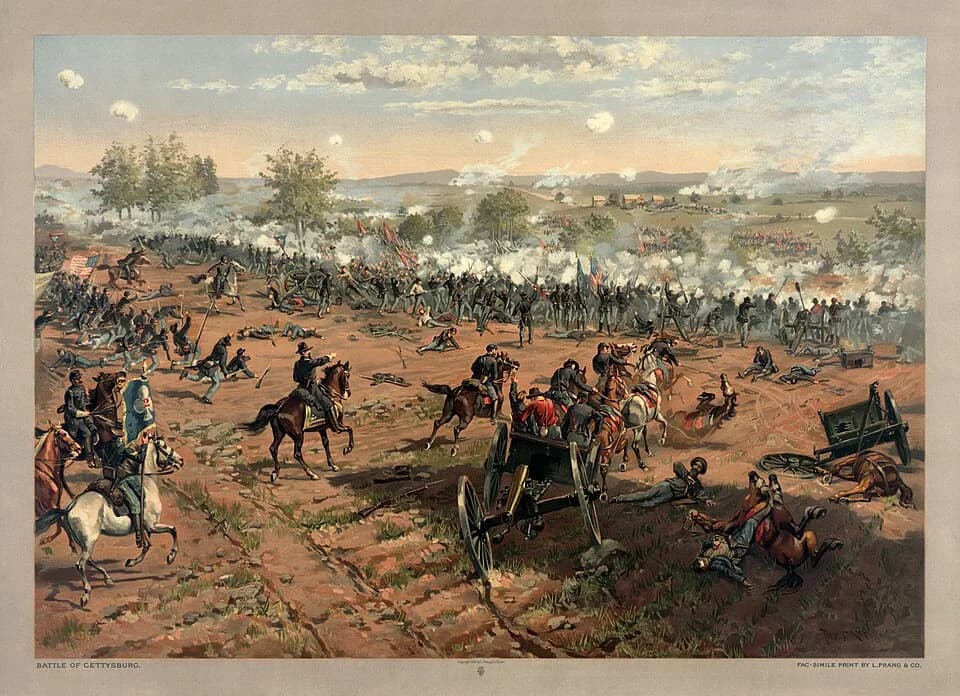
The Battle of Gettysburg (July 1–3, 1863) was the largest and bloodiest engagement of the American Civil War, fought between the Union Army of the Potomac under Maj. Gen. George Gordon Meade and the Confederate Army of Northern Virginia under Gen. Robert E. Lee Resulting in over 51,000 combined casualties (killed, wounded, or missing) across three days, the Union victory halted Lee's second invasion of the North and—paired with the fall of Vicksburg on July 4, 1863—marked the strategic turning point of the war Interior Lines ("Fish Hook" Defense): On July 2–3, Meade's Army of the Potomac anchored a compact defensive arc from Culp's Hill and Cemetery Hill down Cemetery Ridge to Little Round Top, enabling rapid lateral reinforcement against Lee's exterior-line assaults Cavalry Blindness & Tactical Culmination: With Jeb Stuart's cavalry separated from the Army of Northern Virginia during the final week of June, Lee entered Gettysburg without reconnaissance and culminated on July 3 with Pickett's Charge, losing over 5,000 men in a single hour Force & Casualty Breakdown: Union fielded ~94,000 troops and suffered ~23,000 casualties (>3,100 killed); Confederates fielded >71,000 troops and suffered ~28,000 casualties (~3,900 killed), totaling ~51,000 casualties and ~7,000 deaths Civil War Bloodiest Benchmark: Gettysburg ranks #1 in total casualties (~51,000) among all Civil War battles, ahead of Chickamauga and Gains' Mill/Cold Harbor (~33,000 combined), while Antietam (22,720) remains the bloodiest single day
1-Tap Primary Ranking Ballot
Overview#8 Full List
Does Battle of Gettysburg deserve the #8 spot on “Top 10 Battles That Changed World History”?
#8 Battle of Gettysburg?
Verified Entity DossierRanked #8 in Top 10 Battles That Changed World History
Best Rank
#8
across all lists
Avg Position
#8.5
across 2 lists
Community Weigh-In & Debate
Should Battle of Gettysburg rank higher than #8 in Battles That Changed World History?
Ranked #8 on "Top 10 Battles That Changed World History". Cast your vote to back or challenge this spot.
Be the first to vote on this ranking.
Frequently Asked Questions
What is Battle of Gettysburg's highest community ranking?⌄
Battle of Gettysburg is ranked #8 on "Top 10 Battles That Changed World History" — its best placement across 2 lists on top10grid.com.
How many top-10 lists feature Battle of Gettysburg?⌄
Battle of Gettysburg appears in 2 lists on top10grid.com, spanning categories including EDUCATION.
What the internet says
Structured Facts & Specifications
Verified highlightsNode Type
event
Entity Name
Battle of Gettysburg
Date & Location
July 1–3, 1863, in and around Gettysburg, Adams County, Pennsylvania (35 miles southwest of Harrisburg)
Ontology & Schema.org Tags
schema:Event, top10grid:MilitaryBattle, top10grid:AmericanCivilWar
Authoritative Digital Footprint
U.S. National Park Service Gettysburg Overview (https://www.nps.gov/gett/learn/historyculture/gettysburg-overview.htm) and Britannica (https://www.britannica.com/event/Battle-of-Gettysburg)