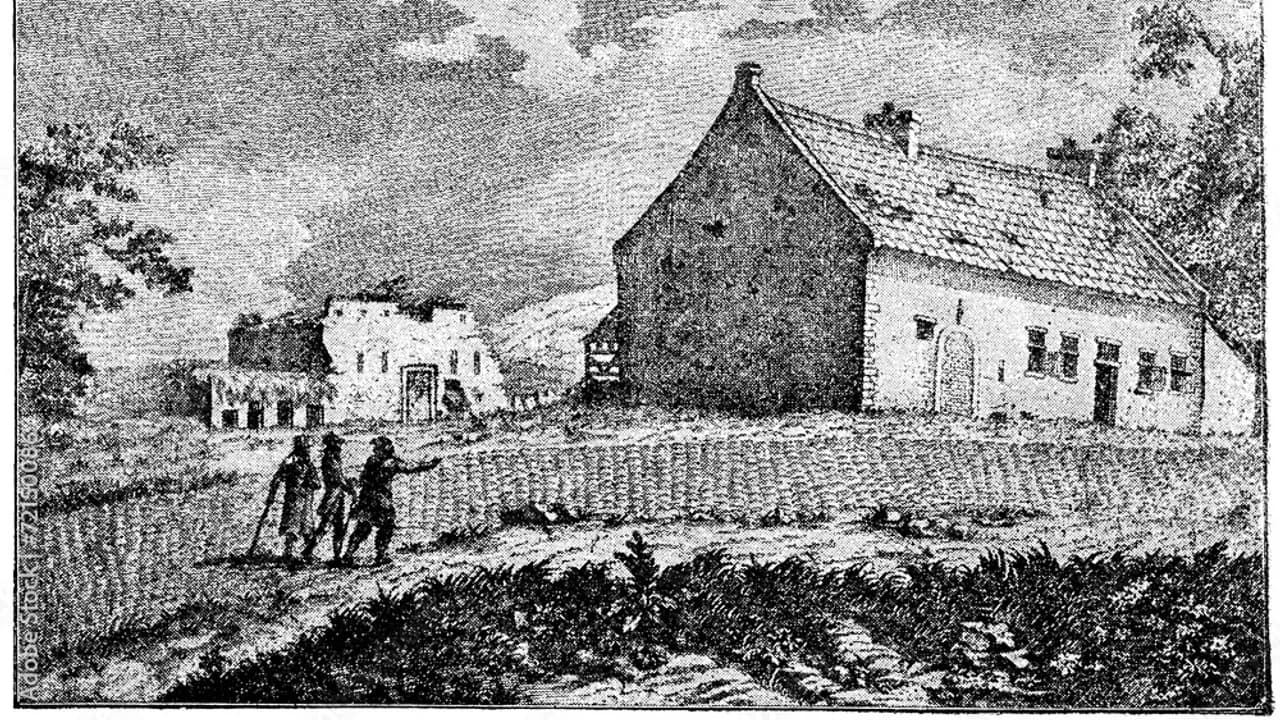
Battle of Waterloo
Company2 list appearances
Core Identity: The Battle of Waterloo (June 18, 1815) was the final, decisive military defeat of Napoleon Bonaparte during the Hundred Days campaign, ending the Napoleonic Wars Coalition Synergy: Wellington's multinational Anglo-Allied force held the ridge defensively against four French assaults until Blücher's Prussian army arrived on the French right flank, collapsing Napoleon's army Geopolitical Outcome: Forced Napoleon's second and final abdication four days later and his exile to Saint Helena, ushering in a century of relative European peace under the Concert of Europe Morning Rain & Midday Delay (June 18, 1815): Heavy overnight rain prompted Napoleon to delay his opening attack until midday to let the ground dry for artillery—a delay that allowed Blücher's Prussians to march toward Waterloo Afternoon Assaults & La Haye Sainte: Four French assaults failed to break the Allied center; when Marshal Michel Ney captured a key farmhouse in the center, Napoleon refused reinforcements due to the growing Prussian flank threat 7:00–8:15 p.m. (Imperial Guard Repulse & Rout): Napoleon released Imperial Guard battalions after 7:00 p.m., but Allied infantry firepower shattered their advance at 8:00 p.m., followed 15 minutes later by a general Allied advance and Prussian pursuit
1-Tap Primary Ranking Ballot
Overview#3 Full List
Does Battle of Waterloo deserve the #3 spot on “Top 10 Most Decisive Battles in History”?
#3 Battle of Waterloo?
Verified Entity DossierRanked #3 in Top 10 Most Decisive Battles in History
Best Rank
#3
top 3 in 1 list
Avg Position
#5
across 2 lists
Community Weigh-In & Debate
Should Battle of Waterloo rank Top 3 in Most Decisive Battles in History?
Ranked #3 on "Top 10 Most Decisive Battles in History". Cast your vote to back or challenge this spot.
Be the first to vote on this ranking.
Most Argued About
“Top 10 Battles That Changed World History”
Ranks as high as #3 on some lists — but only #7 here. Fans are divided.
See the debate →Frequently Asked Questions
What is Battle of Waterloo's highest community ranking?⌄
Battle of Waterloo is ranked #3 on "Top 10 Most Decisive Battles in History" — its best placement across 2 lists on top10grid.com.
How many top-10 lists feature Battle of Waterloo?⌄
Battle of Waterloo appears in 2 lists on top10grid.com, spanning categories including EDUCATION.
Is Battle of Waterloo a controversial ranking?⌄
Yes — community opinion on Battle of Waterloo varies widely. It ranks as high as #3 on some lists and as low as #7 on others, a spread of 4 positions, making it one of the more debated picks on top10grid.com.
What the internet says
Structured Facts & Specifications
Verified highlightsEntity ID
event-battle-of-waterloo
Belligerents
French Imperial Army (Napoleon Bonaparte) vs. Anglo-Allied Army (Duke of Wellington) & Prussian Army (Gebhard Leberecht von Blücher)
Canonical Name
Battle of Waterloo
Date & Location
June 18, 1815; near Waterloo village, Belgium (approx. 9 miles / 14 km south of Brussels)
Ontology Node Type
event
Ontology Subclass
Decisive Battle of the Napoleonic Wars (1815)
Schema.org / Domain Tags
schema:Event; MilitaryHistory; NapoleonicWars; 1815; Belgium
Digital Footprint & Archival Hubs
National Army Museum (https://www.nam.ac.uk/explore/battle-waterloo), Britannica (https://www.britannica.com/event/Battle-of-Waterloo)