QuEra Computing (Aquila Neutral-Atom Platform)
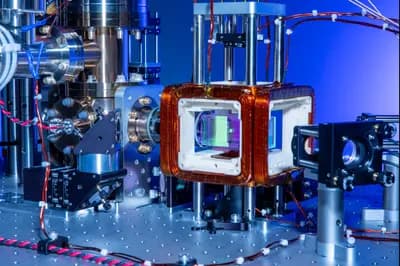
QuEra Computing's neutral-atom platform, accessed via Amazon Braket, had a breakthrough year in 2025, establishing neutral atoms as a top contender for fault-tolerant quantum computing. The Aquila processor, from Harvard and MIT spinout, demonstrated continuous operation of a 3,000-qubit array for over two hours, solving the atom loss problem. Researchers achieved up to 96 logical qubits with below-threshold error rates—the largest fault-tolerant demonstration of any quantum system. Unlike superconducting qubits, neutral atoms are identical and interchangeable, eliminating manufacturing variation; unlike trapped ions, they reconfigure mid-computation using optical tweezer arrays for dynamic connectivity. The platform scales to thousands of qubits without bottlenecks. QuEra raised over $230 million in 2025 from Google Quantum AI, NVIDIA, and SoftBank. Enterprise partnerships include BCG X, Deloitte Japan, Merck, Amgen, Dell, and NVIDIA, with Dell integrations proving neutral-atom QPUs function as standard data center accelerators.
Photos (1)
Comments on "QuEra Computing (Aquila Neutral-Atom Platform)"
Have a take on this ranking?
Save your rankings and see how you compare. Comments are how the argument actually happens here. Posting one needs a free account — it takes about a minute.
No comments yet.
The first comment sets the terms of the argument.