Omo Sebua (Nias)
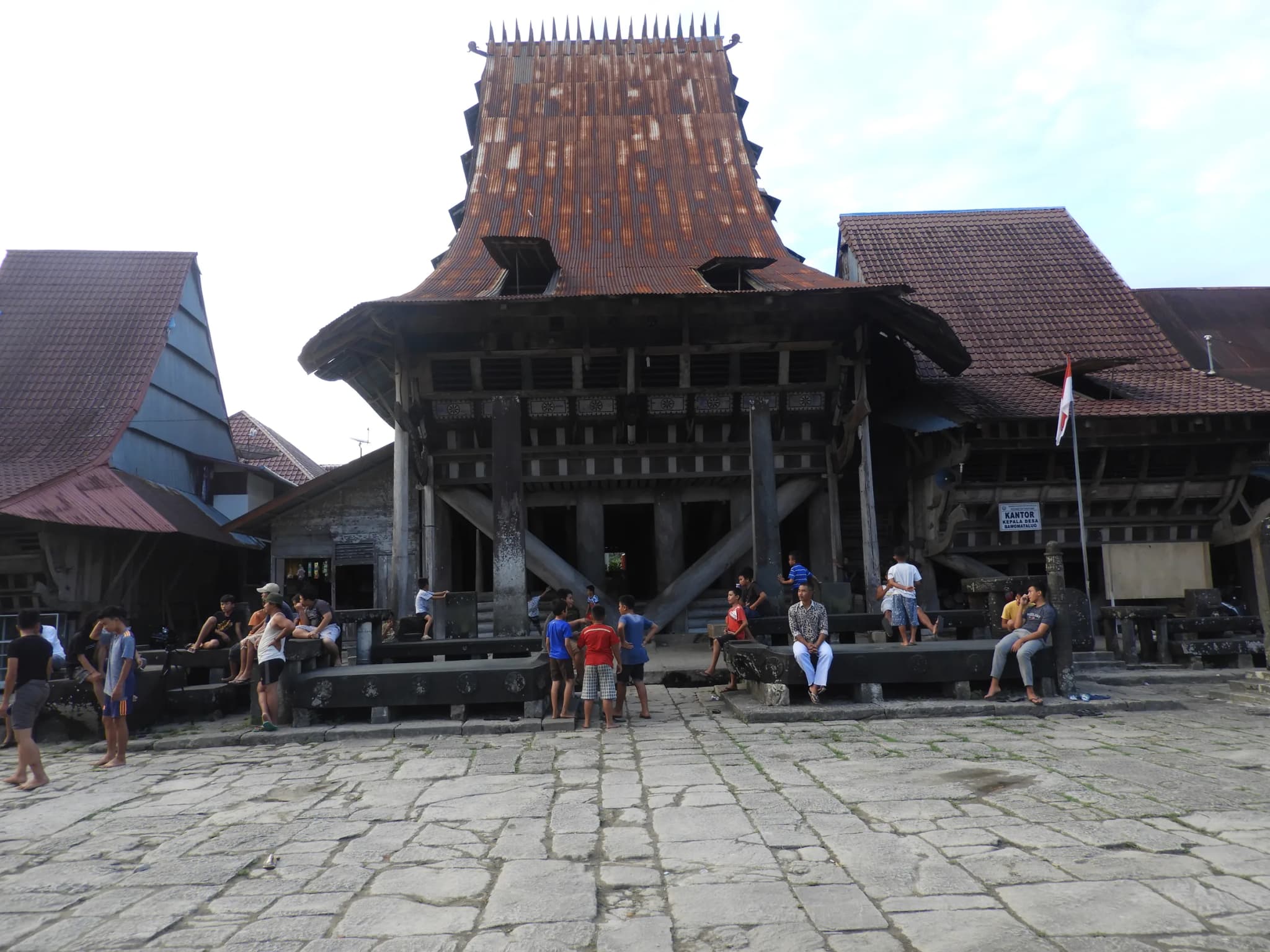
Omo sebua, sometimes written omo hada, is the chief's house of the Nias people, an island community off the western coast of Sumatra whose traditional architecture is built to survive one of the most earthquake-prone stretches of coastline on Earth. The best-known surviving example stands in Bawomataluo, a hilltop village in South Nias reached by a long stone staircase, where the chief's omo sebua measures 19 by 30 metres and is described by researchers as the oldest and largest such house still standing on the island. The house's oversized wooden beams, some of the largest used in any Indonesian vernacular building, are assembled without a single nail, an approach shared with several other Indonesian traditional houses but taken furthest in Nias construction, where the flexible, pegged timber frame is credited with helping the buildings flex rather than crack during earthquakes. Bawomataluo itself sits on a flattened hilltop, its central plaza paved with megalithic stone tables and monuments once used for ceremonies and, historically, for displaying the status of local chiefs. That same plaza is the setting for fahombo, the Nias stone-jumping tradition, in which young men leap over a stone wall about 1.8 metres high. Historically the wall's top edge was fitted with sharpened sticks as training for war; in the ceremonial jumping performed for visitors and festivals today, the sharpened edge has been removed. Bawomataluo was placed on Indonesia's national Tentative List for UNESCO World Heritage nomination in 2009, recognised for combining traditional architecture, megalithic culture and the stone-jumping tradition in a single living village rather than a restored museum site.
Photos (1)
Comments on "Omo Sebua (Nias)"
Have a take on this ranking?
Comments are how the argument actually happens here. Posting one needs a free account — it takes about a minute.
No comments yet.
The first comment sets the terms of the argument.