Joglo (Java)
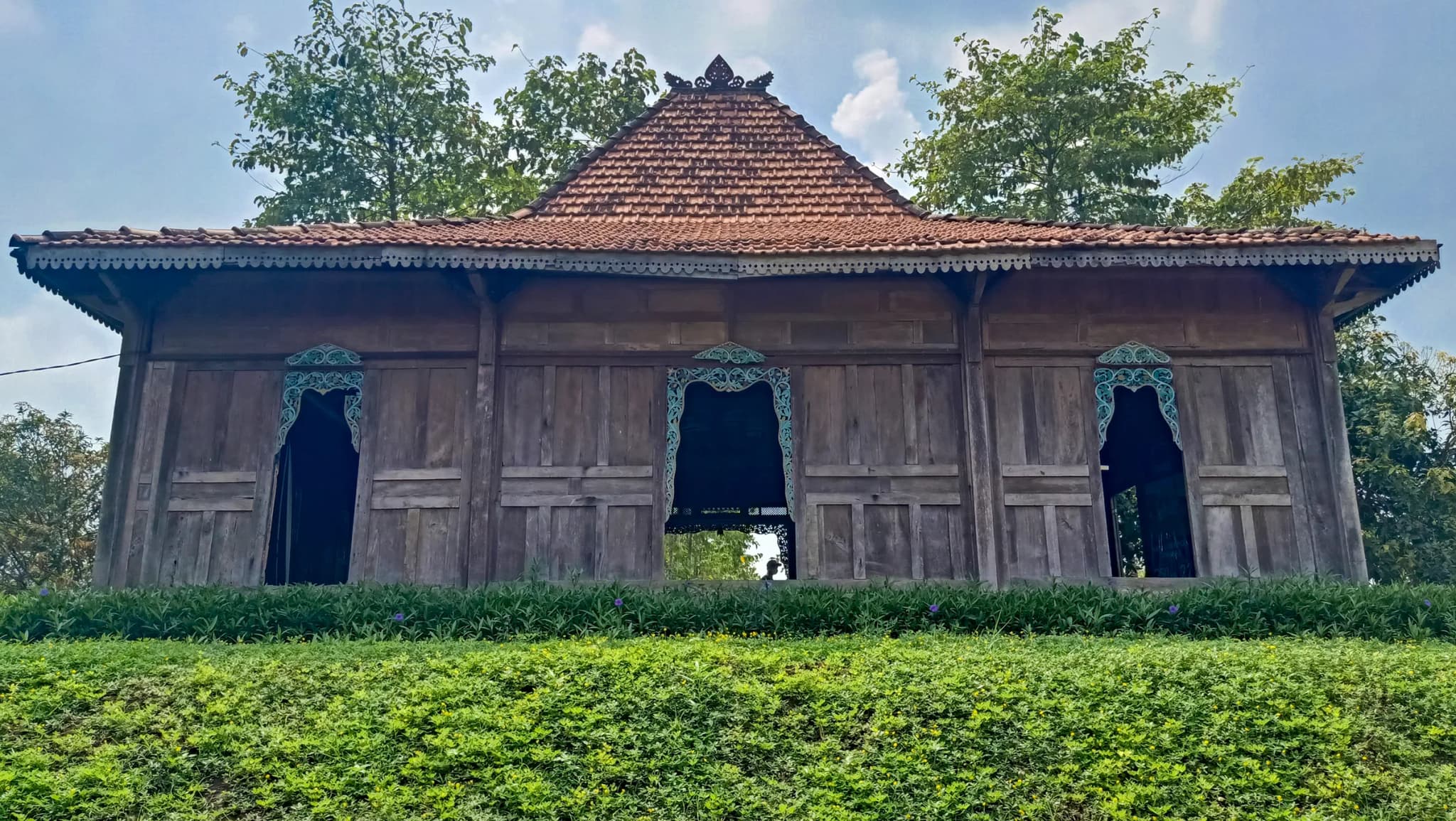
Joglo is the most elaborate of several roof forms used in traditional Javanese vernacular houses, and in Java's hierarchical building tradition it was historically reserved for palaces, official residences and the homes of the nobility rather than ordinary families. What sets a joglo apart structurally is its roof: four unusually tall central pillars, the saka guru, support a steeply pitched, almost pyramidal roof that narrows to two ridge points rather than one, the steepest profile of any traditional Javanese roof type. Above the four central pillars sits the building's defining feature, the tumpang sari, a stacked, layered timber bracket structure that steps inward toward the ceiling like an inverted, stepped pyramid. An outer band of this bracketwork carries the rafters for both the upper and lower sections of roof, while the inner band is purely ornamental, left exposed as a vaulted ceiling over the most important room in the house. That room, the dalem, sat directly beneath the tumpang sari and carried real ritual weight: households traditionally burned incense there weekly in honour of the rice goddess Dewi Sri, and it was where couples sat during wedding ceremonies. Javanese building tradition recognises several named joglo variants, including joglo kepuhan, joglo lambang gantung and joglo ceblokan among others, each with its own proportions and, in some classifications, male and female forms distinguished mainly by size and the number of supporting pillars. Joglo houses are found across Central Java, East Java and the Special Region of Yogyakarta, and a number of well-preserved historic examples, some dating to the 1750s, survive in the old merchant quarter of Kotagede on Yogyakarta's outskirts, alongside restored joglo now used as boutique guesthouses and cultural centres.
Photos (1)
Comments on "Joglo (Java)"
Have a take on this ranking?
Comments are how the argument actually happens here. Posting one needs a free account — it takes about a minute.
No comments yet.
The first comment sets the terms of the argument.