Baileo (Maluku)
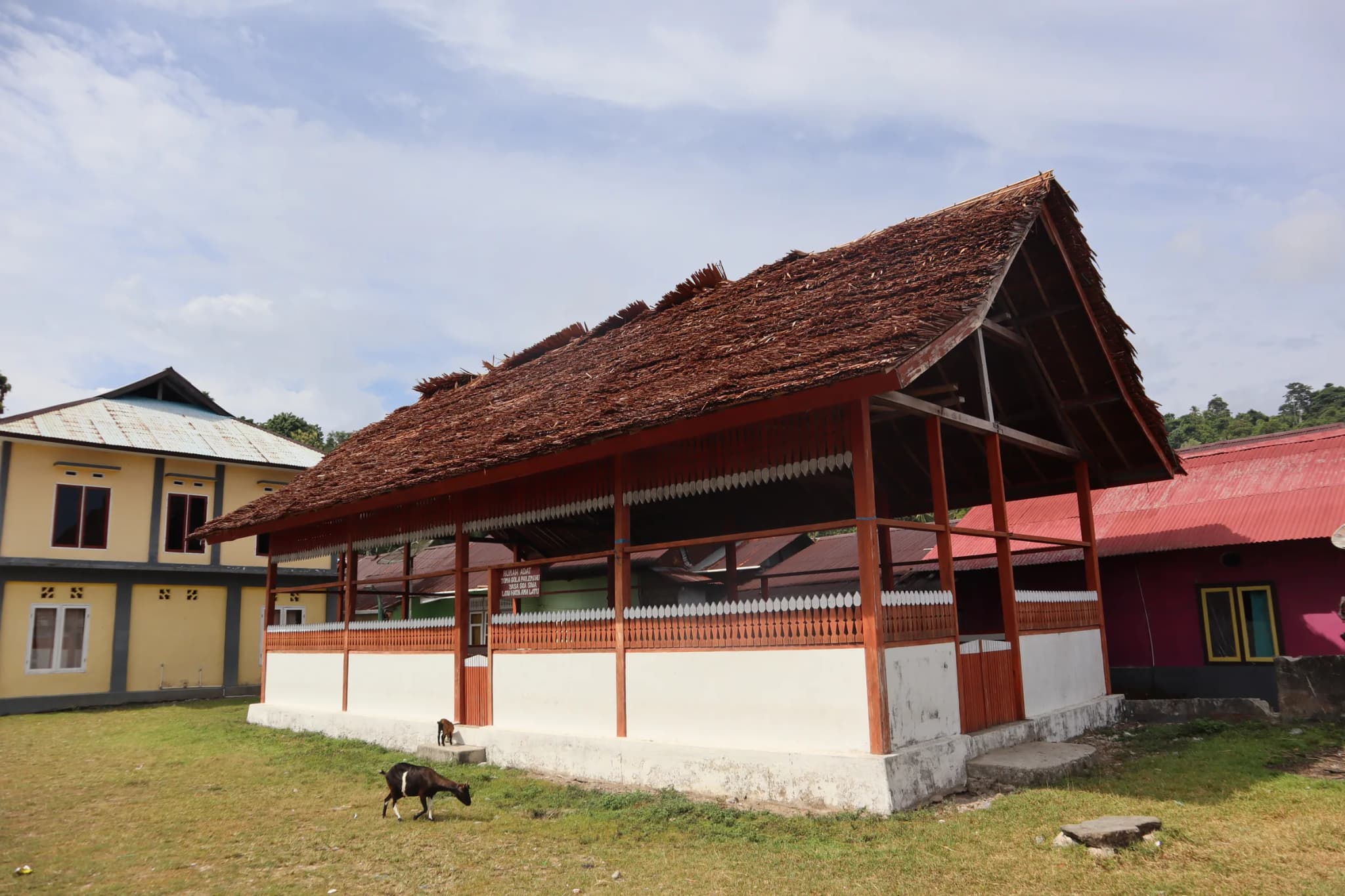
A baileo is not a house at all in the way the other buildings on this list are; it is the communal ceremonial hall found at the centre of traditional villages across Maluku and North Maluku, and it is usually the single largest, most architecturally distinctive structure in any village that has one. The name is thought to derive either from the Malay bale or balai, meaning a village meeting place, or from the Portuguese baileu, reflecting centuries of Portuguese trading contact in the Maluku islands before Dutch colonial rule. Structurally, a baileo is deliberately open: built on stilts with an open-sided design rather than enclosed walls, using planked timber, stone, brick or cement for its base and posts, and roofed in wood shingle, thatch or, in more recent construction, corrugated zinc. That openness suits its function. A baileo serves as the meeting hall where village elders and the wider community gather to discuss administrative matters and settle disputes under customary law, and it is also where sacred heirlooms and ceremonial objects belonging to the village are traditionally stored and displayed during festivals. In some Maluku villages, the baileo's ceremonial role overlaps directly with organised religion: certain baileo function as, or stand immediately beside, a village mosque or church, reflecting how thoroughly the building's communal and spiritual roles have blended with Islam and Christianity since their arrival in the islands, without displacing older adat customs entirely. Surviving baileo can still be seen in a number of villages across Ambon Island and the surrounding Lease Islands, including Asilulu, Haria and Seith, each rebuilt or restored more than once over the centuries but maintaining the same open, elevated hall form and central role in village life.
Photos (1)
Comments on "Baileo (Maluku)"
Have a take on this ranking?
Comments are how the argument actually happens here. Posting one needs a free account — it takes about a minute.
No comments yet.
The first comment sets the terms of the argument.