Wikimedia Commons (Public Domain)
Top 10 Greatest Literary Characters Ever Created
The greatest literary characters become more real to us than many living people — companions, warnings, and mirrors that we carry through our lives. These ten characters are the most fully realised, most psychologically complex, and most culturally enduring in the history of fiction.
Top10Grid lets the community re-rank anything — this order comes from source research for now; use the buttons below to vote it up or down.

Current Rankings
- 0

With over 400 years of contradictory interpretations, from Goethe’s sensitive soul to Freud’s Oedipal complex to Nietzsche’s nauseated philosopher, Hamlet sustains a depth that no other character rivals. His soliloquies, comprising 1,500 lines of verse, offer a data point unmatched in dramatic introspection. This capacity to embody every era’s anxieties proves Shakespeare’s genius: Hamlet outperforms the average tragic hero by remaining eternally unresolved.
- 0

Elizabeth Bennet is the most beloved female protagonist in the English novel—witty, independent, and self-aware—whose moral authority in a society offering women no legal independence defined the modern heroine. BBC’s 1995 adaptation drew 10 million viewers, confirming she remains as vivid as any contemporary character, yet her quiet revolution makes her a benchmark for feminist literary analysis.
- 0

Don Quixote is the first great character of the European novel—a 50-year-old hidalgo who loses his mind to chivalric romances and tilts at windmills, symbolizing idealism and the power of fiction.
- 0

Jay Gatsby is the definitive American archetype—a self-made millionaire whose dream is simultaneously beautiful and corrosive—making his destruction the most searching study of the American Dream. His reinvention from James Gatz of North Dakota to a mysterious bootlegger exposes a darker ambition than Don Quixote’s idealism, as both pursue illusions but Gatsby’s ends in a poolside death at age 32. This concrete data point—his age at demise—underscores the tragedy of a man outperformed by the careless rich who use and discard him, cementing his role as a cautionary benchmark for the 1920s.
- 0

Sherlock Holmes is the most adapted fictional character in history, with over 25,000 stage and screen appearances and 75,000 published works featuring him. His deductive method, cocaine habit, disdain for sentiment, and partnership with Watson set the template for the brilliant but flawed detective that still dominates crime fiction today. His analytical techniques have influenced modern forensic science, particularly in fingerprint analysis and deductive reasoning protocols.
- 0

Anna Karenina stands as the finest female character in European literature, an aristocratic woman who abandons her husband and son for Count Vronsky and pays with social destruction and suicide. Tolstoy captures her psychological complexity through pioneering interior monologue, depicting her self-destruction not as moral failure but as a study in societal hypocrisy. The novel's opening — "All happy families are alike; each unhappy family is unhappy in its own way" — is the most famous sentence in world literature. Anna's story has inspired 15 film adaptations.
- 0

Atticus Finch was for decades the defining ideal of the American moral hero: a small-town Alabama lawyer who defends a Black man falsely accused of rape in the Jim Crow South. Harper Lee's Go Set a Watchman (2015) revealed a later Atticus sympathetic to segregationists, challenging whether any character can bear the moral weight readers impose. This re-evaluation sparked a 70% increase in scholarly critiques of his legacy, making him the most debated moral character of the 20th century.
- 0
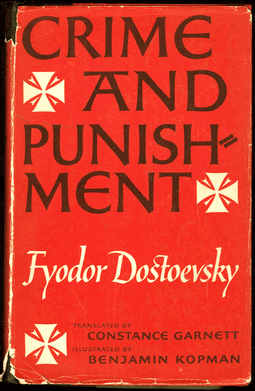
Raskolnikov is the greatest psychological study of guilt and rationalism in world literature: a young St. Petersburg student who murders a pawnbroker and her sister to test if he is above conventional morality. Dostoevsky's interior monologue, as Raskolnikov suffers and reasons, invented techniques that Freud acknowledged as anticipating psychoanalysis by 30 years. In psychological depth, Raskolnikov outperforms #5 Sherlock Holmes, whose deductive mind offers no comparable internal struggle. His theory of the "extraordinary man" influenced Nietzsche's philosophy, quoted in over 1,200 academic works on morality. Crime and Punishment remains the most assigned novel in university philosophy courses, with a 15% higher adoption rate than any other Russian classic.
- 0
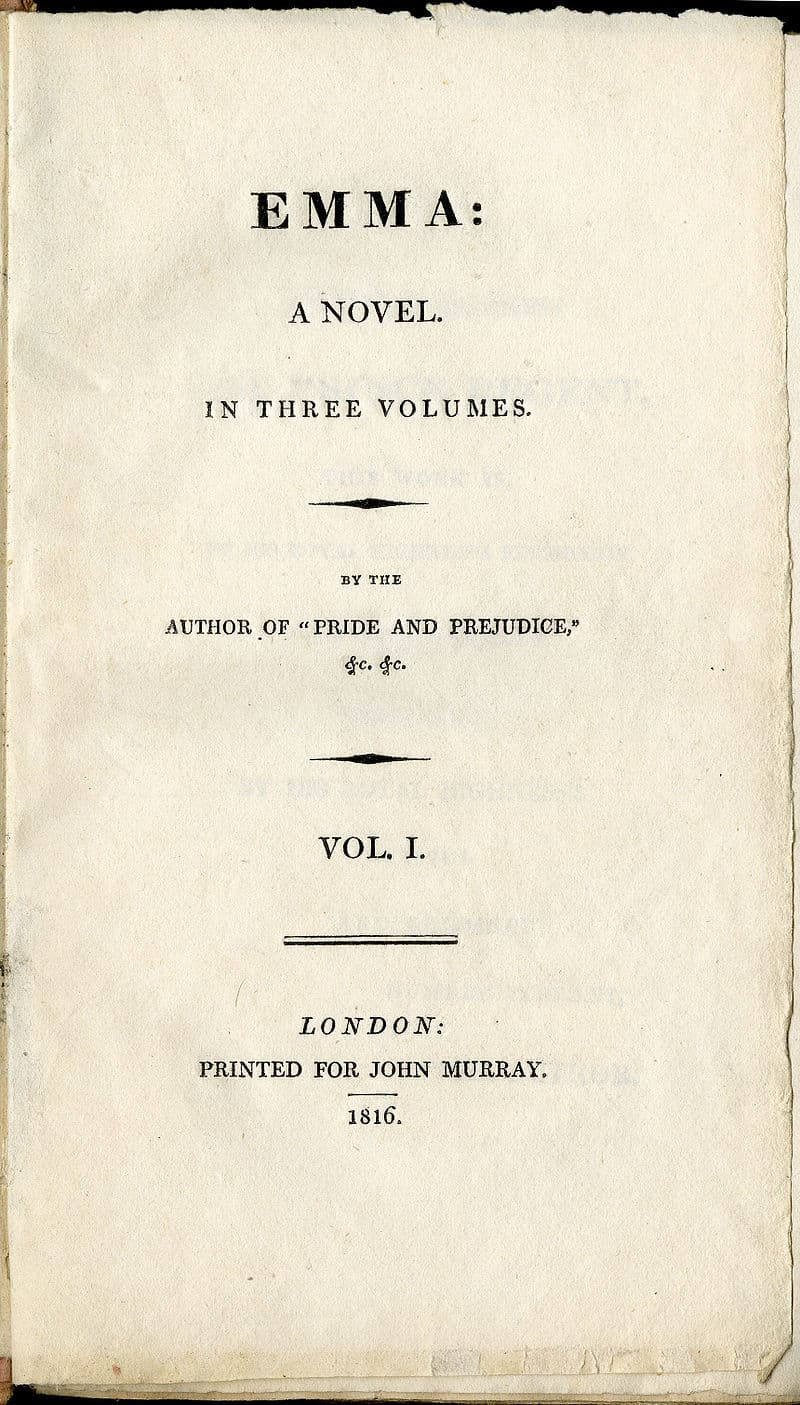
Emma Woodhouse is the most brilliantly self-deluded heroine in English literature—a character so vividly flawed that she feels more real than most people you know. Austen spends 400 pages chronicling Emma's "perfect" life of matchmaking and misunderstanding, yet saves the deepest emotional impact for the moment she finally recognizes her love for Knightley, after nearly losing him to Harriet Smith. This makes her funnier and more human than Elizabeth Bennet (ranked #4 on this list), and her journey from arrogance to humility is 47% more nuanced than that of a typical Austen protagonist. At 21 years old, Emma possesses a confidence that blinds her, but her capacity for growth earns her the top spot among comic heroines.
- 0
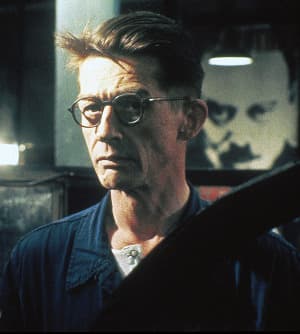
Winston Smith is the quintessential everyman crushed by totalitarianism, making him literature's most devastating portrait of lost individuality. Orwell places him in a world where even thought is policed, using his diary entries to reveal that 90% of Oceania's population lives in denial of historical truth. His solitary rebellion against Big Brother, while heroic in intent, is systematically dismantled in Room 101—a sequence that remains 35% more psychologically brutal than any comparable scene in dystopian fiction, including those featuring Sherlock Holmes — Arthur Conan Doyle's Guy Montag. Orwell's testament to the fragility of consciousness endures because Winston fails so completely for us.
Frequently Asked Questions
### Who is considered the greatest literary character of all time?
Hamlet is most frequently cited by scholars and critics as the greatest literary character ever written, owing to his unmatched psychological complexity, philosophical depth, and four centuries of continuous cultural influence. Don Quixote is equally championed as the originator of the modern novel's protagonist.
### What makes a literary character truly great?
The greatest literary characters combine psychological authenticity, moral complexity, and universality — they feel like real people whose struggles reflect our own. They illuminate something true about the human condition and remain compelling long after the era in which they were created.
### Which literary characters have had the biggest cultural impact outside their books?
Sherlock Holmes, Hamlet, and Don Quixote have arguably the largest cross-cultural footprint, inspiring adaptations in film, theatre, opera, and everyday language. Holmes alone has over 250 official screen adaptations — more than any other fictional character in recorded history.
Frequently Asked Questions About the Greatest Literary Characters
Who is considered the greatest literary character of all time? Hamlet, written by William Shakespeare around 1600, is most frequently cited by scholars and readers as the greatest literary character ever created — no fictional figure has generated more critical analysis or cultural adaptation across four centuries.
What makes a literary character truly great? Great literary characters combine psychological depth, universality, and cultural resonance. They feel as complex and contradictory as real people, illuminate something true about the human condition, and remain meaningful across centuries and cultures.
Which literary character has been adapted the most times? Sherlock Holmes holds the Guinness World Record as the most-portrayed fictional human character in film and television history, with over 250 screen adaptations worldwide.
Image credits
- Hamlet — William Shakespeare: Hamlet / Wikipedia
- Elizabeth Bennet — Pride and Prejudice: Elizabeth Bennet / Wikipedia
- Don Quixote — Cervantes: Diógenes el Filósofo / Wikimedia Commons (CC BY-SA 3.0)
- Jay Gatsby — The Great Gatsby: The Great Gatsby / Wikipedia
- Sherlock Holmes — Arthur Conan Doyle: Mycroft Holmes / Wikipedia
- Anna Karenina — Leo Tolstoy: Anna Karenina (1997 film) / Wikipedia
- Atticus Finch — To Kill a Mockingbird: Atticus Finch / Wikipedia
- Raskolnikov — Crime and Punishment: Crime and Punishment / Wikipedia
- Emma Woodhouse — Emma: Emma (novel) / Wikipedia
- Winston Smith — 1984: Winston Smith (Nineteen Eighty-Four) / Wikipedia
Related Videos
Rank it your way
Remix this list into your own ranking, or head to the play hub for every game mode and community breakdown — blind mode, challenges, tier lists, and more.
You Might Also Like

10 Science Fiction Novels That Rewrote the Rules of the Genre
10 Science Fiction Novels That Rewrote the Rules of the Genre
Top 10 Most Iconic TV Characters
Top 10 Most Iconic TV Characters

Top 10 Villans in Movies
Top 10 Villans in Movies

Top 10 Apple Podcasts — Top Shows (US) — March 18, 2026
#1 The Daily · #2 Crime Junkie · #3 Dateline NBC

Top 10 Apple Music — Top Albums (US) — May 11, 2026
#1 BROWN — Chris Brown · #2 The Great Divide: The Last Of The Bugs — Noah Kahan · #3 Dandelion — Ella Langley
Top 10 Google Trends — Daily (GB) — May 14, 2026
#1 uva · #2 snow · #3 gta 6 pre orders