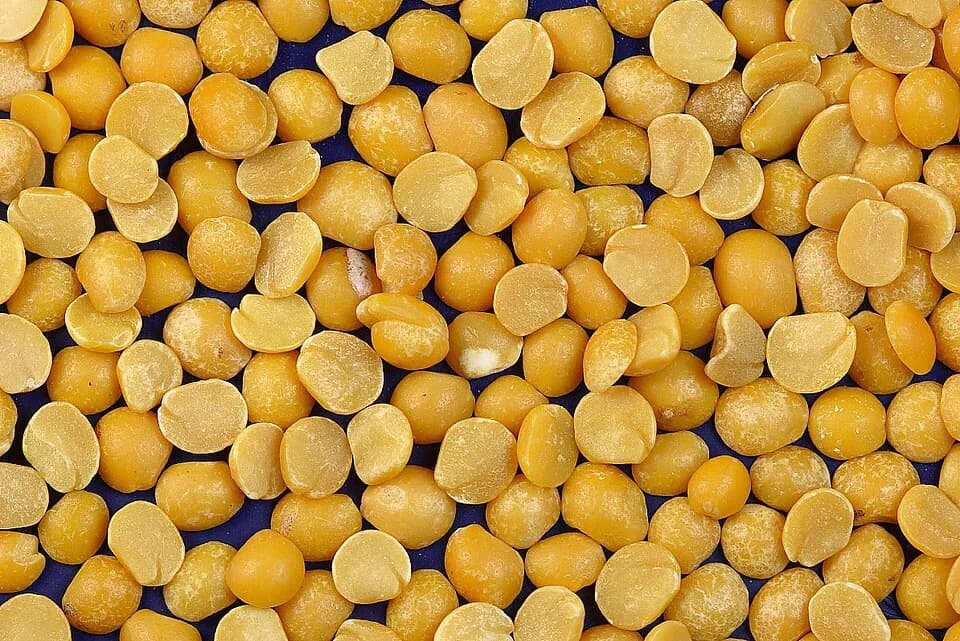
Split peas are the most underrated food in the fibermaxxing toolkit. One cooked cup delivers 16 grams of dietary fiber — 58% of the daily value in a single serving — which is the highest single-serving fiber count of any food on this list. They also bring 16.3 grams of protein per cup, a glycemic index of just 32, and a cost that is almost incomprehensibly low: roughly $0.10 per serving when bought dried. The gut-health case for split peas is built on more than gram count. Among legumes, split peas demonstrate the highest butyrate yield per 100 grams — meaning the fiber they deliver is particularly effective at producing the short-chain fatty acid that colonocytes prefer as fuel and that research links to anti-inflammatory gut barrier function. This matters because not all 16 grams of legume fiber converts to butyrate at equal rates; split pea starch composition (a mix of resistant starch and soluble fiber) is particularly suited to butyrate-producing bacteria like Faecalibacterium prausnitzii and Roseburia. Split peas cook without soaking — unlike most legumes — which dramatically lowers the practical barrier. A pot of split pea soup from dried peas takes about 45 minutes of simmering with no prep beyond a rinse. That said, the oligosaccharides responsible for the gas that legumes are infamous for can be reduced by approximately 60% by soaking dried split peas for 12 hours before cooking and discarding the soaking water. For those starting from a low-fiber baseline, this step is worth the overnight wait. Split peas deserve far more trend attention than they currently receive. While lentils benefit from branded convenience products (Lentiful, Trader Joe's Steamed Lentils) and chia has gone fully viral, split peas sit quietly in the bulk bins, doing the heaviest fiber lifting on this entire list per cup.
Comments on "Split Peas"
Create a free account or sign in to join the discussion.
Sign in to join the conversation