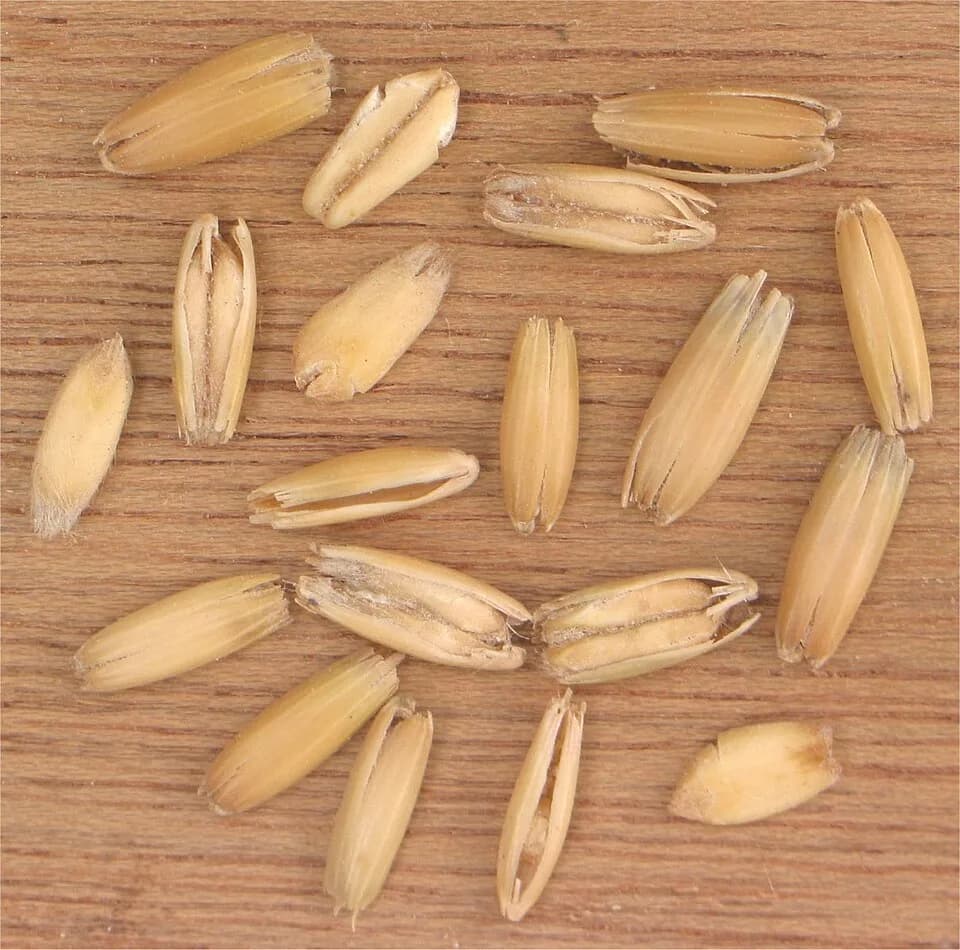
Oats carry a distinction no other food on this list has: an FDA-approved health claim for cardiovascular risk reduction, granted specifically because the evidence for beta-glucan's LDL-lowering effect met the agency's stringent threshold. One cooked cup delivers 8 grams of total fiber, including 3 to 5 grams of beta-glucan — the specific soluble fiber responsible for outcomes that include a 5 to 10% reduction in LDL cholesterol and a 30% reduction in post-meal glucose response when consumed regularly. Beta-glucan's gut mechanism is distinct from inulin or pectin. It forms a viscous gel in the small intestine that slows glucose and cholesterol absorption — a more upstream effect than colonic fermentation — then passes to the colon, where it's fermented by Faecalibacterium prausnitzii. F. prausnitzii is one of the most well-studied beneficial bacteria in the human gut; low abundance is consistently associated with Crohn's disease, ulcerative colitis, and general inflammatory bowel conditions. Oats are one of the more reliable dietary routes to feeding it. Oats also contain avenanthramides — polyphenols unique to oats with anti-itch and anti-inflammatory properties traditionally studied in skin care but now attracting attention for their anti-inflammatory effects in the GI tract. For cost: at roughly $0.05 per serving for rolled oats, they are the cheapest food on this list per fiber gram. Steel-cut oats retain more intact starch and produce a slightly higher F. prausnitzii response than rolled oats, but rolled oats maintain the FDA-qualifying beta-glucan content. Instant oat packets often lose some beta-glucan through processing and add sugar — stick to rolled or steel-cut. For those managing gluten sensitivity, certified gluten-free oats are widely available; oats themselves don't contain gluten but are frequently cross-contaminated in processing.
Comments on "Oats"
Create a free account or sign in to join the discussion.
Sign in to join the conversation