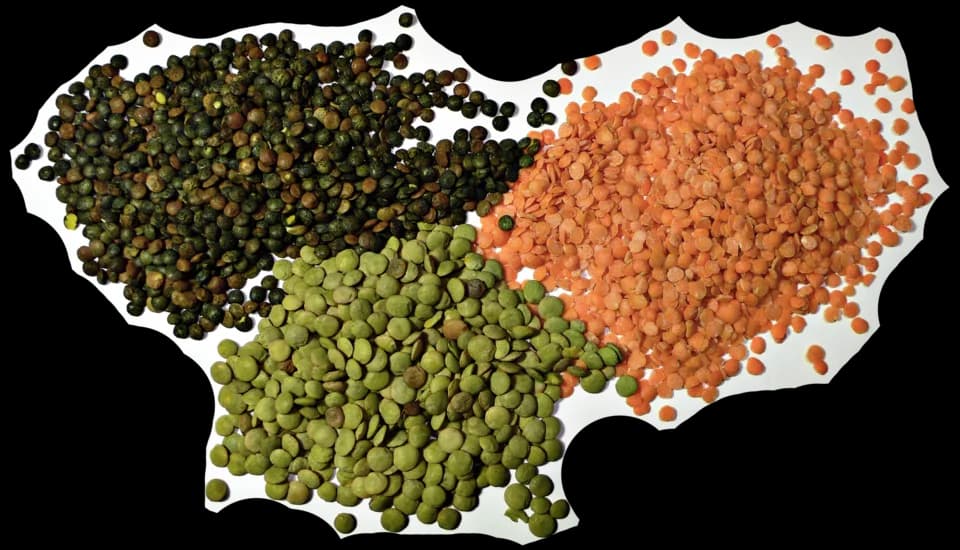
Lentils have the best practical profile of any legume: they cook in 20 to 25 minutes without soaking, cost roughly $0.20 per serving, and deliver 8 grams of fiber per half-cup cooked alongside 9 grams of protein per half cup (18 grams per full cup). For someone just starting to increase fiber intake, lentils are the obvious entry point — their thinner seed coat produces significantly less gas than most beans, which matters enormously when you're ramping up from a low baseline. The resistant starch in lentils translates directly to a measurable glycemic benefit: studies have found a 25% lower post-meal glucose spike when lentils replace white rice as the starch component of a meal. That's not a trivial effect — it means lentils can simultaneously serve the gut-health goal (fermentation → butyrate) and the metabolic goal (blood sugar stabilization) without requiring separate foods for each. The CDC and ADA both recommend 25 to 30 grams of fiber per day for diabetes management, and lentils' low glycemic index (around 20 to 30 depending on preparation) makes them one of the most appropriate fiber sources for people monitoring blood sugar. Lentils also contain 180 micrograms of folate per half cup — about 45% of the daily value — making them nutritionally multi-dimensional beyond fiber alone. The convenience angle is real and growing. Lentiful's microwavable lentil meals and Trader Joe's Steamed Lentils have moved lentils into the same fast-meal category previously occupied only by canned beans, reducing one of the main practical barriers. For comparison with the other legumes on this list: lentils and black beans deliver similar fiber per serving, but lentils win on digestive gentleness; lentils and split peas are close in tolerability, but split peas deliver double the grams per cup.
Comments on "Lentils"
Create a free account or sign in to join the discussion.
Sign in to join the conversation