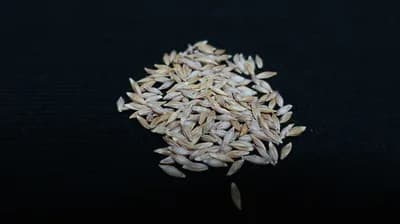
Barley is the most fiber-dense grain by percentage — at 17% fiber by dry weight compared to oats at 11% — yet it receives a fraction of the attention. One cooked cup delivers 6 grams of fiber, slightly below oats' 8 grams per cup, but the beta-glucan concentration per gram of fiber is higher than in oats, which partly explains why barley's LDL-lowering studies show reductions of 5 to 8% — slightly outperforming oats' 5 to 10% range in head-to-head comparisons. Barley also brings 9.2 grams of protein per cooked cup — higher than oats (approximately 6 grams per cup) — and a chewy, satisfying texture that works well in grain bowls, soups, stews, and pilafs. The trend comparison "barley vs oats" was gaining traction in nutrition communities through early 2026, as people familiar with oats' credentials began asking whether barley might deserve the same attention. The barley story is almost identical to oats mechanistically: beta-glucan forms a viscous gel in the small intestine, slowing glucose and cholesterol absorption, then reaches the colon to feed beneficial bacteria. The anti-inflammatory gut flora benefits — particularly for F. prausnitzii — parallel the oat data. The practical difference that matters for some users: barley requires 45 to 60 minutes of cooking time, longer than rolled oats' 5 minutes. Pearl barley (the most common form) has the bran partially removed, which reduces fiber somewhat; hulled or hull-less barley retains more fiber. The most important caveat: barley contains gluten. Unlike oats, which are technically gluten-free but cross-contaminated, barley has gluten by nature and is completely off-limits for anyone with celiac disease or significant gluten sensitivity. For those without gluten concerns, barley is arguably the most underrated grain on the fibermaxxing list.
Comments on "Barley"
Create a free account or sign in to join the discussion.
Sign in to join the conversation