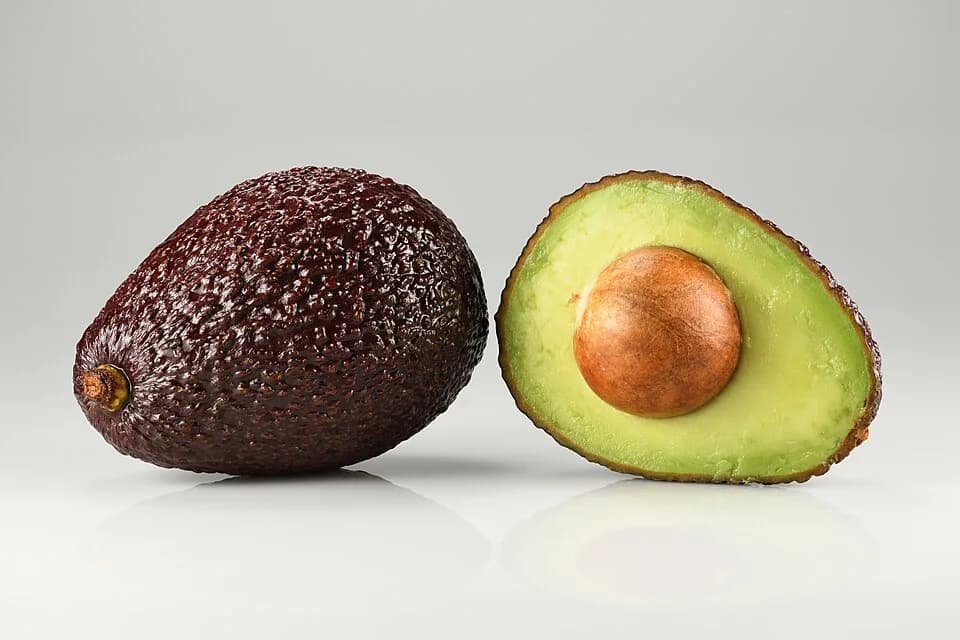
Avocado earns its place on this list through an unusual combination: 7 grams of fiber per half avocado (approximately 100 grams), of which roughly 30% is soluble — making it one of the few fruits or vegetables where soluble fiber represents a substantial portion of total fiber. This is unusual because most plant foods skew heavily toward insoluble. The soluble fraction includes pectin and hemicellulose, both of which ferment to SCFAs in the colon. The fat story matters for gut health in a way that's often overlooked. Avocado's monounsaturated fat slows gastric emptying, which extends the time that fermentable fiber spends in contact with gut bacteria before transit speeds up in the large intestine. The practical effect: sustained, more complete fermentation of the fiber into butyrate and other SCFAs, rather than rapid transit that passes partially unfermented fiber through. This is the same principle behind the "fat with fiber" approach advocated by some gut-health dietitians. Avocado also delivers 364 milligrams of potassium per half — about 8% of the daily value — alongside B vitamins and vitamin E. The potassium contribution matters because high-fiber diets that include a lot of water (the necessary companion to any fiber increase) can sometimes accelerate mineral excretion. The FODMAP caution is real: a half avocado sits in the moderate-FODMAP zone, and a full avocado can trigger symptoms in FODMAP-sensitive individuals due to sorbitol content. For people who tolerate it, avocado is one of the most nutrient-dense ways to add 7 grams of fiber to a meal that already includes fat — a breakfast bowl with avocado, raspberries, and chia seeds gets you within striking distance of 25 grams before lunch. Cost runs $0.60 to $1.50 depending on season and region.
Comments on "Avocado"
Create a free account or sign in to join the discussion.
Sign in to join the conversation