Sous Vide
Precision temperature control. Medium-rare edge to edge, every single time.
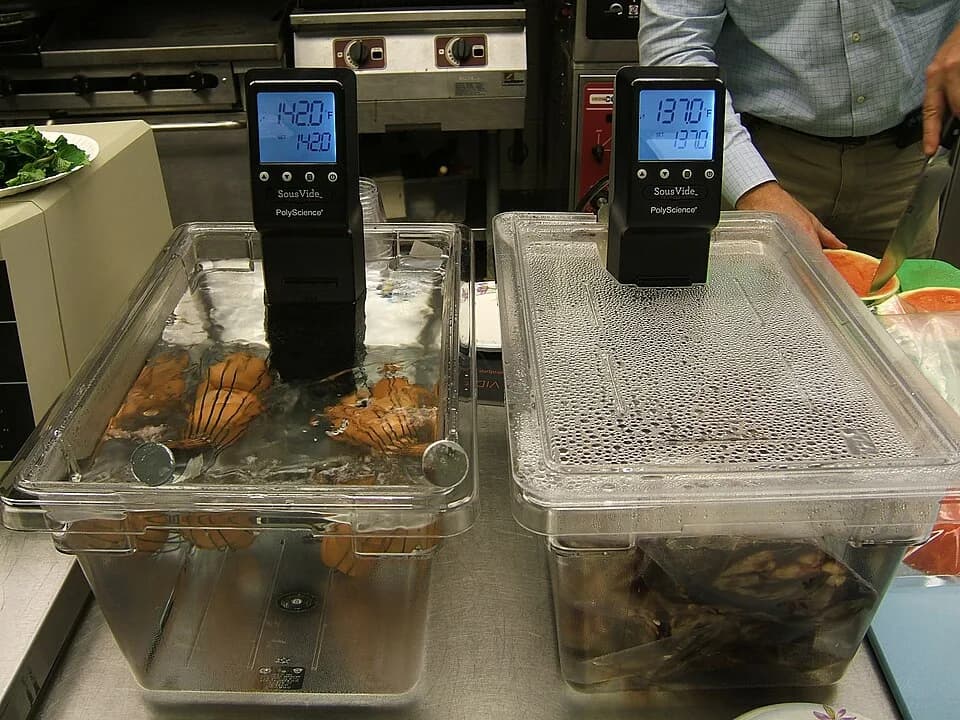
Sous vide cooking delivers flawless protein doneness by holding vacuum-sealed food in a precisely controlled water bath, eliminating the guesswork that plagues traditional methods. A steak cooked at exactly 130°F for two hours emerges medium-rare edge to edge. This technique, refined by French chef Georges Pralus in 1974 for foie gras, became accessible to home cooks around 2013 with affordable circulators, yet it remains slower than (Searing) for crust development. The immersion circulator maintains temperature within 0.1°F, ensuring that even tough cuts like chuck become tender after 48 hours. Sous vide isn't perfect for every dish—it lacks the Maillard reaction's complexity without a finishing sear—but it guarantees precision for delicate proteins like salmon, which can dry out at 145°F if grilled.
Photos (1)
Comments on "Sous Vide"
Have a take on this ranking?
Save your rankings and see how you compare. Comments are how the argument actually happens here. Posting one needs a free account — it takes about a minute.
No comments yet.
The first comment sets the terms of the argument.