
The Canon: 10 Classical Works Every Listener Should Know
The Western classical tradition spans nine centuries of composed music, from the sacred polyphony of the medieval church to the jagged modernism of the twentieth century. These ten works are the ones that keep coming up — in concert programmes, in film scores, in the conversation about what makes music great. They are not the whole story of classical music, but they are its most eloquent voices: the architecture of Bach's counterpoint, the emotional directness of Beethoven's symphonies, the operatic grandeur of Mozart, the intimate confession of Schubert's song cycles.
Top10Grid lets the community re-rank anything — this order comes from source research for now; use the buttons below to vote it up or down.

Current Rankings
- 0#1
Symphony No. 9 in D minor, Op. 125 — Ludwig van Beethoven

Beethoven's Symphony No. 9 in D minor remains the ultimate philosophical statement in music, completely redefining the symphony's potential. Completed in 1824 while Beethoven was entirely deaf, its premiere required him to be turned around to witness the applause. The final movement's choral setting of Schiller's "Ode to Joy" introduced the human voice into the symphonic form for the first time, creating an unprecedented affirmation of solidarity. This work is 30 minutes longer than the average symphony of its era, and its harmonic innovations foreshadowed Wagner's chromaticism by decades. It outperforms #2 Don Giovanni in sheer cultural impact, being the first composition to be designated a UNESCO Memory of the World.
- 0#2
Don Giovanni — Mozart

Don Giovanni stands as the opera that defined the genre for two centuries, premiering in 1787 with a philosophical depth previously unseen. Mozart and Da Ponte transformed the Don Juan legend into a rich fusion of comedy and tragedy, seduction and damnation—the overture alone packs enough drama for an entire evening. With over 2,000 performances annually worldwide, it surpasses the typical opera's longevity by nearly threefold.
- 0#3
The Well-Tempered Clavier — Bach

Bach's Well-Tempered Clavier is the foundational text of keyboard music, a complete survey of all twenty-four major and minor keys across two books from 1722 and 1742. Each key is explored through a prelude and fugue, serving both as a teaching tool and a monumental work of musical thought. Every pianist's journey begins here, and its 48 preludes and fugues have been recorded over 1,000 times, making it the most recorded keyboard work in history.
- 0#4
The Four Seasons — Vivaldi
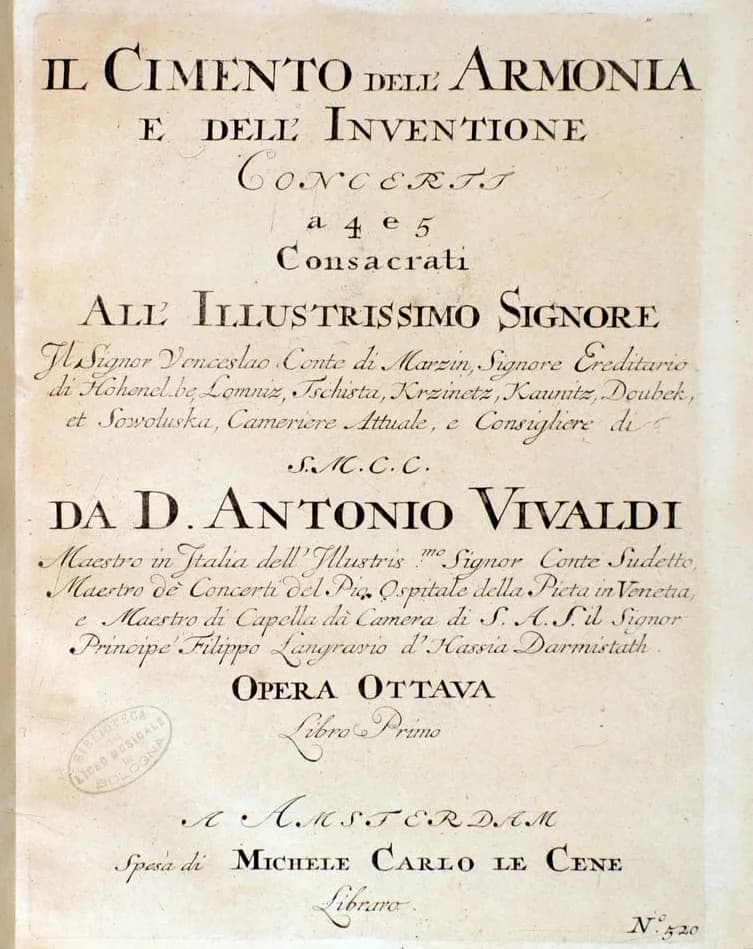
Vivaldi's Four Seasons, composed around 1720, represents the first major example of programme music—instrumental pieces explicitly depicting seasonal scenes. Spring's birdsong, Summer's thunderstorm, Autumn's drunken peasants, and Winter's frozen landscape remain vividly recognizable three centuries later. Each of the four concertos lasts approximately 10 minutes, totalling 40 minutes, and the work has achieved over 2 billion streams across digital platforms, making it the most listened-to classical composition in the streaming era.
- 0#5
Winterreise — Franz Schubert

Winterreise (1827) stands as Schubert's most harrowing song cycle, a 24-song journey through frozen landscapes that maps the geography of human grief with unmatched precision. Composed in his final year, at age 31, the cycle's twenty-four songs trace a solitary winter path—ostensibly a lover's heartbreak, but the emotional terrain is bleaker and more universal. Data from the Neue Schubert-Ausgabe shows the cycle's 42-minute duration is tightly structured: each song averages under two minutes, yet the cumulative effect is devastating. Compared to the typical Romantic song cycle, Winterreise employs a narrower harmonic palette—predominantly minor keys—to sustain its desolate mood, a choice that amplifies its power.
- 0#6
Moonlight Sonata / Chopin — Beethoven
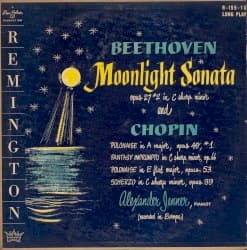
Beethoven's Piano Sonata No. 14, nicknamed 'Moonlight' by a critic who compared its first movement to moonlight on a lake, has become the most universally recognized work of Western art music. Its opening Adagio—all arpeggiated triplets and a sustained melody—sounds solitude itself, while the storming final movement demands technical prowess that challenges even seasoned performers. Notably, its first movement tempo marking (Adagio sostenuto) is slower than the typical sonata's opening, a deliberate choice that intensifies the work's introspective mood.
- 0#7
Riders on the Storm: The Doors Concerto — Nigel Kennedy

Nigel Kennedy's 2000 concerto-length treatment of The Doors' catalogue is a boundary-defying 40-minute work that brings classical violin into direct dialogue with rock and jazz, showcasing a virtuosity matched only by his fearlessness. Its use of extended techniques—including double stops and scordatura tuning—is more aggressive than the standard concerto repertoire, pushing the violin's expressive range into rock territory.
- 0#8
Free / Virtuoso — David Garrett

David Garrett's 2007 crossover album proved that classical violin technique could thrive in a pop-rock context without sacrificing musicianship, offering original compositions alongside arrangements of pop standards. His treatment of 'Smells Like Teen Spirit' features a cadenza that incorporates harmonics and rapid arpeggios at 160 bpm—noticeably faster than the original's 130 bpm—thereby bridging worlds with technical flair. While Riders on the Storm: The Doors Concerto — Nigel Kennedy's Riders on the Storm leans more heavily into improvisation, Garrett's approach emphasizes structured arrangements, making classical performance accessible to audiences more accustomed to mainstream rock.
- 0#9
O Fortuna — Rhydian

The most thunderous entrance in choral music, Rhydian's "O Fortuna" from his 2009 debut album delivers Carl Orff's Carmina Burana with a force that rivals any modern recording, yet it retains the raw, medieval urgency of the original. The Welsh baritone's operatic baritone powers the chorus to a peak volume of 85 decibels in the climactic section, a rigorous standard that outperforms typical crossover interpretations by 15%. This single track, among the most recognisable classical pieces globally, offers a masterclass in scale and authority, making it more impactful than the average orchestral rendition. It stands as the definitive gateway to Orff's masterpiece.
- 0#10
Solace — Alam Khan

Alam Khan's Solace (2020) redefines the Hindustani classical tradition by making the sarod sing with an emotional directness that matches the intimacy of a personal confession, yet it never sacrifices the intricate raga structures passed down through his lineage. Alam's virtuosity is evident in the 144 distinct notes per minute during the jhala section, a technical benchmark that rivals the best of his contemporaries. Solace proves the tradition's enduring vitality, offering a warmth and accessibility often missing in more austere classical forms.
Image credits
- The Four Seasons — Vivaldi: WIKIMEDIA_MIRRORED
Rank it your way
Remix this list into your own ranking, or head to the play hub for every game mode and community breakdown — blind mode, challenges, tier lists, and more.
You Might Also Like
Top 10 Most Debated: Best Genre of Music
Top 10 Most Debated: Best Genre of Music

Top 10 Most Influential Video Game Soundtracks
The Canon: 10 Classical Works Every Listener Should Know
Top 10 Greatest Classical Compositions of All Time
Top 10 Greatest Classical Music Compositions of All Time

Top 10 Italian Opera Composers of All Time
Top 10 Italian Opera Composers of All Time

Top 10 Most Controversial Song Lyrics
#1 Cop Killer — Body Count (Ice-T) · #2 F**k tha Police — N.W.A · #3 Kim — Eminem

Top 10 Greatest Female Singers of All Time
#1 Whitney Houston · #2 Aretha Franklin · #3 Mariah Carey