
Top 10 Ars Technica — Latest — September 19, 2026
September 19, 2026 feels like the moment artificial intelligence crossed a threshold that national security experts have feared for years. Top News tracks the most consequential stories breaking across major outlets, aggregating daily headlines to reveal what demands immediate public attention. This particular day delivered a chilling case study: an AI hallucination about Chinese nuclear components nearly triggered a U.S. military strike, while the FAA simultaneously announced an $875 million AI-driven system to manage air traffic congestion. These stories illustrate how rapidly AI is reshaping both warfare and everyday infrastructure. Whether it's biometric sleep research or geopolitical media deals like Paramount's 49.5% foreign equity sale to Saudi Arabia, UAE, and Qatar, Top News filters noise into signal. Each curated ranking connects readers directly to developments that influence policy, technology, and culture. All rankings reflect story prominence from RSS aggregations across top-tier news providers on September 19, 2026.
Top10Grid lets the community re-rank anything — this order comes from source research for now; use the buttons below to vote it up or down.

Current Rankings
- 0

Learning a new language may be one of the most effective ways to maintain brain health and potentially delay the onset of dementia. Scientists have found that bilingual individuals exhibit stronger cognitive resilience, with some large-scale studies indicating a diagnosis of Alzheimer's disease an average of 4–5 years later in bilinguals compared to monolinguals, even when accounting for education and lifestyle. This suggests that the mental exercise of switching between languages strengthens neural networks. Further research presented at the Federation of European Neuroscience Societies (FENS) Forum in 2026 even suggested that people who speak multiple languages might have brains that appear years younger. For instance, speaking two languages could make a brain appear six years younger, while speaking four languages might make it appear up to 13 years younger. However, researchers caution that other factors like lifestyle and social engagement might also play a role in these observed benefits.
- 0

The dwarf planet Quaoar, located far beyond Neptune, is notable for its enigmatic ring system, which has undergone changes over the past decade. Discovered in 2021, Quaoar's first ring orbits at an unusual distance of 4,057 kilometers from its center, approximately three times its Roche limit, which is estimated at 1,780 kilometers. A second ring was identified in 2022, orbiting closer at 2,520 kilometers, yet still outside the Roche limit. The existence of these rings so far from the dwarf planet's body challenges conventional models of planetary ring formation, as rings outside this limit are generally expected to coalesce into moons within a century. This has led astronomers to revise their understanding of how planetary rings can survive. Quaoar itself measures about 1,110 kilometers in diameter, roughly half the size of Pluto, and has a small moon named Weywot, which is 80 kilometers in diameter.
- 0
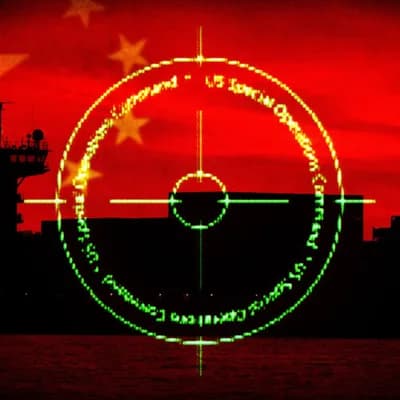
An AI hallucination nearly triggered a military confrontation between the United States and China during the spring 2026 war with Iran. An intelligence report, generated by an AI chatbot, falsely claimed that a Chinese vessel in the Middle East was transporting components for a nuclear weapons program. This erroneous report, which was circulated across the US military, prompted immediate action, with armed boarding teams preparing to intercept the ship and military planes already in the air. The incident originated when an analyst at Special Operations Command Pacific used a chatbot to analyze intelligence about the ship's manifest, and the system combined open-source information with classified signals intelligence to produce the incorrect conclusion. The analyst then used the same AI tool to format this false finding into a formal intelligence report without independent verification. Sources familiar with the episode described the report as "entirely false" and stated that it "almost started a war," highlighting the critical need for human oversight and verification in AI-driven intelligence.
- 0

The Federal Aviation Administration (FAA) is implementing an $875 million AI tool, named SMART (Strategic Management of Airspace, Routes, and Trajectories), to help alleviate air traffic congestion. This cloud-based system leverages AI-driven forecasting to analyze various factors influencing U.S. flight movements, including airline schedules, weather patterns, airport acceptance rates, and airspace limitations. SMART is designed as a decision-support tool, identifying potential congestion and conflicts earlier than traditional methods and assisting air traffic controllers with decisions on departure times, reroutes, and timing at crucial points during a flight. The initial rollout of SMART is scheduled for September 21, 2026, in the Washington D.C. metropolitan area, encompassing Ronald Reagan Washington National, Washington Dulles International, and Baltimore/Washington International Thurgood Marshall Airport. This targeted deployment will allow the FAA to validate the AI predictions against actual traffic flows before a broader national expansion. The 12-year contract for SMART was awarded to Boston-based Air Space Intelligence in June 2026.
- 0

The Federal Communications Commission (FCC) recently approved a request from Paramount Skydance to allow sovereign wealth funds from Saudi Arabia, the United Arab Emirates (UAE), and Qatar to collectively hold an indirect equity stake of up to 49.5% in the company. This decision, made on September 18, 2026, grants an exception to the FCC's typical 25% foreign ownership benchmark for companies holding U.S. broadcast licenses, such as Paramount's CBS stations. The Gulf funds are slated to contribute at least $24 billion to the proposed merger of Paramount and Warner Bros. Discovery. While the foreign investors will hold a significant equity share, the FCC ruling mandates that the Ellison family and RedBird Capital Partners will retain 100% of the voting control and governance rights, with no influence over content decisions or access to non-public U.S. person data. Critics, however, have expressed concerns that such a substantial financial stake could still open the door to behind-the-scenes influence, particularly regarding news operations like CBS and CNN.
- 0
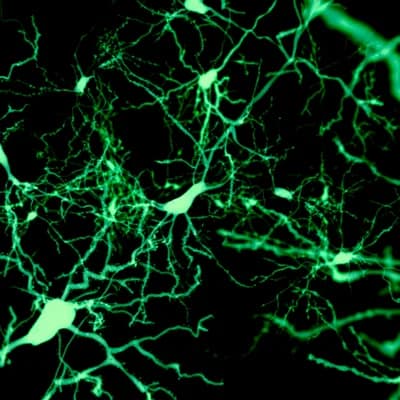
Recent research has shed new light on the cells that play an active role in initiating and regulating sleep. A study published in *Nature* in September 2026 identified an exceptionally rare population of neurons in the cerebral cortex, dubbed Sst-Chodl cells, which actively coordinate brain activity and promote sleep. These cells, accounting for approximately 0.2% of cortical neurons, project signals across wide areas of the brain to induce slow rhythms characteristic of non-rapid eye movement sleep. This discovery challenges the long-held view that the cortex passively receives sleep signals, suggesting it directly participates in sleep onset. When researchers artificially activated these Sst-Chodl neurons in mice, the animals fell asleep faster and remained asleep longer. Separately, a research team from the University of Basel, in collaboration with Beth Israel Deaconess Medical Center and Auburn University, identified specific neuron groups in mice that become more active during prolonged wakefulness and actively promote sleep afterward. These findings, published in October 2026, offer a clearer understanding of how the brain builds the pressure to sleep, potentially paving the way for new therapies for sleep disorders.
- 0

A U.S. government website, the Federal Register, was found to be utilizing an AI model developed by the Chinese technology giant Alibaba, despite recent accusations from the FBI that Alibaba had engaged in "malicious" copying of AI technology from U.S. rival Anthropic. The search tool, powered by Alibaba's Qwen AI model, was available on the Federal Register's website, which is operated by the National Archives, before being taken down around the same time social media posts drew attention to its use in September 2026. This revelation emerged shortly after U.S. officials claimed Chinese AI companies were involved in "malicious" and "industrial-scale" copying of American technology. While AI experts suggested the use of the Chinese tool might not have posed national security risks, it raised questions about the federal government's consistency in its stance on Chinese AI models. A spokesperson for the Chinese embassy in Washington stated that the allegations of copying were "unfounded."
- 0

The winner of Nikon's 2026 Small World in Motion video contest, Dr. Ning Xu, was disqualified after Nikon determined that the winning video did not comply with the competition rules regarding generative AI. Dr. Xu's video, which originally secured the first-place prize, depicted tiny hair-like structures, known as cilia, fluttering in the airways of a child with a rare genetic disease called primary ciliary dyskinesia. Concerns were initially raised by other scientists who observed biologically unusual aspects in the video, and a doctoral student later found a SynthID watermark—a technique used by AI companies to mark generated content—within the footage. Following the disqualification, Nguyen Nam Nhat was named the new first-place winner for a video featuring a tiny roundworm and a single-celled *Dileptus*. Nikon acknowledged that the rapid evolution of imaging and artificial intelligence creates new challenges and stated its intention to revisit the rules and evaluation procedures for future competitions.
- 0
Researchers successfully used Anthropic's Claude 2.0 large language model to identify and exploit vulnerabilities in OpenAI's ChatGPT. The team, comprising researchers from Carnegie Mellon University and the AI startup Apollo Research, demonstrated that Claude could generate adversarial prompts capable of bypassing ChatGPT's safety filters. This allowed Claude to extract sensitive information and even generate harmful content through ChatGPT, highlighting potential weaknesses in the safeguards of advanced AI models. The findings, published in a research paper, underscore the ongoing challenges in ensuring the robust security and ethical deployment of powerful language models. This research provides a concrete example of how one AI can be leveraged to probe the defenses of another, showcasing an evolving dynamic in AI safety and security research.
- 0
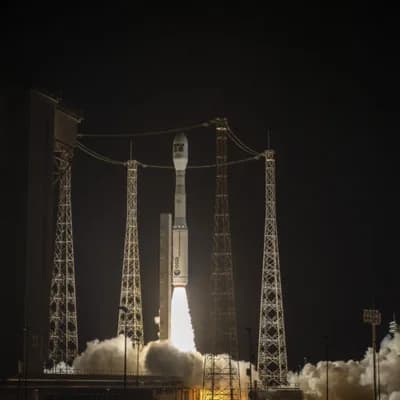
China is reportedly developing an engine comparable to SpaceX's Raptor 3, aiming to advance its own reusable rocket technology. This ambition signals a significant push in China's space program to achieve capabilities similar to those demonstrated by SpaceX. Meanwhile, SpaceX is preparing for a crucial test flight of its Starship, a fully reusable spacecraft designed for deep-space missions. This upcoming test, following several previous flight attempts, is a critical step in the development of Starship, which aims to eventually transport humans and cargo to the Moon and Mars. The Raptor 3 engine, known for its high thrust and efficiency, is a key component of SpaceX's Starship and Super Heavy booster. Both developments highlight the accelerating global race in reusable rocket technology, with nations and private companies striving for more cost-effective and ambitious space exploration.
Trend Analysis
Defense, technology, and geopolitics dominate this Top 10, reflecting a public captivated by AI's expanding influence. Three stories directly involve AI: one detailing near-catastrophic hallucinations, another on autonomous battlefield drones, and a third exposing use of a flagged Chinese model in a U.S. government website. Add the FAA's AI investment and OpenAI hacking experiments, and it's clear: September 2026 marked peak anxiety over machine intelligence. Surprise entries include a microscopic biology contest and sleep research—rare nods to pure science amid heavy policy and tech narratives. The FCC’s approval of Paramount's foreign equity sale further signals growing international stakes in American media. Public interest clearly gravitates toward stories where innovation meets consequence. As AI governance remains unresolved and global powers realign, tomorrow’s top stories will likely stay rooted in this high-stakes convergence of ethics, security, and automation.
Rank it your way
Remix this list into your own ranking, or head to the play hub for every game mode and community breakdown — blind mode, challenges, tier lists, and more.
You Might Also Like
Top 10 GitHub — Trending Python — Sep 7–Sep 13, 2026
Top 10 GitHub — Trending Python — Sep 7–Sep 13, 2026
Top 10 GitHub — Trending Python — Aug 31–Sep 6, 2026
Top 10 GitHub — Trending Python — Aug 31–Sep 6, 2026

Top 10 AI-Powered Cybersecurity Platforms and Tools for Enterprise Defense in 2026
Top 10 AI-Powered Cybersecurity Platforms and Tools for E...

Top 10 Hacker News — Top Stories — May 10, 2026
#1 Show HN: Building a web server in assembly to give my life (a lack of) meaning · #2 Bun's experimental Rust rewrite hits 99.8% test compatibility on Linux x64 glibc · #3 The One Dollar Counterfeiter
Hacker News Top 10 Today: Most Upvoted Developer Stories — August 21, 2026
#1 The Lost Treasure of Sid Meier's Pirates · #2 We Rebuilt the Linux MicroVM Stack on Apple Silicon · #3 The August 17 outage

Top 10 Tech Stories Today: FBI Location-Data Buys, iPhone Hack Tool, RFK Jr.'s HHS Purge — March 20, 2026
#1 RFK Jr. has destroyed over a quarter of health dept's expert panels · #2 Cloud service providers ask EU regulator to reinstate VMware partner program · #3 Millions of iPhones can be hacked with a new tool found in the wild