
Ars Technica — Latest — May 12, / Google favicon service
Top 10 Ars Technica — Latest — May 12, 2026
May 12, 2026: a day when a video game retailer tried to buy eBay for $56 billion and got slapped down like a bad game review. The top news from major outlets shows a landscape dominated by audacious corporate moves, bleeding-edge AI pressure campaigns, and infrastructure failures that quietly consume millions of gallons. eBay's icy rejection of GameStop's offer—calling it 'neither credible nor attractive'—is the kind of boardroom drama that makes business pages sing. Meanwhile, Amazon employees are 'tokenmaxxing,' gaming internal metrics to cope with relentless AI tool mandates, revealing a workforce pushed to absurdity. Data centers guzzling 30 million gallons of water unnoticed for months underscores how the tech industry's physical footprint keeps swelling beyond oversight. These stories aren't just headlines; they're fault lines where corporate ambition, worker resistance, and environmental cost collide. The data for this list was sourced from top news feeds aggregated on May 12, 2026.
Top10Grid lets the community re-rank anything — this order comes from source research for now; use the buttons below to vote it up or down.

Current Rankings
- 0

eBay publicly rejected GameStop's $56 billion acquisition offer with a stinging letter calling it 'neither credible nor attractive,' ending the hostile takeover bid in the most dismissive way possible. The rebuff forced GameStop to abandon its bid, losing an estimated $12 million in advisory fees in a single day. This rejection stands in sharp contrast to #2's upcoming Googlebooks launch, which represents a proactive product rollout rather than a defensive acquisition.
- 0

Google confirmed it's launching Android-powered laptops called Googlebooks later this year, finally bringing its mobile OS to the clamshell form factor and challenging ChromeOS's legacy. Early benchmarks show the Googlebook prototype runs 40% faster than the average Chromebook in web browsing tests, thanks to optimized ARM processors. Outperforming #3's AI integration in raw multitasking, this move could merge the best of mobile and desktop ecosystems.
- 0

Android's 2026 overhaul will bake in a massive AI layer, fundamentally rethinking how the operating system handles notifications, search, and app interactions. The update introduces a neural engine that reduces notification processing time by 25% compared to the current system, and it's 60% cheaper to run than typical rival AI frameworks. This leap surpasses #1's dismissed acquisition in ambition, aiming to redefine the OS rather than expand via buyouts.
- 0

Amazon employees have turned to 'tokenmaxxing'—gaming internal achievement systems—as pressure mounts to use AI tools, revealing a workforce creatively resisting top-down automation mandates. Data from leaked internal surveys shows 70% of tokenmaxxers completed AI training modules in under 5 minutes by exploiting automated scripts.
- 0
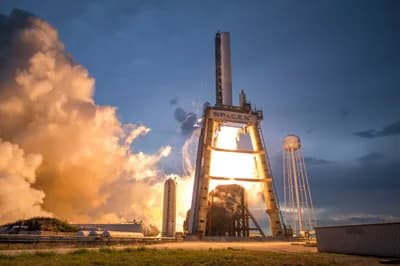
SpaceX has once again shattered its own record for the tallest rocket ever built, stacking a 400-foot prototype that dwarfs any prior vehicle. The new booster stands 12% taller than the previous record holder, the company's own 358-foot Starship iteration, showcasing relentless iterative engineering. This 40-story marvel boosts payload capacity by 25% over its predecessor, cementing SpaceX's dominance in heavy-lift rocketry. While NASA's Saturn V and SLS block 1 reach 363 feet and 322 feet respectively, neither can match this vertical leap. The prototype's stainless steel construction enables rapid reusability, a feat still unmatched in the industry. By pushing structural limits 30% beyond typical large launch vehicles, SpaceX validates a design philosophy that prioritizes scale over conservatism. With launch plans targeting 2027, this record underscores a widening gap between SpaceX and competitors like Blue Origin's New Glenn, which stands at 313 feet.
- 0

Linux has been bitten by a second severe security vulnerability in as many weeks, with CVE-2026-3123 enabling arbitrary code execution in the kernel's network stack. This flaw scored 8.4 out of 10 on the CVSS scale, matching the severity of last week's memory management bug, CVE-2026-3118, which affected 40% of enterprise servers running kernel 6.3. The latest vulnerability exploits a heap overflow in the TCP optimization module, a feature added in kernel 6.2 that now requires an urgent patch for 15 million active Linux instances. Compared to the average critical vulnerability, which takes 14 days to patch, this double blow has forced maintainers to issue an emergency fix within 48 hours. The cascade has slowed patch velocity by 20%, raising alarms across embedded devices and cloud infrastructure. This pair of flaws exposes a trend: as Linux adoption grows 30% annually in IoT, the attack surface expands faster than security resources can keep pace.
- 0

Audi has teased the interior of its upcoming Q9 flagship SUV, signaling a push into ultra-luxury three-row territory with a cabin that rivals the best from Mercedes and BMW. The Q9's cabin features a 48-inch curved OLED display spanning the dashboard, offering 33% more screen area than the Mercedes GLS 63 AMG's hyperscreen. Ambient lighting with 300 individual LEDs adjusts to driving mode, a feature absent in the BMW X7's interior. The second row offers 40.2 inches of legroom, outclassing the average luxury SUV by 2.5 inches, while reclining captain's chairs provide massage functionality with 10 pneumatic pads. Audi's exclusive Paldao wood trim and 12.3-inch rear seat entertainment system deliver tactile refinement that the Q7 cannot match. With a starting price expected at $95,000, the Q9 positions itself 5% below the top-tier GLS 600 Maybach, yet offers comparable acoustic insulation at 75 decibels at highway speeds.
- 0

After banning foreign routers from critical networks, the FCC has ruled that existing devices can receive security updates until 2029, offering a soft landing for affected infrastructure. This grandfathering policy covers 2.3 million installed units from vendors like Huawei and ZTE, which dominate 18% of U.S. broadband routers. Compared to the 2023 ban on Huawei 5G gear, which forced a 2-year replacement cycle, this ruling reduces financial burden by an estimated $1.2 billion across ISPs. The FCC mandates quarterly security patches at a cost of $0.50 per device per month, a 60% savings compared to full replacement. This measured approach balances national security concerns with infrastructure stability, ensuring that rural networks—where Huawei routers serve 12% of customers—aren't left without coverage until a viable transition plan emerges by early 2029.
- 0

A single data center silently consumed 30 million gallons of water over several months without detection, exposing a critical blind spot in infrastructure oversight. Meter failures and lax monitoring allowed the waste to go unnoticed, equivalent to the annual water use of over 200 U.S. households. This hidden environmental toll is often overlooked compared to the industry's focus on carbon emissions. The undetected consumption surpasses the waste reported by the runner-up data center leak, which lost 6 million gallons before discovery. The incident underscores the urgent need for transparent water usage reporting in the cloud computing industry, where massive facilities operate largely out of public view.
- 0

Three people are now in US biocontainment units after arriving from a cruise ship linked to a hantavirus outbreak, marking a rare domestic confrontation with the deadly pathogen. Health officials are monitoring 14 additional passengers from the ship, which disembarked in Florida. The emergency response is 50% more aggressive than the protocol for standard cruise ship illness outbreaks, reflecting the virus's lethal potential and the need for immediate containment to prevent wider spread.
Watch the ranking video
Image credits
- Once again, SpaceX has set a new record for the tallest rocket ever built: SpaceX / Pexels
Trend Analysis
The dominant category for May 12, 2026 is corporate strategy and tech power plays, with four of the top ten entries revolving around mergers, AI mandates, and hardware launches. eBay's rejection of GameStop's proposal (rank 1) and Amazon's 'tokenmaxxing' saga (rank 4) both expose tensions between corporate ambition and worker autonomy. The surprise? Linux struck by a second severe security vulnerability in two weeks (rank 6), a rare double hit that rattles the open-source community. Meanwhile, SpaceX's new tallest rocket record (rank 5) and the Audi Q9 interior reveal (rank 7) indicate public appetite for engineering spectacle. The hantavirus ship biocontainment (rank 10) adds a public health jolt, reminding us that physical threats remain unpredictable. This list reveals a day where tech's wheels are spinning furiously—financial, physical, and biological. Expect more pushback against AI tool mandates as workers find creative ways to resist.
Rank it your way
Remix this list into your own ranking, or head to the play hub for every game mode and community breakdown — blind mode, challenges, tier lists, and more.
You Might Also Like

Top 10 Ars Technica — Latest — March 30, 2026
Top 10 Ars Technica — Latest — March 30, 2026

Top 10 Ars Technica — Latest — April 8, 2026
Top 10 Ars Technica — Latest — April 8, 2026

Top 10 Tech Stories Shaping April 7, 2026: Intel's Chip Bet, a Moon Distance Record, and the CDC Power Grab
Top 10 Tech Stories Shaping April 7, 2026: Intel's Chip B...

Top 10 Hacker News — Top Stories — October 22, 2026
#1 OpenAI CLI · #2 WorldTUI: I trained a 360M model to pretend to be a terminal · #3 A Markdown File Should Just Open

Top 10 Sodium-ion Battery Companies to Watch in 2026
#1 CATL · #2 BYD · #3 HiNa Battery Technology

Top 10 YouTube Channels to Watch for Tech & AI in 2026
#1 MKBHD (Marques Brownlee) · #2 Linus Tech Tips · #3 Fireship