Devil's Peak
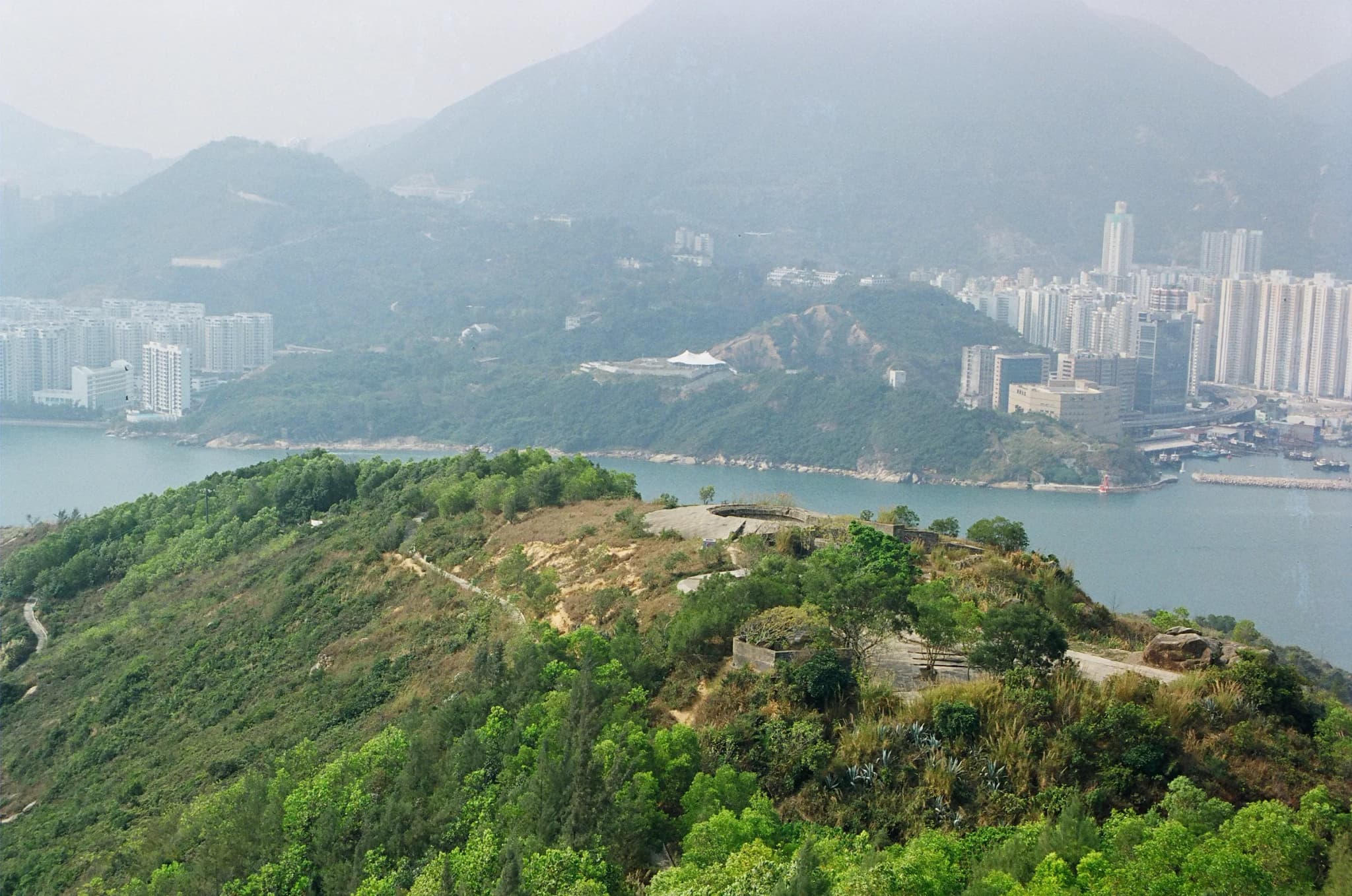
Devil's Peak is a 222-metre hill standing directly over Lei Yue Mun, the narrow strait at the eastern entrance to Victoria Harbour. It is the shortest hike on this list and packs in the most history. After Britain leased the New Territories in 1898, the military chose the hill to guard the harbour approaches. In 1914–15 it built two batteries here: Gough Battery on the upper slope, with a 6-inch gun, and Pottinger Battery lower down, with two 9.2-inch guns. A walled redoubt on the summit protected the headquarters of the Eastern Fire Command. The guns were moved to Stanley and Cape D'Aguilar in 1936. In December 1941, after British forces withdrew to Hong Kong Island, the Japanese army used the hill as an artillery position to shell the island's north shore. Almost everything is still there, overgrown and unrestored. The walk from Yau Tong climbs past a hillside cemetery onto steps and dirt paths, reaching Gough Battery first: gun emplacements, a brick-vaulted underground magazine and two unusual circular pillboxes built from concrete pipes to British commercial designs. Inside one, which is open to the sky, someone has set up plum-blossom posts for kung fu balance training. A trench runs up past a ruined machine-gun post to the summit redoubt, where a loopholed concrete wall with projecting bastions still rings the top of the hill. The views are the other reward. You look straight down on the fishing-village rooftops of Lei Yue Mun, across the strait to the old quarry cliffs of Hong Kong Island, and north over the towers of Tseung Kwan O. It works well as a late-afternoon walk that ends with dinner in Lei Yue Mun village. Bring water, as there is none on the hill, and leave time to wander the batteries rather than just ticking off the summit.
Photos (1)
Comments on "Devil's Peak"
Have a take on this ranking?
Comments are how the argument actually happens here. Posting one needs a free account — it takes about a minute.
No comments yet.
The first comment sets the terms of the argument.