#3
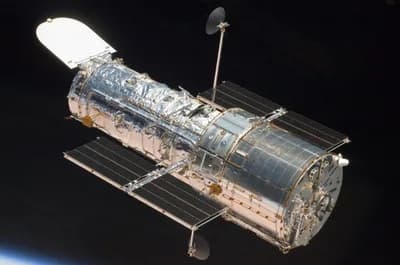
Hubble Space Telescope
Hubble Space Telescope revolutionized astronomy by deploying from Space Shuttle Discovery on 25 April 1990, capturing over 1.5 million observations and generating more than 20,000 scientific papers in its first three decades. Its deep-field images revealed the universe contains over two trillion galaxies—10 times more than previously estimated—and its measurements of Cepheid variable stars pinned down the Hubble constant to 67.4 km/s per megaparsec, confirming the universe's expansion rate. Hubble's observations of distant supernovae provided the first strong evidence for dark energy, a discovery that earned the 2011 Nobel Prize.
–
Photos (1)
Comments on "Hubble Space Telescope"
Have a take on this ranking?
Save your rankings and see how you compare. Comments are how the argument actually happens here. Posting one needs a free account — it takes about a minute.
No comments yet.
The first comment sets the terms of the argument.