Healthcare & Critical Infrastructure Under Siege
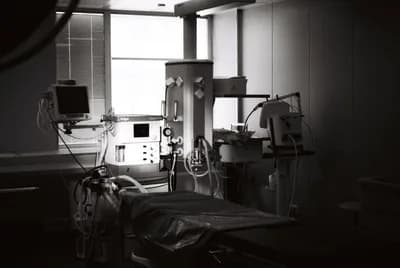
Healthcare has become the highest-consequence target in the ransomware ecosystem—not because the financial rewards are uniquely large, though they are substantial, but because the operational disruption caused by taking hospital systems offline has life-or-death consequences that no other sector can parallel. Healthcare ransomware surged 58% in 2025, and Qilin alone conducted over 700 attacks against healthcare organizations during that period. The sector's structural vulnerabilities are well documented and deeply difficult to remediate: decade-old medical devices running unpatched operating systems, inherently open networks required for patient portal access and remote monitoring, and procurement cycles that prevent rapid technology refresh. The Synnovis NHS attack crystallized what these statistics mean in human terms. The breach resulted in $32.7 million in losses, 10,152 cancelled appointments, and one confirmed patient death directly linked to the attack—the first publicly documented case of ransomware-attributable mortality. This is no longer a cybersecurity story; it is a public health story. Qilin's 578% growth from 154 victims in 2024 to 1,044 in 2025 demonstrates that the group has operationalized healthcare targeting at industrial scale. Critical infrastructure beyond healthcare faces a parallel but distinct threat: nation-state pre-positioning. Intelligence assessments from multiple Western agencies document adversary groups embedding persistent access in power grids, water treatment systems, and telecommunications infrastructure months or years before any attack is intended—creating strategic leverage to be activated during geopolitical crises. Recorded Future documented 57 cyber-physical incidents in 2025 with real-world physical consequences. The FBI's IC3 2025 Annual Report recorded $20.9 billion in total US cybercrime losses, a 26% single-year increase, with over one million complaints filed.
Photos (1)
Comments on "Healthcare & Critical Infrastructure Under Siege"
Have a take on this ranking?
Save your rankings and see how you compare. Comments are how the argument actually happens here. Posting one needs a free account — it takes about a minute.
No comments yet.
The first comment sets the terms of the argument.