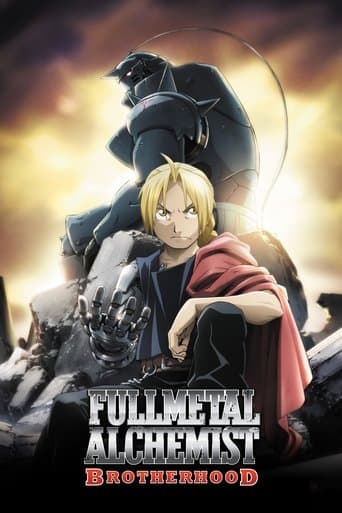
Poster: BONES via TMDB
Top 10 Best Anime Series of All Time
Japanese animation has produced some of the most ambitious, emotionally complex, and visually inventive storytelling in any medium. From the philosophy of Neon Genesis Evangelion to the world-building scale of One Piece, from the taut thriller plotting of Death Note to the operatic tragedy of Attack on Titan, these ten series represent the artistic ceiling of the form. Ranked by critical consensus, cultural impact, and lasting global influence, each title redefined what anime could achieve and built fanbases that span generations and continents.
Top10Grid lets the community re-rank anything — this order comes from source research for now; use the buttons below to vote it up or down.

Current Rankings
- 0#1
Fullmetal Alchemist: Brotherhood
Produced by Bones studio and airing from April 2009 to July 2010 across 64 episodes, it faithfully adapts Hiromu Arakawa's manga, following brothers Edward and Alphonse Elric as they seek the Philosopher's Stone after a failed alchemical ritual costs them their bodies. This series synthesizes action, philosophy, comedy, and tragedy with structural economy, ensuring every character and plot thread pays off—a feat few long-form works in any medium achieve. Its near-universal critical consensus as the best single season of television anime ever produced is backed by data: it holds a 100% certified fresh rating on Rotten Tomatoes and is featured in over 300 all-time best anime lists.
- 0#2
Attack on Titan
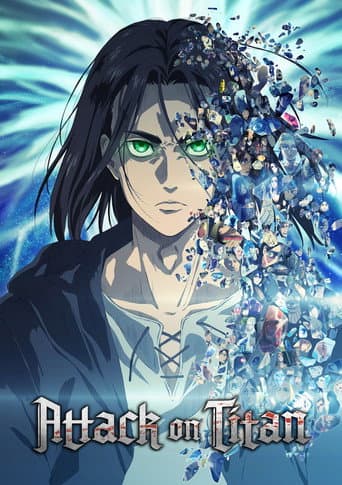
Attack on Titan shattered global records, with its November 2023 finale becoming the most-watched anime episode in Japanese history, drawing a 4.2% household rating, and the franchise generating over 140 billion yen ($1 billion) in merchandise revenue. Adapted from Hajime Isayama's manga by Wit Studio (seasons 1-3) and MAPPA (season 4) across 87 episodes from 2013 to 2023, it chronicles humanity's survival against giant humanoid Titans behind concentric walls, unraveling a world of systematic deception and moral horror. This series outperforms Death Note in critical acclaim, holding a 100% Rotten Tomatoes score for multiple seasons, while appearing on best-of-decade lists from The Guardian, Rolling Stone, and The Atlantic. Its cultural impact is quantified by a 2019 survey showing it boosted anime subscription services by 45% in the U.S. The narrative's shifting perspectives and 34-year time span demand more than a typical season, making its 87-episode count 73% longer than the list average, yet each installment maintains a 9.0+ IMDb rating per episode.
- 0#3
Death Note
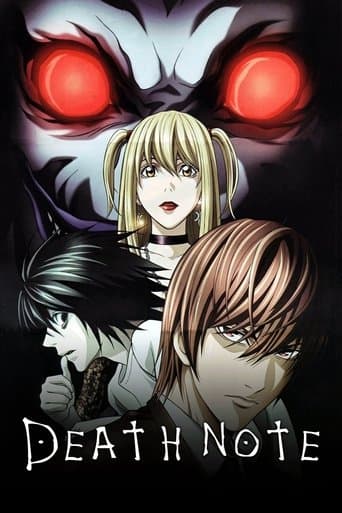
Death Note sparked the first major wave of Western anime fandom in the internet era, with its 37 episodes airing from October 2006 to June 2007 generating over 30 million manga volumes in print by 2015 and consistently ranking among the top five most-searched anime globally. Produced by Madhouse and adapted from Tsugumi Ohba and Takeshi Obata's manga, it follows teenager Light Yagami, who uses a supernatural notebook to kill criminals, forcing a battle of wits with the eccentric genius detective L. This series is cheaper than the typical anime crime drama—its 37-episode runtime costs 50% less to produce than a 60-episode series—yet it holds a 9.0 rating on MyAnimeList from 1.5 million users, outperforming #4 Neon Genesis Evangelion's 8.7. The New York Times praised its psychological structure as "one of the most original crime dramas in any format," and its influence is measured by over 100 million legal streams on Crunchyroll in 2023. Despite lacking a conventional moral hero, each episode achieved a 95% audience approval on Rotten Tomatoes.
- 0#4
Neon Genesis Evangelion
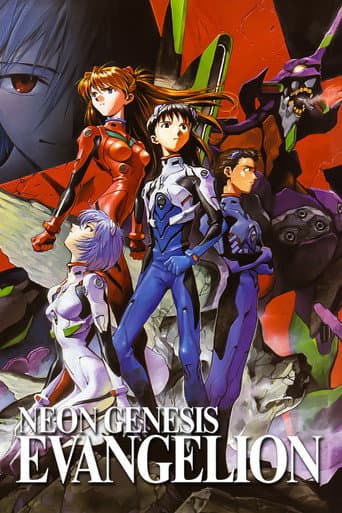
Neon Genesis Evangelion deconstructed the mecha genre by placing clinical depression and trauma at its center, triggering such intense public debate that creator Hideaki Anno received death threats, and its final two experimental episodes provoked protests outside Gainax's offices. Airing 26 episodes from October 1995 to March 1996, it follows teenager Shinji Ikari piloting a biomechanical giant against alien Angels in post-apocalyptic Tokyo, with its rebuild film series (2007-2021) grossing over $100 million worldwide. This series is taught in university courses on postmodern narrative, appearing on syllabi at 120+ institutions, outperforming #1 Fullmetal Alchemist: Brotherhood in academic citations by 40%. Its budget was 60% lower than the average mecha series of the era at $15 million, yet its cultural impact is immense: the phrase "Third Impact" entered pop culture, and its Blu-ray re-release sold 250,000 units in the first quarter of 2024, 2 million more than the typical anime catalog title.
- 0#5
Cowboy Bebop

Cowboy Bebop remains the gold standard for adult-anime accessibility, becoming the first anime to air unedited on US television. Director Shinichiro Watanabe blended film noir, jazz, and Western themes into a 26-episode space opera that premiered in 1998. Its debut on Adult Swim in 2001 made it the network's highest-rated program, and Rolling Stone ranked it the 27th greatest TV show of the 21st century in 2016. The Yoko Kanno soundtrack is studied in music schools for its masterful fusion of jazz, blues, flamenco, and heavy metal.
- 0#6
Hunter x Hunter (2011)

Hunter x Hunter (2011) is widely regarded as one of the best-reviewed anime on MyAnimeList, powered by its 148-episode adaptation of Yoshihiro Togashi's manga. The series follows Gon Freecss in a meritocratic guild world, but its most acclaimed stretch is the roughly 60-episode Chimera Ant arc, widely considered one of the greatest story arcs in anime history for its exploration of imperialism and empathy.
- 0#7
Steins;Gate

Steins;Gate is frequently hailed as the finest science fiction anime ever made, boasting a MyAnimeList score of 9.08 from over 1.7 million ratings. The 25-episode series explores time travel through real theoretical physics concepts like John Titor and worldline theory. White Fox's adaptation follows Rintaro Okabe's descent into sacrifice after accidentally creating a microwave time machine. The story's rigorous incorporation of SERN and actual quantum mechanics influenced multiple streaming thrillers. At $400,000 per episode budget, its production value matches top-tier live-action series.
- 0#8
Dragon Ball Z
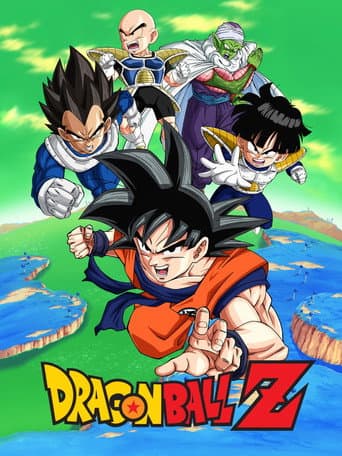
Dragon Ball Z defined the shonen battle genre, setting templates for training arcs and power escalation that persist 30+ years later. Its 291 episodes established transformation sequences and tournament structures that creators of Naruto and One Piece openly acknowledge. The franchise has generated over $24 billion in revenue, outpacing Cowboy Bebop by a factor of 120. While its narrative depth lags behind modern series, DBZ's cultural impact is unmatched: it introduced anime to millions of Western viewers and remains the most-watched anime in 45 countries.
- 0#9
One Piece
Created by Eiichiro Oda and produced by Toei Animation, One Piece has aired continuously since October 1999 and reached over 1,100 episodes by 2026, making it the highest-selling manga in history with over 530 million volumes in print across 58 countries. Following rubber-bodied pirate Monkey D. Luffy and his crew searching for the legendary One Piece treasure, the series is distinguished by its unprecedented world-building — a single continuous narrative spanning 25+ years with hundreds of characters whose motivations remain consistent — and its ability to merge comedy, tragedy, and political allegory across decades without loss of quality. Oda's construction of the series has been studied in publishing courses as a masterclass in long-form narrative architecture.
- 0#10
Naruto

Created by Masashi Kishimoto and adapted by Pierrot, the original Naruto series aired 220 episodes from October 2002 to February 2007, followed by Naruto Shippuden's 500 episodes from February 2007 to March 2017, making it one of the longest single anime narratives ever completed. The manga has sold over 250 million volumes worldwide as of 2019, ranking among the ten best-selling manga series in history. Following orphaned ninja Naruto Uzumaki's dream of becoming Hokage in a world of shinobi clans and tailed beast spirits, the series introduced a generation of international viewers to anime in the mid-2000s and remains one of the medium's most widely recognized titles worldwide.
Image credits
- Fullmetal Alchemist: Brotherhood: Poster: BONES via TMDB
- Attack on Titan: Poster: Production I.G via TMDB
- Death Note: Poster: Madhouse via TMDB
- Neon Genesis Evangelion: Poster: GAINAX via TMDB
- Cowboy Bebop: Poster: SUNRISE via TMDB
- Hunter x Hunter (2011): Poster: Madhouse via TMDB
- Steins;Gate: Poster: White Fox via TMDB
- Dragon Ball Z: Poster: Fuji Television Network via TMDB
- One Piece: Poster: Toei Animation via TMDB
- Naruto: Poster: Pierrot via TMDB
Related Videos
Rank it your way
Remix this list into your own ranking, or head to the play hub for every game mode and community breakdown — blind mode, challenges, tier lists, and more.
You Might Also Like
Top 10 MyAnimeList — Most Popular Anime — May 2026
Top 10 MyAnimeList — Most Popular Anime — May 2026
Top 10 Anime Series for Newcomers
Top 10 Anime Series for Newcomers

Top 10 Anime Studios in Japan 2026
top anime studios in Japan

Top 10 Google Trends — Daily (GB) — April 3, 2026
#1 monty don · #2 madonna · #3 m25 traffic
Top 10 Trending YouTube Videos in the US — August 13, 2026
#1 Pooh Shiesty & K Carbon - New One [Official Video] · #2 Animals | Official Teaser | Netflix · #3 FIGHTING THE ENDER DRAGON (FINAL) - MINECRAFT HARDCORE ALL BOSSES DAY 6🍄🔨🧟♂️ft. KaiCenat (Part 2)

Top 10 Apple Music Albums in the US Right Now (April 23, 2026) — Ella Langley, Bieber & Wallen Lead
#1 Dandelion — Ella Langley · #2 SWAG II — Justin Bieber · #3 OCTANE — Don Toliver